
A near miss in a warehouse rarely comes down to one mistake. More often, it is a chain of small failures – poor visibility at an aisle crossing, rushed pedestrian movement, an overloaded shift, an ageing forklift, or a missed maintenance issue. That is why warehouse safety technology trends matter right now. For Australian operators under pressure to move more stock, reduce downtime and keep people safe, the strongest gains are coming from systems that prevent incidents before they interrupt the day.
This is not about chasing gadgets. It is about using technology to tighten control over traffic, visibility, operator behaviour and equipment condition in environments where a single blind corner or delayed service response can carry real cost.
The biggest shift is that safety technology is no longer being treated as a separate layer added after the fleet is purchased. It is becoming part of the operating model. Warehouses are assessing machines, power sources, telemetry, servicing and training as one connected safety decision.
That matters because the old approach had limits. A site could install mirrors, mark walkways and run inductions, yet still deal with repeated near misses if forklift movements were hard to monitor or if maintenance issues were caught too late. Newer systems give supervisors more visibility and more control, but they also bring a higher expectation of discipline. Technology can reduce risk. It does not replace site rules, competent operators or proper fleet planning.
One of the clearest warehouse safety technology trends is the use of proximity systems that alert operators and pedestrians when they enter a shared risk zone. In a busy warehouse, especially one with mixed traffic, these systems can help reduce low-visibility interactions at aisle ends, dock areas and pick zones.
The value is practical. Instead of relying only on line marking and mirrors, the site gets active warning points built into the traffic environment. Some operations are pairing these systems with speed reduction settings in higher-risk zones. That said, performance depends on layout, signal accuracy and how well the site maps its danger areas. If the system creates too many alerts, people start ignoring it. The best result comes when the technology is calibrated to the actual movement patterns on site.
Visibility remains one of the oldest warehouse risks, and one of the hardest to fully remove. Camera systems, reversing aids and improved monitoring around forklifts are being adopted more widely because they address a daily problem operators recognise immediately.
This is especially relevant in operations handling bulky loads, operating in narrow aisles or dealing with high racking where the load itself blocks sightlines. Cameras can improve awareness, but they work best as support rather than a substitute for operating discipline. A poor site layout will still be a poor site layout. Technology helps the operator see more, but it cannot fix congestion created by bad traffic design.
Another major shift in warehouse safety technology trends is the move to data-led fleet oversight. Telemetry gives managers a clearer picture of how each machine is being used – hours, impacts, fault codes, battery behaviour, service intervals and, in some cases, operator access.
Explore Hyundai’s Fleet Management Solutions
From a safety point of view, this changes the conversation. Instead of reacting after an incident, supervisors can spot patterns earlier. Repeated impact events on a specific truck, harsh operating habits or signs of overuse on a high-demand unit can all point to a risk building in the background.
There is also a management advantage here. Telemetry supports accountability without relying on guesswork. But it needs careful handling. If staff see it only as surveillance, buy-in drops quickly. If it is introduced as part of safer operations, better servicing and less unplanned downtime, it tends to deliver stronger results.
Forklift safety is not just about how a machine is driven. It is also about condition, response time and how quickly faults are diagnosed before they become a hazard. This is why remote diagnostics and connected service support are becoming more relevant across industrial fleets.
For warehouse operators, that can mean earlier fault identification, faster technician preparation and less time with a machine operating below standard. In high-throughput environments, this matters. A delayed repair can push extra pressure onto the rest of the fleet, which often creates rushed movement, overloaded scheduling and greater exposure to mistakes.
Technology-led servicing does not eliminate the need for regular inspections or trained technicians. What it does is improve the speed and accuracy of response. That is a strong operational benefit as much as a safety one.
As more businesses shift towards electric fleets and lithium-powered equipment, power management is becoming part of the broader warehouse safety conversation. Battery performance, charging practices, changeover procedures and designated charging areas all affect site safety.
Lithium technology can reduce some of the manual handling and maintenance issues associated with older battery practices, but each site still needs the right charging setup, ventilation planning and operating procedure. In other words, cleaner power does not mean lower attention. It means a different set of controls.
For businesses comparing electric, LPG and diesel equipment, safety should be weighed alongside duty cycle, indoor use, ventilation requirements and servicing support. The right power choice is still application-specific.
Automation is one of the most talked-about warehouse safety technology trends, but it is often oversimplified. Automated guided vehicles and semi-automated handling systems can reduce human exposure in repetitive or high-risk movement tasks. That can be valuable in facilities with predictable routes, stable volume and a strong need for traffic separation.
The trade-off is that automation works best where the process is controlled. Highly variable sites, changing inventory profiles or mixed-use industrial environments may not get the same return from a full automation push. In some warehouses, a better outcome comes from combining manually operated forklifts with selective automation and stronger traffic management.
This is where serious fleet planning matters. The aim is not to automate for the sake of it. The aim is to remove avoidable risk while protecting throughput and flexibility.
A site can invest in advanced equipment and still struggle with unsafe habits if operator training is not kept current. One of the more useful shifts in warehouse safety technology trends is the move towards more practical, technology-supported training methods.
Digital learning modules, operator access control and technology-assisted technician support are helping businesses reinforce standards without slowing the whole operation. Augmented support tools can also help service teams diagnose and resolve issues more accurately in the field, which supports safer equipment uptime.
Still, training technology has limits. It works best when backed by site leadership that takes compliance seriously. If refresher training is treated as a box-ticking exercise, the software will not save it.
For most Australian warehouses, the best safety upgrade is not the most advanced feature on the market. It is the one that fits the real risk profile of the site. A 3PL operation with fast pedestrian movement has different priorities from a steel yard, a food warehouse or a pharmaceutical facility.
That is why procurement teams and operations managers should assess technology against four practical questions. Does it reduce a known risk on this site? Will operators and supervisors actually use it properly? Can the supplier support it over the long term? And will it help productivity rather than slow the task down?
The strongest suppliers are the ones that can support that full picture – equipment selection, service response, training, battery advice, fleet planning and aftersales support. For businesses that need safety improvements without sacrificing uptime, that joined-up support model matters as much as the machine itself.
At Hyundai Material Handling Australia, that broader view is central to how fleets are supported across purchase, rental, servicing and long-term performance planning.
Warehouse safety used to be discussed mainly in terms of compliance. That is no longer enough. Today, safer traffic flow, better equipment visibility, faster fault response and more informed fleet management all contribute to labour stability, lower disruption and stronger output.
The real opportunity is not in adding more technology everywhere. It is in selecting the systems that solve the right problems, then backing them with dependable machines, proper servicing and site discipline. Businesses that get that balance right will not just reduce incidents. They will build operations that hold up under pressure, shift after shift.
A farm forklift should match your loads, your ground conditions...
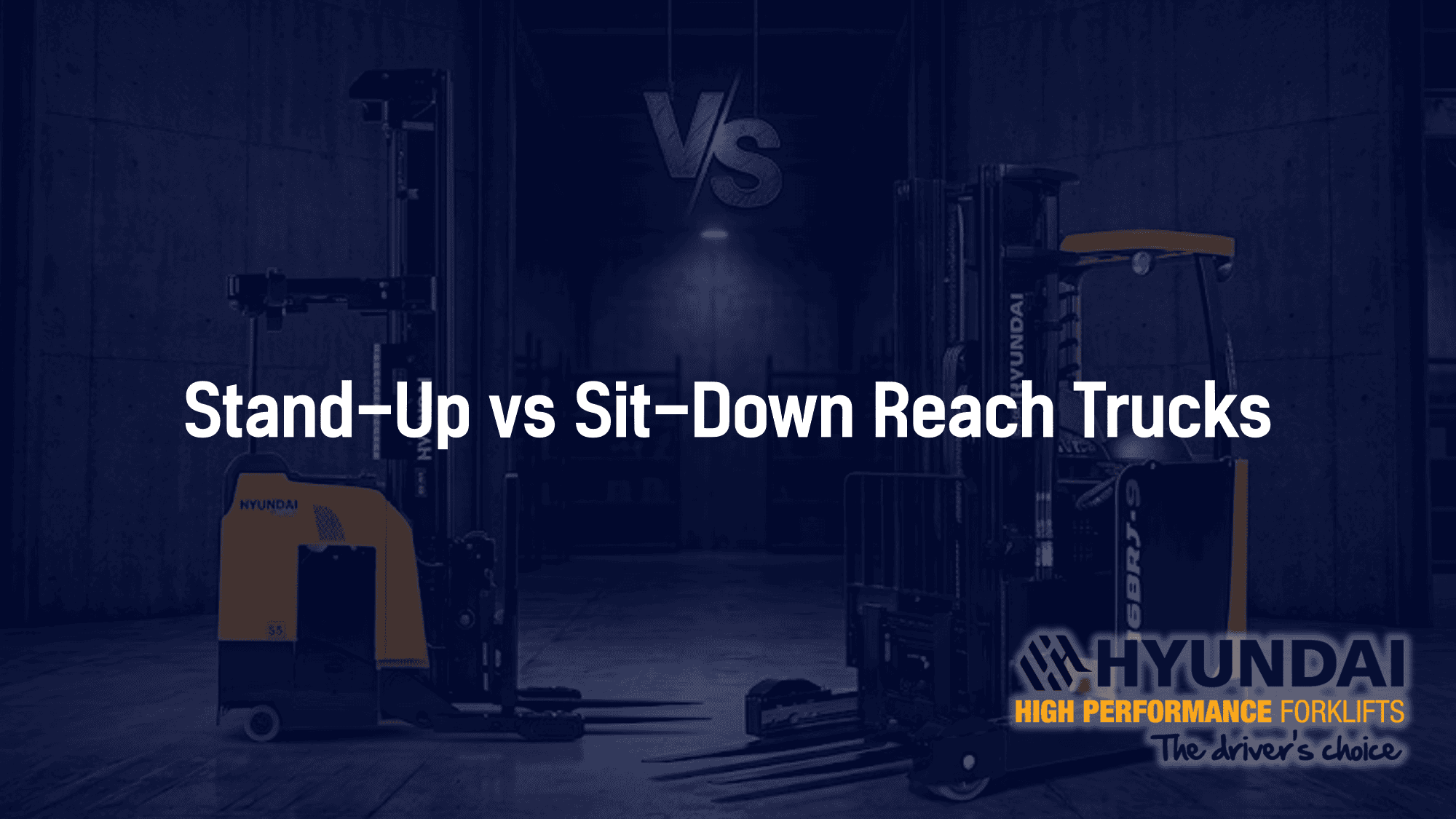
A stand-up reach truck suits frequent stops and short trips,...
Life in a hire fleet is demanding. A forklift can...