
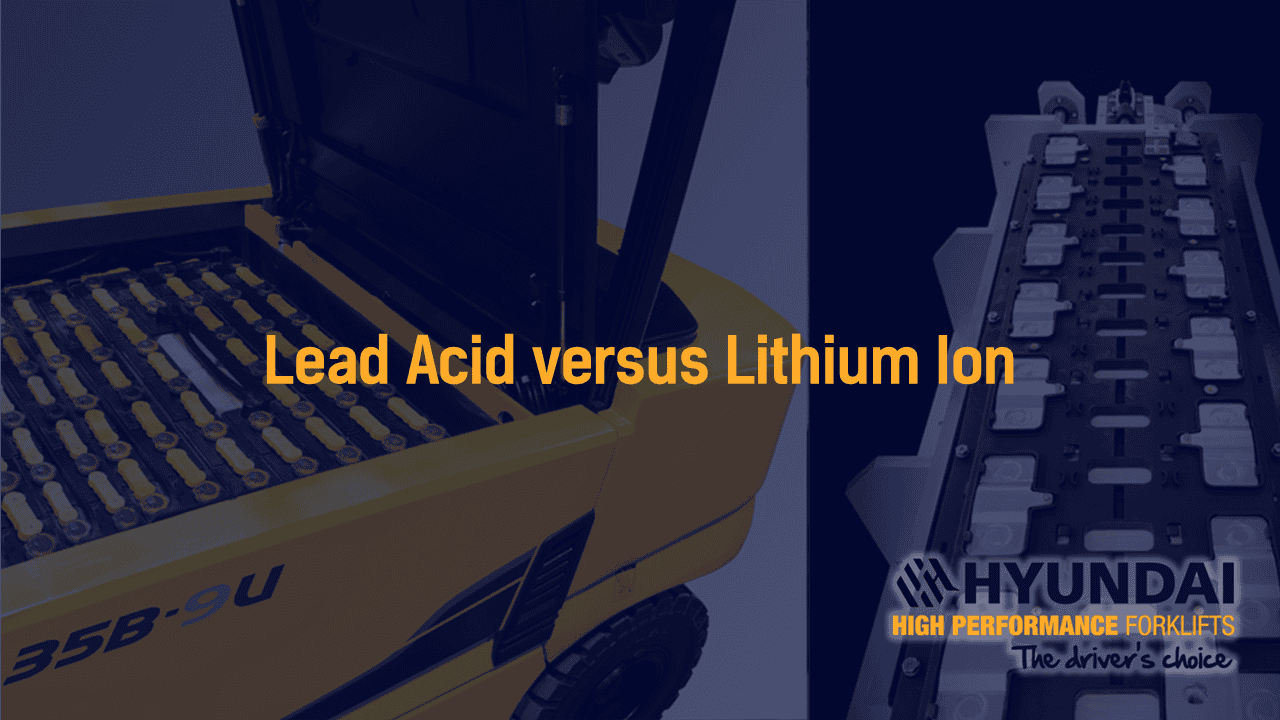
If you are already using electric forklifts, the next question is not diesel vs electric – it is lead‑acid vs lithium‑ion. For Australian warehouses, logistics sites and industrial operations, there is no one‑size‑fits‑all answer. The right choice depends on shift patterns, utilisation, available charging windows, site layout and how hard each truck needs to work. Let’s figure out which battery type is the best fit for your operation.
At a glance, both options power electric forklifts and both can support indoor handling work where low emissions and low noise matter. The difference is in how they behave over a full working day and what they demand from your business to keep them productive.
Lead-acid batteries are the long-established option. They are familiar, widely understood and often come with a lower initial purchase price. For some operations, especially single-shift sites with time for overnight charging, that can still make solid commercial sense.
Lithium batteries offer fast charging in around two hours, support opportunity charging during breaks, and maintain stable voltage throughout the shift. This means truck performance stays consistent right through to the end of the day, giving operators more predictable travel and lift response and improving overall satisfaction. As a result, it becomes much easier to keep a single forklift productively covering multiple shifts.
Get in touch with our sales team to discuss best option for your site.
Let’s get specific. Lead‑acid batteries typically require 8–10 hours to charge and work best with full charge and discharge cycles. They may also need battery changes and cooling periods during peak times. In this respect, lithium‑powered electric forklifts offer a clear advantage in day‑to‑day convenience and flexibility.
Lithium batteries offer fast charging in around two hours, support opportunity charging, and maintain stable voltage throughout the shift. That means no slow, “tired” feeling in the last hours of work and fewer complaints from operators. They are also well‑suited to short top‑up charges during breaks, which makes it easier to run multiple shifts on a single truck.
When capital budgets are tight and utilisation is moderate, lead-acid electric forklifts can look attractive because they usually cost less to buy upfront. They are familiar, proven and fit well in single-shift operations that already have a battery room and established handling procedures. For these lower-intensity sites, the economics of lead-acid can still stack up.
However, purchase price is only one part of total cost of ownership (TCO). A forklift that fits the budget on day one can cost more over its working life if it needs regular battery watering, equalisation charging, extra ventilation space and additional labour to keep it running. In operations that rely on high fleet availability, those costs are not theoretical. They show up as downtime, supervision overhead and reduced flexibility on the floor.
Li-ion electric forklifts usually require a higher upfront investment, but they reduce day-to-day operating friction. Fast charging, opportunity charging and lower battery maintenance can cut labour hours tied to battery care and improve fleet availability. In higher-utilisation environments – multi-shift warehouses, logistics sites and industrial operations where uptime and throughput matter – these gains often shift the total cost picture in favour of lithium-ion over time.
For fleets running on lead‑acid batteries, there is a steady stream of work involved in looking after the batteries themselves. In this section, we will look at how battery maintenance creates hidden tasks from the perspective of forklift drivers, maintenance and facility teams, and warehouse or logistics managers.
Forklift drivers handle a range of battery‑related tasks during their shifts. When the state of charge drops, they need to drive the truck to the battery change area, carry out the battery swap, and then set up the used battery on charge. Each cycle can take around 10–20 minutes per truck, during which the unit is temporarily out of service. If this happens during peak hours, it can interrupt workflow and increase perceived stress for the driver. Towards the end of a shift, declining voltage can also make acceleration and lift response feel sluggish, which gradually adds to driver fatigue.
Maintenance and facility teams are responsible for routine tasks such as watering lead‑acid batteries, cleaning terminals, and performing equalization charges. They also need to periodically check battery condition, service life, and replacement timing across the fleet to reduce the risk of unexpected failures and unplanned downtime. As the number of trucks grows, the time dedicated to these recurring activities becomes a regular part of the maintenance workload.
From the viewpoint of warehouse and logistics managers, battery maintenance directly affects labour planning and uptime. They must manage time‑based KPIs while coordinating battery changes and charging so that too many trucks are not taken out of operation in the same time window, which could slow down picking and loading performance. In addition, they need to account for the labour allocated to battery handling, as well as the cost of spare trucks and batteries kept on standby to cover change‑outs. This makes battery management an operational factor that influences both productivity and the overall cost structure of the fleet.
These activities may not show up as a clear line item in your TCO, but they do influence how efficiently a site runs day to day. When you switch to lithium‑ion batteries, this picture changes. Regular watering, acid handling, and equalization routines largely disappear, so far less time has to be carved out solely for battery care. As a result, maintenance teams can focus more on core preventative work and equipment inspections, and site managers can concentrate on staffing for actual operations instead of planning around dedicated “battery handling” roles.
Not every electric forklift works the same way under load, and not every site uses them the same way. In sectors like 3PL, food distribution, manufacturing and high-turnover warehousing, battery consistency through the shift matters.
Lead-acid batteries can experience performance drop-off as charge levels fall. In some operations that is manageable. In others, especially where travel distances, lift cycles or peak-hour demand are high, that variation can affect productivity.
Li-ion systems generally provide more consistent power output through the discharge cycle. That can help maintain performance from the start of the shift to the end. For operators, that can mean more predictable machine response. For managers, it means stronger planning confidence around throughput and shift execution.
A well-matched forklift and battery package also supports safer operation. Consistent performance, fewer battery handling tasks and less unplanned downtime all contribute to a more controlled working environment.
Battery choice has a footprint beyond the forklift itself. Lead-acid fleets often require dedicated charging rooms, ventilation considerations and space for spare batteries or changing equipment. On high-value warehouse floors, that space comes at a cost.
Li-ion charging setups are generally simpler and can reduce the need for separate battery rooms. For sites looking to recover floor space or avoid complex battery-change areas, that can be a strong operational benefit.
There are workplace safety implications as well. Fewer manual battery changes and less exposure to acid handling can reduce risk points on site. That does not remove the need for proper charging and electrical safety procedures, but it can simplify the overall environment.
Get in touch with our sales team to discuss best option for your site.
The best decision starts with usage, not trends. If your forklifts work one predictable shift and downtime for charging is easy to schedule, lead-acid may still offer the most economical fit. If your business runs hard across multiple shifts, deals with peak demand windows, or cannot afford equipment sitting idle, lithium-ion usually deserves close attention.
Ask a few direct questions. How many hours does each forklift actually work? Is there dead time available for charging? Do battery changes disrupt the shift? Is floor space tight? How much labour is tied up in battery care? And if a forklift is unavailable, what does that cost the wider operation?
Those answers will usually point clearly towards the better option.
For many Australian operators, the decision is also tied to acquisition strategy. A purchase, lease or rental arrangement can change how you weigh upfront cost against long-term efficiency. The strongest result usually comes from looking at the whole fleet plan, including service support, battery management and expected utilisation rather than judging battery type in isolation.
That is where an experienced material handling partner can add real value. Hyundai Material Handling Australia works with businesses that need more than a forklift spec sheet. The right recommendation should fit your site, your shift structure and your productivity targets.
Battery technology should serve the operation, not complicate it. If your next forklift decision is under review, focus on the working day you need to run tomorrow, next quarter and three years from now. The right power choice is the one that keeps your fleet moving when the pressure is on.
Lithium-Ion Electric Forklifts: 5 Reasons Fleets Are Switching from Diesel
A farm forklift should match your loads, your ground conditions...
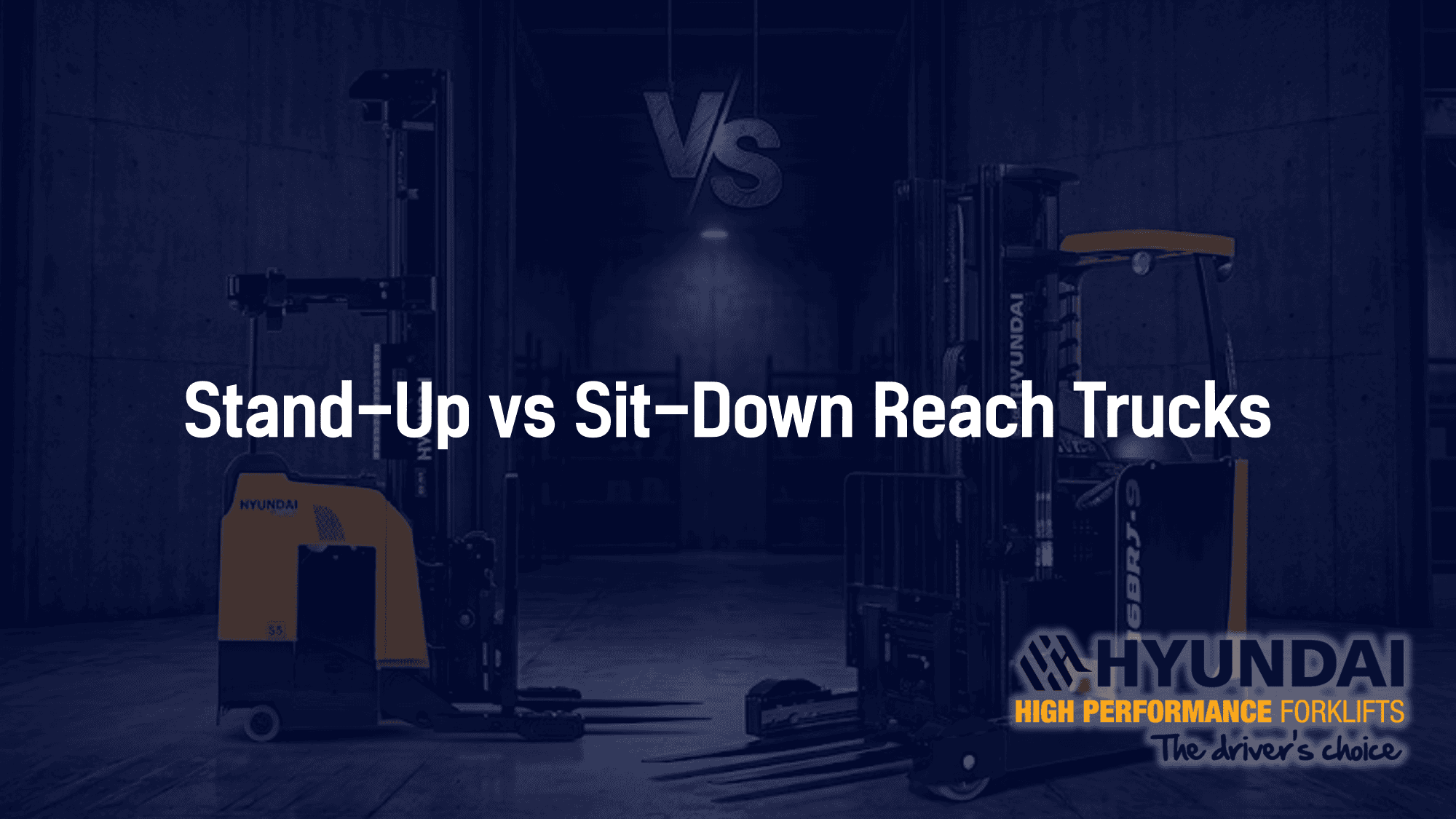
A stand-up reach truck suits frequent stops and short trips,...
Life in a hire fleet is demanding. A forklift can...