
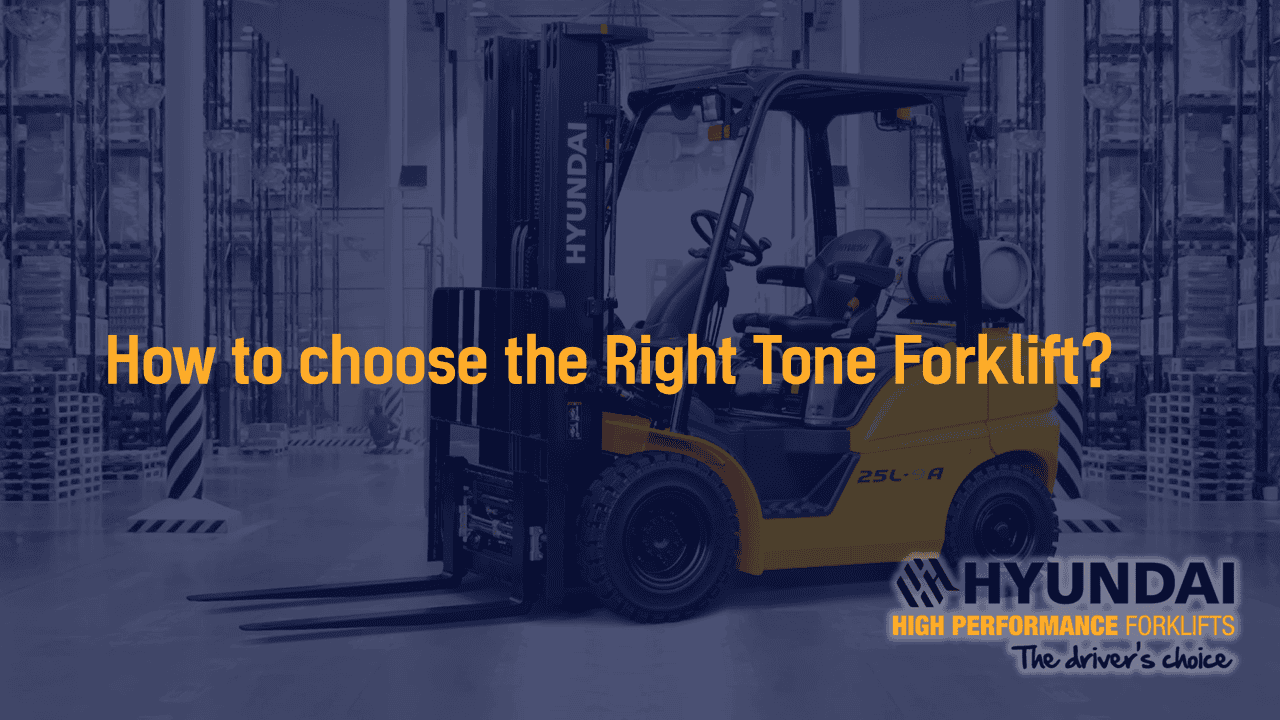
“What size forklift do I need?” is rarely a question of capacity alone. On an Australian worksite, the real question is whether the machine can handle your actual load at your required lift height, across your surface conditions, shift patterns and safety requirements without slowing the operation down.
That is where many buying decisions go off track. A forklift that looks right on paper can be under specced once attachments are fitted, once loads move higher into racking, or once the job shifts from occasional handling to full day production. The better approach is to match capacity to the task first. Then match power, tyres, mast and support model to the environment you run every day.
When businesses talk about a 2.5 tonne or 3 tonne forklift, they are usually referring to the nominal load capacity under standard test conditions. That figure is useful, but it is not the same as guaranteed lifting performance in every application.
Capacity changes with load centre, attachment choice and lift height. A pallet with an awkward footprint or a long load such as timber or steel can shift the load centre forward, reducing effective capacity. The same applies when you fit a sideshift, fork positioner or clamp. These are often essential productivity tools, but they add weight and can reduce how much the forklift can safely lift.
This matters because many sites buy close to their minimum requirement. If your operation regularly handles loads near the upper limit, there is very little margin for variation. In practice, that can lead to slower handling, more conservative operation and, in the worst case, a machine that is simply wrong for the task.
The right capacity starts with the heaviest load you expect to move, but it should never stop there. Procurement teams and fleet managers need to look at the full operating profile.
First, consider your true maximum load, not the average. If most of your pallets sit at 1.8 tonnes but your incoming product occasionally reaches 2.3 tonnes, the forklift still needs to cover the heavier end safely. Second, check the lift height. A machine may lift a rated load at a lower height but derate as the mast extends. In high-bay warehousing, that detail is critical.
Third, look at the shape and consistency of the load. Standard pallets are one thing. Long packs, unstable product, stillages and bulky loads are another. The more variation you have, the more important it becomes to allow operating margin. Finally, think about duty cycle. A machine that handles heavy loads all day in a busy logistics environment needs a different level of durability and powertrain suitability than one used intermittently in a smaller yard.
For many operations, the most reliable decision is not the smallest forklift that technically works. It is the one that covers peak demand without creating a bottleneck elsewhere in the shift.
Capacity is only part of the equation. Power type has a direct effect on running cost, site suitability, maintenance planning and operator comfort.
Electric models suit indoor warehousing, food handling, pharmaceuticals and operations where emissions, noise and manoeuvrability matter. They are often the right fit for businesses running multi-shift warehouse work with access to charging infrastructure and clear battery management processes. Electric forklifts can also deliver strong acceleration and lower day-to-day servicing requirements, but the result depends on battery type, charging discipline and the intensity of the duty cycle.
LPG remains a practical all-rounder for mixed indoor and outdoor work where fast refuelling and operational flexibility are priorities. For businesses that need continuous use without waiting on battery charging, LPG can be an efficient option. It is especially useful where one forklift may move between yard and warehouse over the same shift.
Diesel forklifts are typically chosen for outdoor, heavy-duty environments such as timber yards, steel handling, construction supply and industrial sites with rougher conditions. They are built for hard work and sustained performance, particularly where heavier loads and uneven surfaces are part of the job. The trade-off is that they are less suited to enclosed indoor operations due to emissions and noise considerations.
There is no single best answer here. The right choice depends on where the forklift works, how long it runs each day and what infrastructure your site already has in place.
A forklift that performs well on a smooth warehouse floor may struggle to deliver the same efficiency in a yard with gradients, wet conditions or broken surfaces. Tyre choice, ground clearance and machine stability all come into play.
Indoor operations usually prioritise tight turning, lower noise and precise control in confined aisles. Outdoor and mixed-use sites need traction, weather tolerance and a chassis that can stand up to harsher treatment. If your loads move between the warehouse and the yard, that crossover should influence the entire specification.
This is also where mast selection matters. Duplex, triplex and container mast options affect visibility, collapsed height and reach. The wrong mast can slow loading under low doorways or limit access to higher storage positions. The right one helps keep freight moving without compromise.
Attachments improve productivity, but they also change the capacity equation. A standard fork carriage does one job. Add a clamp, rotator or fork positioner and the machine becomes more versatile, but also more specialised.
That can be a smart investment if it removes manual handling, reduces product damage or speeds up repetitive tasks. In beverage, paper, timber and manufacturing environments, attachments can deliver a clear return. But they should be specified from the start, not added later without checking derated capacity and hydraulic compatibility.
If your operation relies on attachments, the safest path is to treat them as part of the core machine specification. That avoids a mismatch between what the forklift is rated to do and what your site expects it to do.
For some businesses, outright purchase makes sense because the forklift is a long-term production asset with stable usage and a clear maintenance plan. For others, rental or finance is the better commercial decision.
Rental works well when demand fluctuates, projects are short term or seasonal peaks require extra capacity. It also gives operations more flexibility when fleet needs are still changing. Finance and leasing can help preserve capital while keeping access to the right specification from day one.
The decision should come back to utilisation, cash flow and risk. A forklift that runs hard every day may justify ownership. A machine needed for surge periods or contract-based work may be better rented. What matters is not just the sticker price, but the total cost across uptime, maintenance, support and replacement planning.
A well-specified forklift still becomes a problem if parts are slow to arrive or service support is not there when you need it. For Australian operators, aftersales capability is not an extra. It is part of the buying decision.
That means looking at service coverage, parts access, warranty support, technician capability and whether the supplier can support the fleet over time rather than simply deliver the unit. Businesses running tight schedules cannot afford extended downtime waiting on answers.
This is where a full-service supplier adds value. Equipment supply, maintenance planning, battery support, fleet management and responsive dealer backup all contribute to uptime. Hyundai Material Handling Australia takes that broader approach because productivity is built over the life of the machine, not just at handover.
The most common error is choosing on headline capacity without checking the actual application. Close behind that is underestimating future needs. Operations grow, stock profiles change and racking layouts evolve. A forklift that just fits today can become a constraint sooner than expected.
Another mistake is treating fuel type as a simple preference. In reality, it affects maintenance routines, site layout, refuelling or charging workflows and whole-of-life cost. Ignoring operator environment is another expensive oversight. Comfort, visibility and ease of use influence productivity more than many buyers expect, particularly across long shifts.
The strongest forklift decisions usually come from looking at the site as a working system rather than a list of specs.
When you are assessing a tonne forklift, think beyond what it can lift for a moment in perfect conditions. Focus on what it needs to deliver, hour after hour, on your floor, with your loads, under your deadlines. That is the machine that earns its place in the fleet.
Get in touch with our sales team to discuss best Ton Forklift for your site.
A farm forklift should match your loads, your ground conditions...
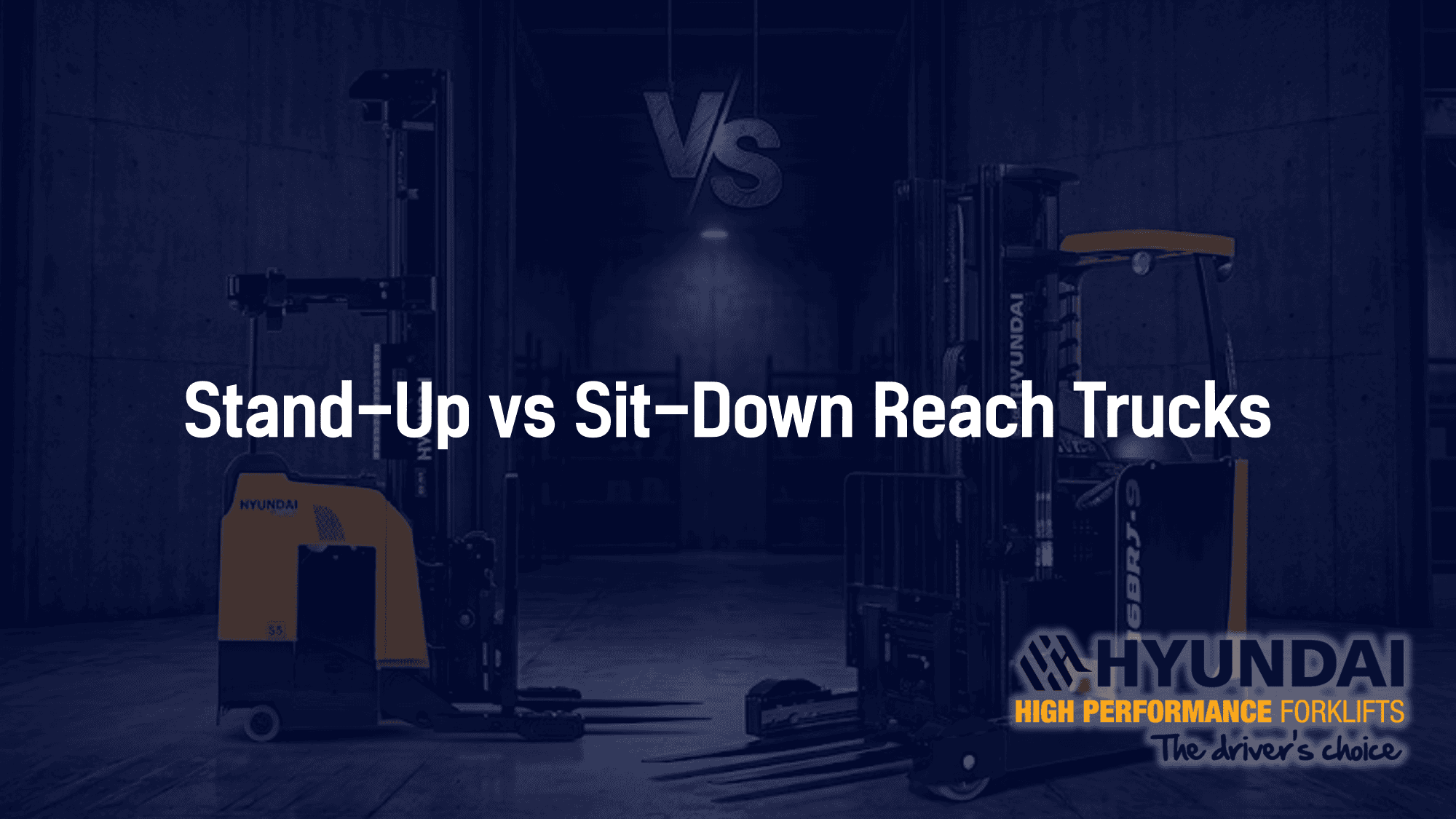
A stand-up reach truck suits frequent stops and short trips,...
Life in a hire fleet is demanding. A forklift can...