
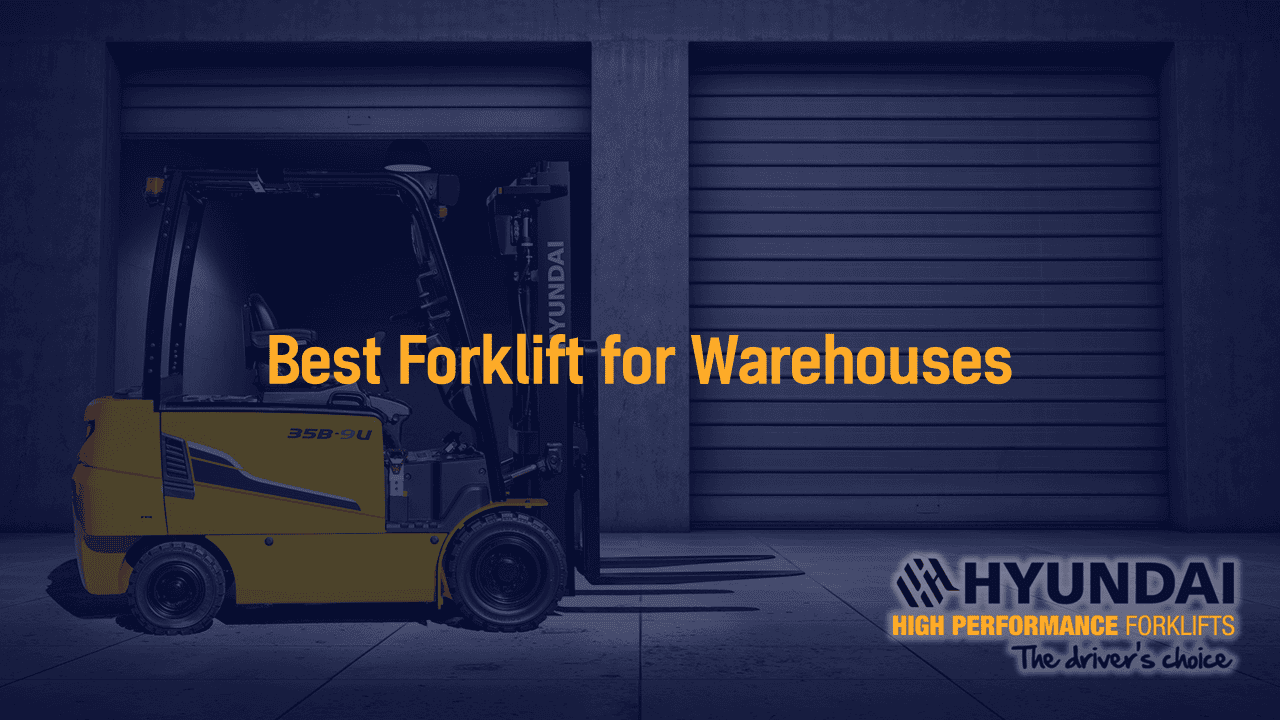
A warehouse that runs behind schedule rarely has a single cause. Often, productivity slips because the equipment does not match the task. If you are looking for the best forklift for warehouses, you need to look beyond lift capacity and consider aisle width, load profile, shift pattern, floor conditions and service support.
For Australian operators, that decision carries real cost. The wrong machine can slow putaway, increase pallet damage, create battery bottlenecks or leave operators fighting visibility in tight spaces. The right one keeps goods moving, supports safer handling and gives you stronger return on every hour the fleet is on the floor.
In a warehouse environment, the best forklift is usually the one that fits the workflow with the least wasted movement. That sounds obvious, but it is where many fleets miss the mark. Businesses often buy around headline specs, then discover the machine is too large for the aisles, too limited for rack height or not suited to the number of daily cycles.
A warehouse forklift should be judged on five practical measures: manoeuvrability, lift performance, power source, operator comfort and uptime support. If one of those is wrong, the rest of the package starts to unravel. A fast truck with poor battery planning will still create downtime. A compact machine with limited lift height will still slow replenishment.
The strongest buying decisions start with the application. Are you moving pallets from dock to floor? Picking in narrow aisles? Replenishing high racking? Running chilled storage? Feeding production lines? Each job points to a different machine category.
Counterbalance forklifts are often the first machines buyers consider, and for good reason. They are versatile and familiar to operators. They work well for loading, unloading and general movement in wider warehouse spaces. If your operation handles mixed tasks across docks, staging zones and moderate racking, an electric counterbalance forklift can be a strong fit.
But versatility has limits. In tighter warehouse layouts, a reach truck may be the better tool. Reach trucks are built for high stacking and narrow aisle work, helping operators access deeper racking while using less aisle space than a counterbalance forklift would need. For businesses trying to increase storage density, this difference matters.
Order pickers come into play when piece picking drives the operation. Instead of lifting only the load, they lift the operator to the picking height, which improves efficiency in distribution centres and e-commerce environments. Walkie stackers and electric pallet jacks are also worth considering for lower-intensity handling, back-of-house movement and shorter travel distances.
So when buyers ask for the best forklift for warehouses, the real question is often whether they need a forklift at all, or a more specialised warehouse machine.
For most indoor warehouse applications, electric forklifts lead the field. They offer low operating noise and no tailpipe emissions. Their precise handling is especially valuable in confined spaces and safety-conscious sites. They also suit businesses that want to reduce operating costs over the life of the fleet.
That does not mean every warehouse should go electric without question. Multi-shift operations need a clear charging or battery swap strategy. If the site cannot support charging infrastructure or battery management, the benefits can be diluted. High-voltage lithium options can help here, particularly where fast charging and strong performance consistency are priorities.
LPG forklifts still have a place in mixed indoor-outdoor operations where quick refuelling matters and ventilation is appropriate. They can suit warehouses with frequent yard work, variable duty cycles and less predictable scheduling. Diesel is typically better reserved for heavier outdoor handling rather than mainstream indoor warehousing, although some industrial sites with adjoining hardstand and bulky loads may still rely on it.
The best choice comes down to how the machine will be used across the day. One shift with predictable breaks is a different battery equation from a near-continuous logistics operation.
A forklift that performs well in one facility can be the wrong choice in another. Warehouse layout has a direct impact on turning radius, mast selection, lift height and visibility. This is why a site assessment is far more useful than choosing from a brochure alone.
Tight aisles: every extra millimetre of truck width matters.
High racks: mast stability and residual capacity are critical.
Dock loading: compact truck dimensions and traction over dock plates are important.
Mixed indoor–outdoor travel: tyre choice and ground clearance matter.
This is also where safety and productivity overlap. A forklift that is too large for the travel path creates more reversing, more corrective movements and more risk around pedestrians and stock. A machine sized correctly for the environment keeps handling smoother and more controlled.
Many buyers start with capacity because it is easy to compare. A 2.5 tonne forklift versus a 3.0 tonne forklift sounds straightforward. In practice, warehouse selection is more nuanced than that.
The rated capacity changes with load centre and lift height. Once attachments are added, or loads become longer, irregular or less stable, usable capacity can shift again. A warehouse moving standard pallets at low level has different requirements from a site handling long loads, double-deep racking or high-bay storage.
That is why attachment planning matters early. Side shifters, fork positioners and specialised clamps can improve efficiency, but they also affect weight distribution and truck specification. The best forklift is not simply the strongest on paper. It is the one engineered for the actual load and operating conditions.
A lower upfront price can look attractive until servicing, parts delays and operator complaints start eating into the budget. Warehouses run on timing. If a forklift is down during peak periods, the cost shows up quickly in labour inefficiency, delayed dispatch and pressure on the rest of the fleet.
This is where long-term support becomes part of the buying decision. Local parts access, responsive technicians, warranty backing and practical service planning can make more difference than a small gap in initial purchase cost. Fleet managers know that dependable aftersales support protects utilisation.
For businesses weighing purchase against rental or finance, flexibility also matters. Seasonal demand, contract growth and temporary project work may justify rental or staged fleet expansion rather than immediate capital outlay. A trusted forklift partner should be able to support that decision with a full-life view of the equipment, not just a sales transaction.
Warehouse performance is not just about machine capability. It is also about how consistently operators can work across a shift. Visibility, control layout, seat comfort, entry and exit design and steering response all influence fatigue and handling quality.
A forklift that feels predictable and comfortable is easier to operate safely and efficiently. That matters in fast-moving warehouse environments where operators are repeating tasks for hours at a time. Better ergonomics can reduce handling errors, support training outcomes and improve operator acceptance of new equipment.
This is one reason electric forklifts and purpose-built warehouse trucks are often preferred indoors. Their control precision and quieter operation can make the working environment easier to manage, particularly in high-traffic facilities.
There is no single forklift that suits every warehouse in Australia. A food distributor with narrow aisles and strict hygiene expectations will usually need a different fleet mix from a steel wholesaler or a 3PL managing fast pallet throughput. The best result often comes from combining machines across the site – perhaps an electric counterbalance at the dock, a reach truck in racking aisles and pallet equipment for short internal runs.
That is the practical way to think about warehouse performance. Match the machine to the movement, the environment and the demand profile. Then back it with service, training and support that keeps the fleet working.
For operators who want dependable performance without guesswork, Hyundai Material Handling Australia approaches warehouse equipment as a full operational solution, not just a machine on a spec sheet. That is where better fleet decisions start – with the right equipment, properly supported, doing the job it was built to do.
If you are weighing up your next warehouse forklift, start on the floor where the work happens. The best choice is usually the one that removes friction from the operation and keeps your team moving with confidence.
A farm forklift should match your loads, your ground conditions...
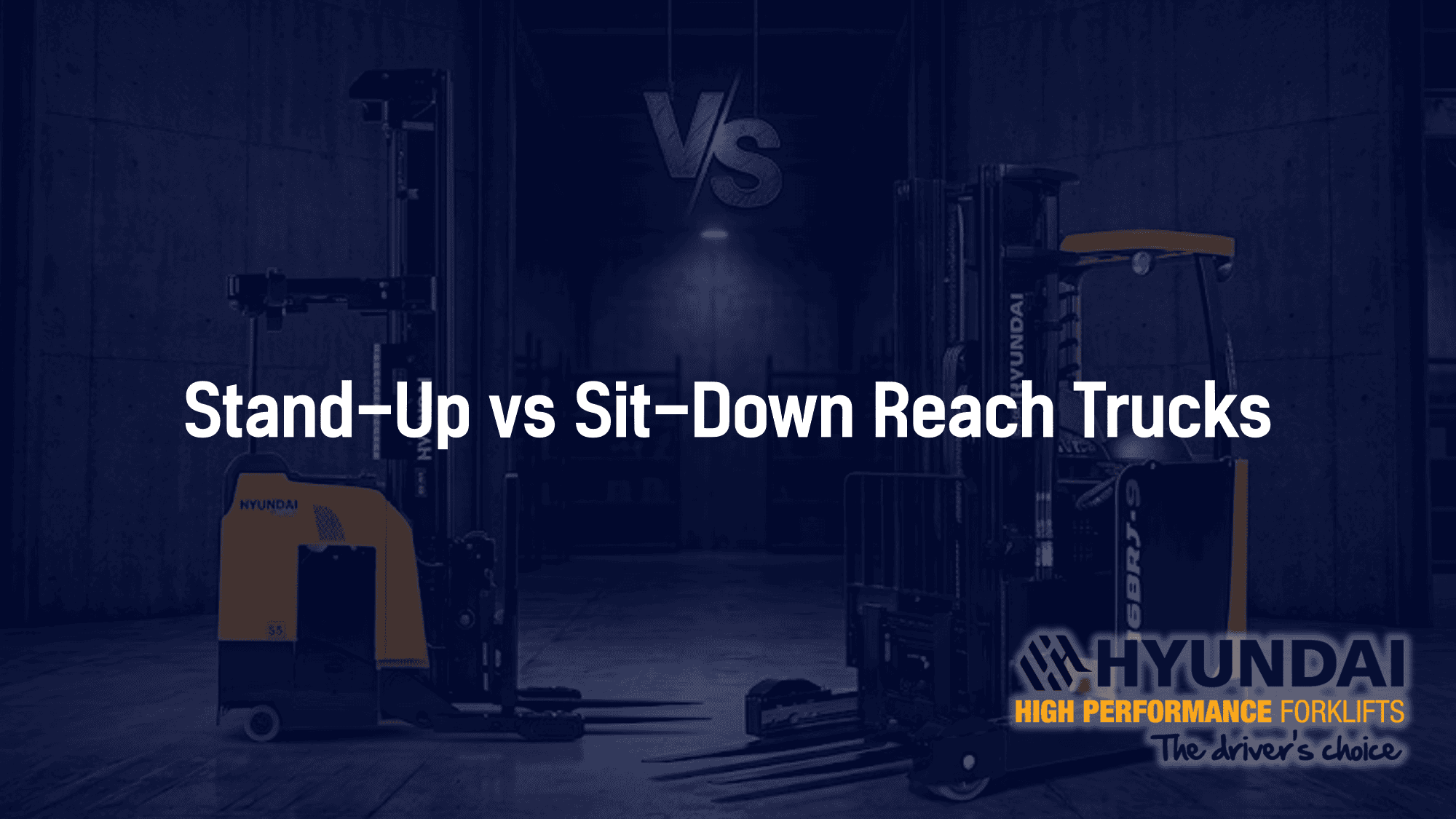
A stand-up reach truck suits frequent stops and short trips,...
Life in a hire fleet is demanding. A forklift can...