
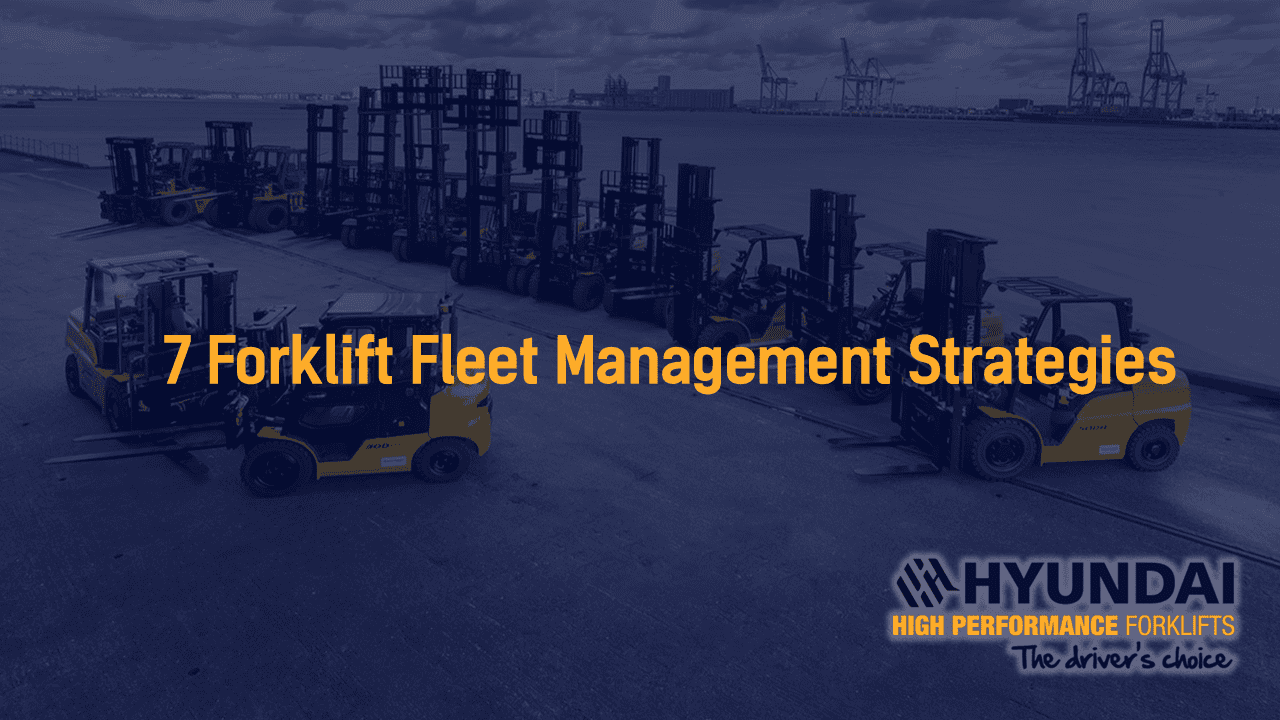
A forklift fleet rarely underperforms because of one bad machine. More often, productivity slips through small failures that stack up – the wrong truck for the task, reactive servicing, battery issues, poor operator habits, and assets sitting idle in one part of the site while another area is under pressure. That is why the top fleet management strategies are not just about buying equipment. They are about building a fleet that works harder, lasts longer and stays available when your operation needs it.
For Australian warehouses, logistics operations, manufacturing sites and heavy-duty handling environments, fleet management has become a direct profit lever. Every decision around equipment mix, servicing, power type and replacement timing affects uptime, labour efficiency and total cost of ownership. The best results come from treating fleet planning as an operational system, not a one-off purchasing exercise.
One of the most effective top fleet management strategies is also one of the most overlooked: matching equipment to the real task. Many businesses carry unnecessary cost because they rely on a general-purpose fleet where specialised equipment would move stock faster, more safely and with less wear.
A counterbalance forklift may suit yard work and general loading, but it is not always the right answer inside a narrow-aisle warehouse. Reach trucks, order pickers, walkie stackers and electric pallet jacks all solve different handling problems. The same applies to power type. Electric units can make strong commercial sense indoors where noise, emissions and running costs matter. LPG and diesel can still be the better fit for heavier outdoor work or longer shifts, depending on the application.
This is where many fleet decisions go wrong. Procurement teams often focus on purchase price first, when the better question is how each machine will perform across shift length, load profile, floor conditions, aisle width and operator usage. A cheaper truck that slows travel, increases tyre wear or creates charging bottlenecks can become the expensive option very quickly.
Reactive maintenance is one of the fastest ways to lose control of fleet cost. When servicing only happens after a fault appears, the business pays twice – once in repair cost and again in lost productivity.
The stronger approach is planned maintenance built around operating hours, application demands and known wear patterns. High-use fleets in logistics and 3PL environments need tighter intervals than lightly used machines in lower-intensity operations. Harsh conditions such as dust, outdoor work, heavy loads or multi-shift use also change the servicing picture.
Well-managed servicing reduces unplanned downtime, protects warranty value and helps parts replacement happen before a minor issue becomes a major one. It also improves safety. Steering, brakes, mast components, hydraulics and batteries all affect operator performance as much as machine reliability.
There is a trade-off, of course. More frequent servicing increases planned maintenance spend in the short term. But for most industrial operations, that cost is easier to manage than the disruption of a failed truck during a peak period. If your site runs tight dispatch windows or depends on a small number of critical machines, uptime is worth more than squeezing every last hour out of a service interval.
Not every fleet problem is mechanical. Some are allocation problems. One unit might be doing double shifts and wearing out early while another spends most of the week parked. Without visibility, this imbalance can go unnoticed for months.
Usage tracking helps fleet managers see where hours are going, which machines are overloaded and where capacity is being wasted. That matters for replacement planning, servicing schedules and future purchasing decisions. It also helps answer a common operational question: do you actually need another machine, or do you need to redistribute the fleet you already have?
The most useful fleet data is not complicated for the sake of it. Hours, downtime events, service history, fault trends, battery performance and utilisation by site or task can already tell you a great deal. Technology such as remote fault finding can add another layer of value by helping teams identify problems earlier and support faster maintenance decisions.
Power choice is not a side issue. It is one of the top fleet management strategies because it affects operating cost, charging or refuelling workflows, maintenance demand and site suitability.
Electric forklifts and warehouse equipment are increasingly attractive for indoor operations because they offer lower emissions, quieter running and, in many cases, lower ongoing maintenance requirements. High-voltage lithium models can be especially useful where fast charging, reduced battery maintenance and strong shift flexibility are priorities. But they are not automatically the right answer for every site.
LPG can remain practical for mixed indoor and outdoor work where fast refuelling matters. Diesel still has a place in tougher outdoor environments and heavier applications. The right choice depends on your load cycle, ventilation, shift structure, charging infrastructure and long-term cost model.
This is where fleet management becomes commercial rather than purely technical. A business running one shift in a standard warehouse may find electric gives the best overall return. A site running intensive outdoor applications may reach a different conclusion. The point is to assess power type against the actual operation, not against trends.
Even a well-specified fleet underperforms when operator behaviour varies widely. Harsh acceleration, poor battery handling, missed pre-start checks and avoidable impacts all shorten equipment life and increase safety risk.
Standardising operator practice is one of the most practical top fleet management strategies because it improves both productivity and asset protection. Clear induction, refresher training and site-specific operating rules help create consistency. So does making accountability visible through pre-start check processes and supervisor oversight.
For larger fleets, this matters even more. A single bad habit repeated across multiple operators and machines can become a major cost line over a year. Battery misuse, for example, can undermine the value of an otherwise strong electric fleet strategy. The same goes for tyre damage, mast impacts and poor load handling.
Training should not be treated as a compliance box. In high-throughput environments, it is an efficiency tool.
One of the biggest mistakes in fleet planning is assuming every machine should be purchased outright. In reality, the best fleet structure often combines owned, leased and rental equipment depending on utilisation, seasonality and cash flow priorities.
Core high-use assets may justify purchase or long-term finance. Short-term peaks, contract surges or project-based demand may be better handled through rental. Some businesses also benefit from refreshing fleet segments on a planned cycle rather than holding ageing equipment until reliability becomes a problem.
Flexibility matters because demand changes. A warehouse expanding its racking profile, a 3PL taking on new customers or an industrial site adding shifts may need different equipment six months from now than it needs today. A rigid acquisition model can leave the business overcapitalised in the wrong assets.
This is why many operators work with a full-service partner rather than sourcing equipment in isolation. A provider that can support sales, rental, service, parts, finance and fleet planning can help align the fleet to the operation as it changes.
Waiting until a machine becomes unreliable is rarely an efficient replacement strategy. By the time failure becomes obvious, the business is already carrying higher repair costs, lower availability and growing disruption risk.
A stronger approach is to set replacement triggers based on hours, maintenance history, operating cost trend and application fit. An ageing forklift that still runs may no longer be the right machine if site layout, load type or shift intensity has changed.
Replacement timing is not always straightforward. Extending asset life can improve short-term capital control, especially when usage is modest. But in high-demand fleets, delayed replacement often costs more through downtime and service expense than it saves on capital deferral. The right call depends on how critical that machine is to throughput and what your maintenance data shows.
Fleet management does not stop at the machine. Service response, parts availability and technical support all influence uptime. For many Australian businesses, especially those operating across multiple sites or regional areas, aftersales capability is part of the asset decision.
When support is slow, even a quality machine can become an operational problem. When support is structured well, faults are resolved faster, servicing is easier to plan and fleet confidence improves. That is one reason businesses look for suppliers with local dealer support, practical service capability and technology that helps technicians diagnose issues quickly.
At Hyundai Material Handling Australia, that full-lifecycle approach is central to how fleets are supported – from equipment selection and finance through to servicing, battery solutions, parts and dealer-backed aftersales.
The strongest fleet strategy is usually the one that removes guesswork. When your equipment is matched to the task, maintained on time, monitored properly and backed by responsive support, the fleet stops being a daily concern and starts doing what it should: driving productivity across the site.
Talk to your local Hyundai Material Handling Australia dealer for better fleet management.
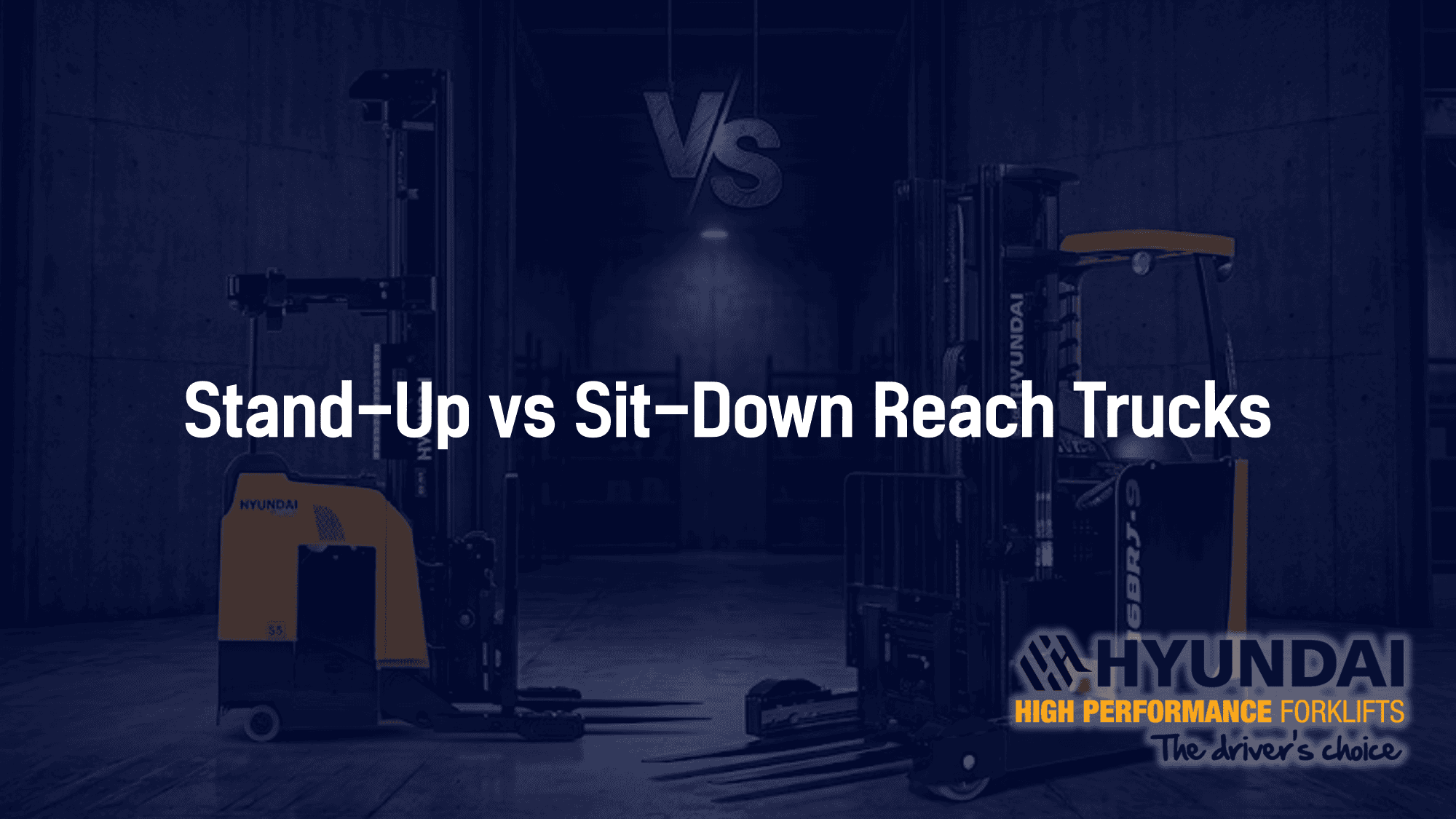
A stand-up reach truck suits frequent stops and short trips,...
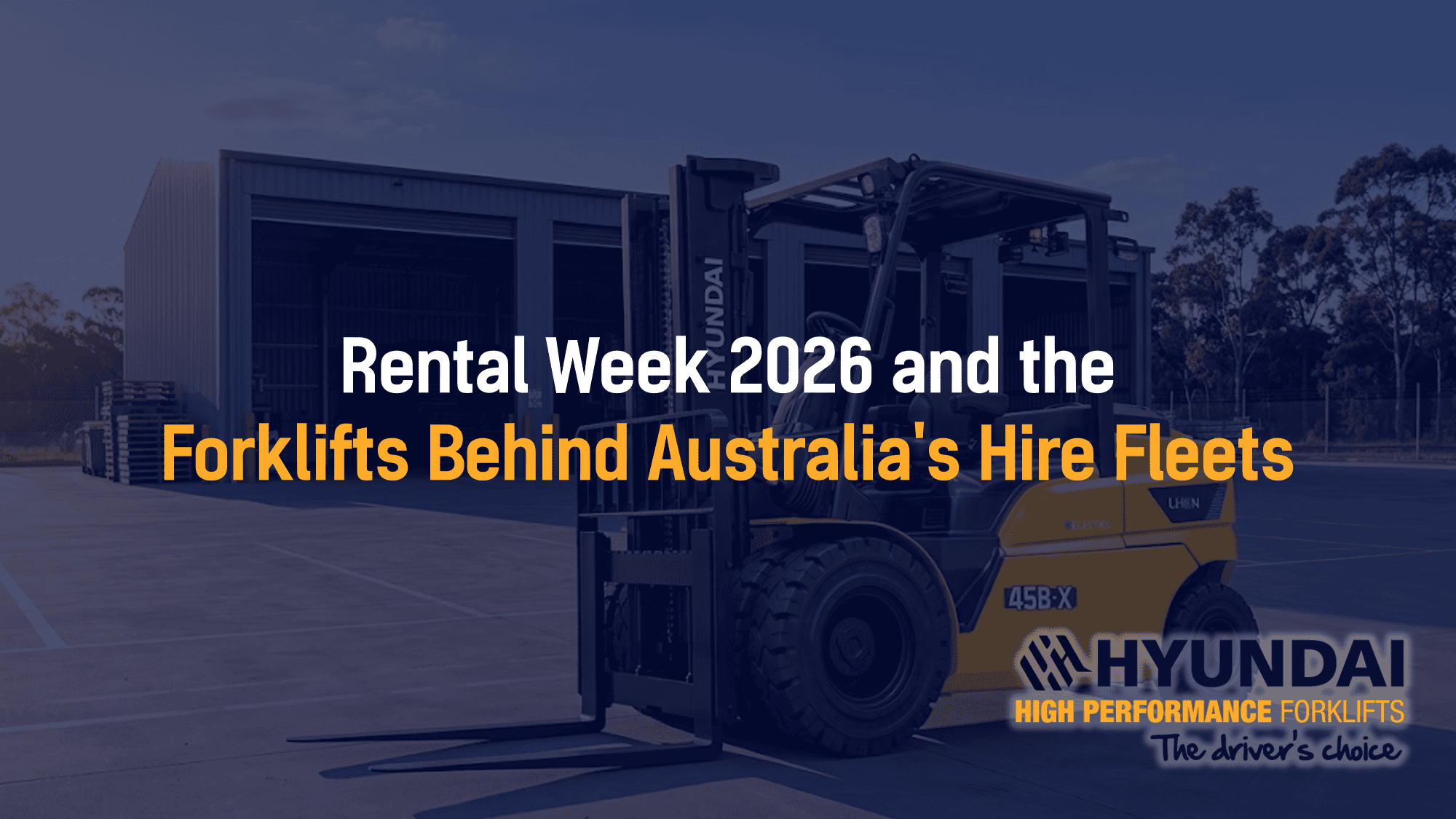
Life in a hire fleet is demanding. A forklift can...
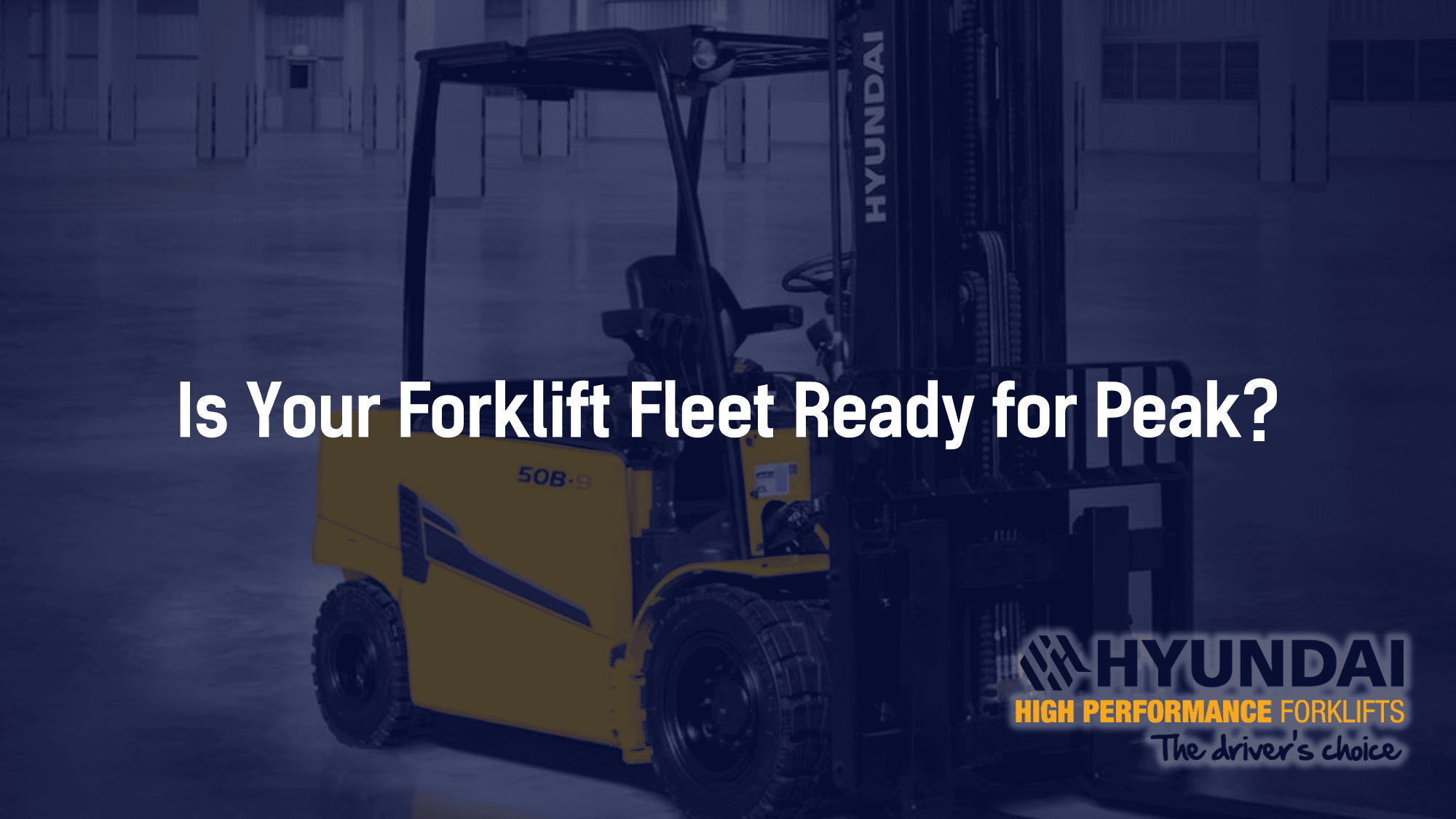
Your forklift fleet is ready for peak season when utilisation...