
In any steel handling forklift application, the wrong truck shows up fast – slower cycle times, unstable handling, higher maintenance and more risk around every lift. A steel coil does not forgive poor equipment choice. Neither does a yard stacked with long product, tight turning zones and abrasive surfaces that punish tyres, brakes and driveline components every shift.
Steel operations demand more than a standard materials handling setup. Choosing the right steel industry forklift means starting from the job itself. Loads are heavier, longer, denser and less predictable than in many warehouse environments. The operating surface may shift between smooth internal floors, rough external yards and transfer points exposed to dust, moisture and heat. That means forklift selection has to start with the job, not just the rated capacity on a brochure.
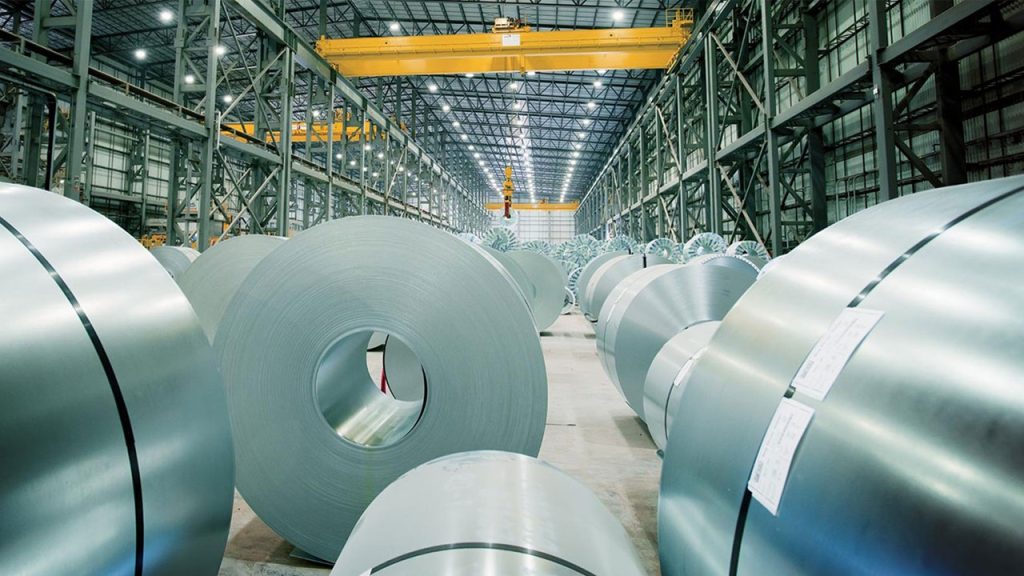
Rolled steel coils stored in a large industrial warehouse with overhead crane access for efficient material handling.
In steel facilities, forklifts often move plate, coil, pipe, billets, mesh, sheet packs and fabricated sections. Those loads behave differently. A compact load can be extremely heavy for its footprint. A long load is a different problem, blocking visibility and increasing swing risk. It also shifts the centre of gravity in a big way. Add uneven ground or narrow aisle movement and the margin for error gets even smaller.
This is why steel handling fleets put durability and control first, then speed. Throughput still matters, but not at the expense of stability, component life or operator confidence. A forklift in this environment needs a strong chassis, dependable mast, consistent hydraulic performance and braking that holds up under real production pressure.
A steel industry forklift should be specified around six core factors – load dimensions, lift height, travel distance, attachment requirements, ground surface, and material flow pattern. Matching those factors to your site is what separates a productive machine from one that looks right on paper but underperforms in practice.
Capacity alone is not enough. A forklift rated for a certain weight may still be poorly matched if the load centre shifts, the mast configuration changes or an attachment reduces residual capacity. In steel operations, that detail shows up quickly.
Material flow determines the type of machine you need. Some steel businesses require high-capacity internal handling for repeatable movements between production stages. Others need yard-based forklifts built to handle rough terrain, variable weather and heavy outbound loading. Some operations need both, which is where fleet planning becomes more important than selecting a single high-spec unit.
A forklift rated for a certain weight may not safely handle that same weight once a coil ram, fork positioner or specialised attachment is fitted. The attachment adds weight and can push the load centre forward, reducing effective capacity. That is not a minor technicality. It can be the difference between a productive machine and one that is underspecified from day one.
Long loads create another issue. Pipe, structural steel and bundled sections can affect balance and manoeuvrability in ways that are not obvious until the forklift is on site. In these cases, mast visibility, carriage stability and steering response can matter as much as headline lifting power.
There is no one-size-fits-all answer here. Diesel forklifts remain a practical fit for many outdoor steel yards where long run times, high loads and demanding surfaces are part of daily work. They are well suited to heavy-duty handling and can be a strong option where refuelling convenience and sustained output matter most.
LPG can suit mixed indoor-outdoor use where operators need flexibility and quick refuelling. Electric forklifts are increasingly relevant as battery technology improves, especially where businesses want lower local emissions, reduced noise and strong torque delivery. In the right application, a high-performance electric unit can be a serious industrial asset rather than a compromise.
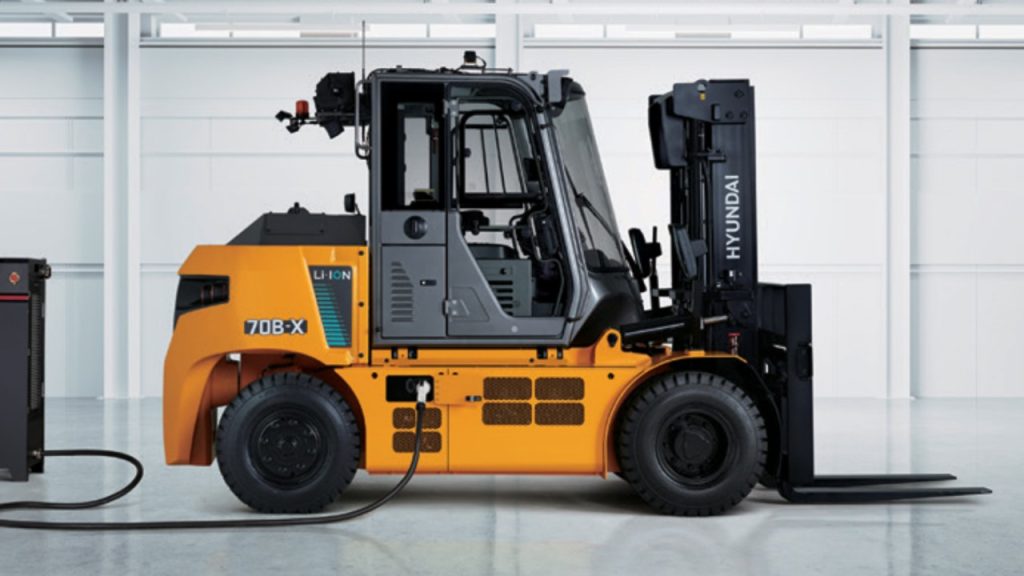
Hyundai 70B-X electric forklift with lithium-ion power for heavy-duty indoor steel handling applications.
The key is to assess shift length, charging or refuelling access, indoor air quality requirements, maintenance expectations and total operating cost. The best power source is the one that matches your site reality, not the trend of the moment.
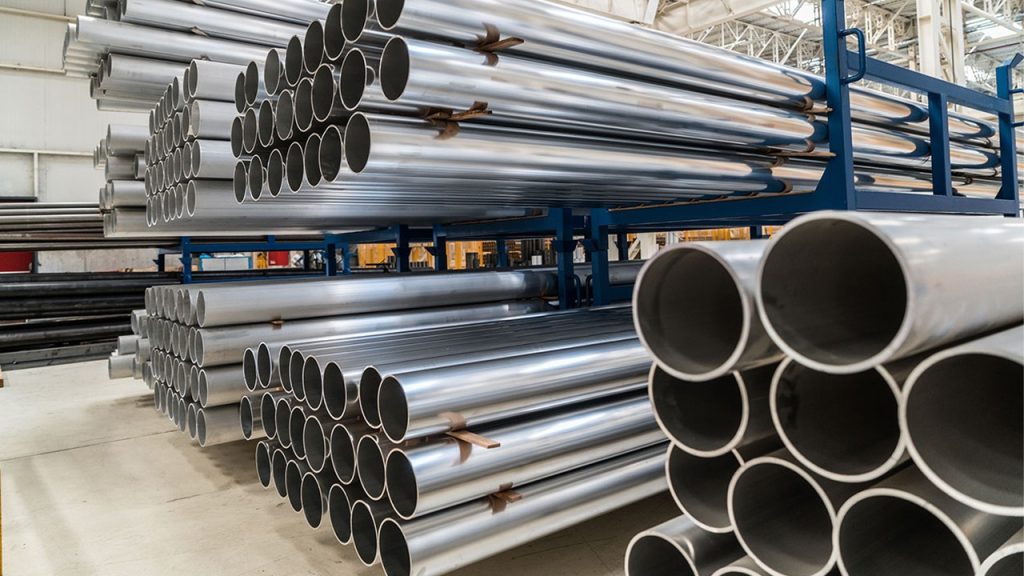
Organized steel pipe and tube racking system designed for warehouse storage and long-product access.
In steel environments, attachments are not an afterthought. They are often central to safe and efficient handling. Coil rams, fork positioners, side shifters and specialised load supports can improve placement accuracy, reduce product damage and cut manual intervention. They can also slow a machine down or reduce residual capacity if they are not selected properly.
That is why attachment choice needs to happen during forklift specification, not after delivery. The forklift, mast, hydraulics and attachment should be treated as one working system. If they are matched correctly, operators get better control and the business gets cleaner cycle times. If they are mismatched, the problems usually show up in maintenance, safety incidents or operator workarounds.
Steel sites are busy, high-risk environments. Operators need clear sightlines when approaching racks, loading trucks or moving awkward product through shared traffic zones. Mast choice affects both lift capability and visibility. A taller mast may be necessary for storage or transfer requirements, but it can also change stability, residual capacity and forward vision.
That trade-off needs to be managed carefully. If the machine spends most of its day at lower heights, an oversized mast may create compromises without delivering much value. If your operation depends on high stacking or multi-level storage, then mast performance becomes a core part of the business case.
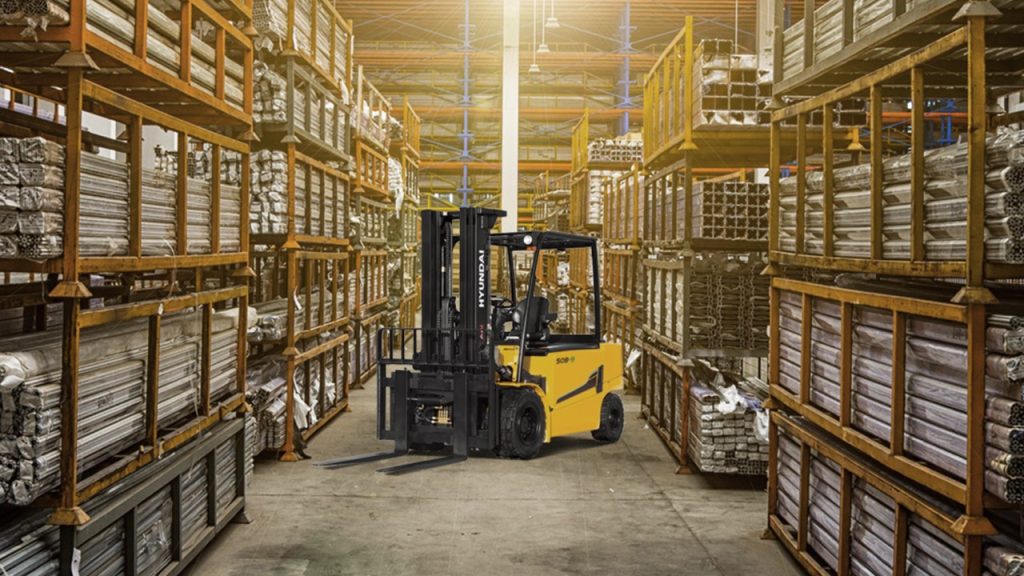
Steel pipes and tubes stored in a long-product yard where forklifts are used for handling and transport.
Steel facilities are hard on running gear. Rough yards, steel debris, wet patches and repeated heavy braking all accelerate wear. Tyre selection has a direct impact on traction, ride quality, operator comfort and surface durability. Cushion tyres may work in some controlled indoor settings, while pneumatic options are often better suited to external yards and uneven terrain.
Braking performance also deserves close attention. A forklift moving dense product in a busy work zone needs predictable stopping power and stable handling under load. That is especially true on gradients, during trailer loading or in wet conditions. Cutting corners here usually costs more later, whether in downtime, tyre replacement or incident risk.
A steel forklift that sits idle waiting for parts or diagnostics is not just a workshop problem. It affects dispatch, labour planning and customer commitments. That is why support should be considered part of the forklift package from the start.
For many Australian businesses, local parts access, technician coverage and responsive troubleshooting are as important as machine specification. Smart service tools such as remote fault finding can shorten the path from issue to repair, but only if they are backed by a dealer and service network that understands industrial urgency. Hyundai Material Handling Australia positions this as part of the full equipment lifecycle, which is the right way to think about it in high-demand sectors like steel.
Many steel operators do not need one forklift. They need a mix of machines across yard handling, production support, loading and warehouse movement. When that fleet grows over time without a clear plan, inefficiency follows. You end up with overlapping capacities, inconsistent controls, patchy maintenance histories and equipment that is either oversized or underused.
A more effective approach is to map each task by load type, weight, travel path and operating frequency. That often reveals where a high-capacity forklift is essential, where a smaller unit can improve manoeuvrability, and where electric equipment may reduce running costs in enclosed areas. It also helps procurement teams look beyond upfront price and compare value over the life of the fleet.
Training and procedures matter, but they cannot compensate for poorly matched equipment. In steel handling, safety starts with the right capacity, attachment integration, visibility, braking and stability. Operator comfort also has a direct impact on safety. If a forklift is fatiguing to drive, difficult to see out of or inconsistent under load, that will affect performance over a long shift.
The strongest forklift decisions usually come from a proper site assessment. That means reviewing your heaviest and most awkward loads, measuring aisle widths and yard conditions, checking lift heights, confirming attachment requirements and understanding the pressure points in your daily throughput.
From there, the discussion should move to total cost of ownership. Fuel or battery strategy, maintenance intervals, tyre life, service response, operator acceptance and resale value all shape the real return on investment. A lower purchase price can look less attractive once downtime and premature wear enter the picture.
The right forklift for steel is rarely the cheapest unit and it is not always the biggest. It is the machine that keeps product moving safely, stands up to the environment and fits into a support model that protects uptime when production cannot wait.
If your steel operation is pushing equipment hard, that is not a reason to accept avoidable downtime. It is a reason to be more precise about what the forklift needs to do every day, every shift, on your site.
Diesel forklifts for mining applications face extreme conditions that standard...
A forklift fleet rarely underperforms because of one bad machine....
A near miss in a warehouse rarely comes down to...