
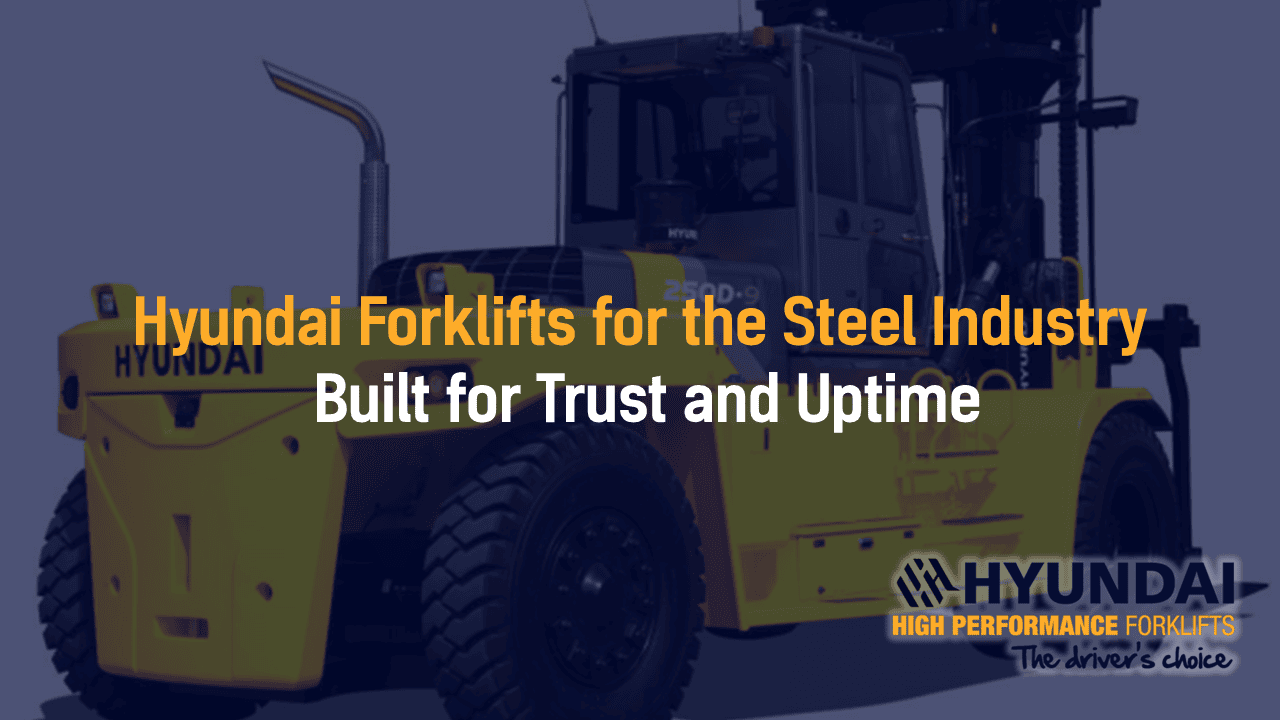
A forklift that handles steel does not get much margin for error. Long loads, shifting centres of gravity, abrasive environments and tight production schedules expose weak equipment quickly. That is why conversations about trust and reliability in steel forklift operations are not really about badges or brochure claims – especially when Hyundai forklifts are working in the steel industry. They are about whether a machine can hold up under pressure, protect operators and keep throughput moving when the site is flat out. You can see how this plays out in real applications on our dedicated Hyundai steel industry page.
For steel processors, fabricators, stockholders and industrial warehouses, the right forklift decision sits at the intersection of capacity, stability, serviceability and support. Price matters, but downtime costs more. A machine that looks competitive on day one can become expensive fast. If it struggles with attachment loads, needs frequent repairs or lacks responsive local service, costs escalate quickly.
Steel operations are harder on equipment than many general warehouse tasks. Loads are often dense, awkward and unforgiving. Coil, billet, pipe, sheet and fabricated product all place different demands on a forklift, and those demands reach beyond rated lift capacity.
In this environment, trust is earned through predictable performance. Operators need clear visibility, stable braking and confident hydraulic response. Fleet managers need machines that start every shift, tolerate harsh operating conditions and do not create a string of maintenance interruptions. Procurement teams need confidence that the forklift selected today will still make commercial sense over the life of the asset.
That is where Hyundai forklifts stand out when they are matched properly to the application. The conversation is less about a single universal machine and more about selecting the right diesel, LPG or electric platform for the duty cycle, load profile and site layout. Reliability is never just a product feature. It comes from the combined effect of engineering, component quality, correct specification and aftersales support.
In Hyundai’s range, that translates into distinct options for heavy-duty diesel steel handling, flexible LPG units and increasingly capable electric forklifts designed for indoor and mixed environments.
Trust in a forklift brand is practical. It comes from evidence on the floor, not marketing language. For steel applications, that usually starts with the frame and mast design, because these areas absorb real punishment over time. Machines working around steel racks, uneven yards, loading zones and heavy stock movement need structural integrity that holds up under repeated stress.
Just as important is drivetrain and hydraulic consistency. A forklift can have the headline capacity you need, but if the power delivery is poor under load or the hydraulics feel abrupt, productivity and safety both suffer. In steel operations, smooth control matters because a small misjudgement can damage product, infrastructure or attachments.
Operator confidence also plays a direct role in reliability. A machine that is comfortable, predictable and easy to control tends to be used better. Fatigue drops. Handling improves. Incidents become less likely. Over a full fleet, those factors contribute to lower wear and more stable operating costs.
A dependable forklift is not just a factory outcome. Local parts access, technical expertise and fast service response are part of the reliability equation. Even high-quality machines need planned maintenance, and when an unexpected issue appears, speed matters.
For Australian operators, this is especially relevant where sites are balancing metro distribution demands with heavy industrial applications. A forklift that suits steel plant in Melbourne or Brisbane still needs service backing that understands the urgency of missed shifts, delayed dispatch and production bottlenecks. Reliability in practice means the equipment is supported properly after delivery, not just well specified at the point of sale.
There is no single answer for every steel business because the job can vary sharply from one site to the next. Some operations move palletised finished goods indoors. Others handle long and irregular loads in open yards. Some need high-capacity diesel forklifts for demanding outdoor work, while others benefit from LPG models in mixed indoor-outdoor environments.
Hyundai’s material handling range gives businesses room to match the machine to the task rather than force the task to fit the machine. For heavy and continuous duty, high‑capacity diesel forklifts are often the natural fit because they deliver strong torque, solid outdoor performance and the stamina needed for long shifts. In Hyundai’s range, models such as the 160D suit demanding yard and loading work, while larger units like the 180D and 250D give steel operations headroom for heavier coils, long product and more intensive duty cycles.
In operations where emissions, ventilation or mixed-use flexibility matter, LPG can be a sensible option. Electric forklifts are also becoming more relevant in parts of the steel supply chain, particularly where indoor handling, lower noise and lower routine maintenance are priorities. That said, electric is not automatically the right answer for every steel site. It depends on load weight, attachment requirements, operating hours, charging strategy and environmental conditions. Reliability improves when the power source fits the real duty cycle, not when a business chases trends.
One of the biggest mistakes in steel operations is choosing capacity based only on the stated weight of the product. Attachments such as fork positioners, clamps or specialised steel handling tools can reduce effective capacity. Load length and load centre also change the equation.
A forklift that appears suitable on paper may operate too close to its limits in real conditions. That affects stability, tyre wear, mast stress and operator confidence. A better approach is to assess the full handling scenario – including attachment weight, lift height, surface conditions and shift intensity – before selecting the model. This is where trust starts, because a properly matched machine is more likely to perform reliably year after year.
For a more detailed checklist on how to specify a forklift around real steel industry conditions, see our Forklift Selection Guide for the Steel Industry.
Durability matters in steel environments, but uptime usually hurts operations more than anything else. Even a hevily built machine causes problems when servicing is difficult, diagnostics are slow or replacement parts are hard to source.
Reliable forklift fleets tend to share the same characteristics. They are easy to maintain, supported by clear service pathways and monitored before small issues become major breakdowns. Smart service technology, remote fault finding and strong technician support can reduce disruption significantly, especially for operations where every hour of downtime affects despatch windows or production flow.
That is why fleet decisions should look beyond the purchase price. Total operating value comes from the machine’s ability to stay productive, the service partner’s ability to keep it running and the supplier’s ability to support the equipment over time. Hyundai Material Handling Australia positions this as a full-service relationship rather than a one-off transaction, and that matters for steel operators who cannot afford equipment uncertainty.
On a steel site, reliability shows up in ordinary moments. The forklift starts at the beginning of the shift without fuss. It remains stable with awkward loads. Hydraulics stay precise through repetitive movements. The operator can work confidently around stock, trucks and racking. Maintenance is planned rather than reactive.
That consistency is what builds trust across operations teams. It gives supervisors confidence in scheduling. It helps safety leaders reduce exposure to avoidable risk. For procurement teams, it supports investment in assets with long-term value rather than short-term appeal.
There is also a commercial benefit that is easy to overlook. Reliable forklifts support better fleet utilisation. When machines are dependable, businesses can plan more accurately, avoid overcompensating with extra units and reduce the hidden cost of operational buffers built around unreliable equipment.
If a business is assessing forklifts for steel handling, the right questions are straightforward. Can the model handle the true load profile with the intended attachment? Is it suited to indoor, outdoor or mixed operation? How will it perform across a full shift pattern? What service coverage and parts support sit behind the machine? And how quickly can problems be diagnosed and resolved if downtime appears?
The honest answer is that reliability depends on fit. A well-supported mid-range machine matched correctly can outperform a larger, more expensive unit that is poorly specified. Likewise, the strongest forklift on paper can disappoint if service access is weak or operator needs are ignored.
A proper evaluation should include site conditions, operator feedback, service planning and lifecycle cost, not just rated capacity. Test drives and application-specific consultation are valuable here because they expose handling behaviour that a spec sheet cannot fully explain.
For many Australian steel operations, that often means pairing high‑capacity diesel models such as the Hyundai 160D, 180D or 250D with application‑specific attachments and local service support, so the fleet can handle today’s loads and tomorrow’s growth with confidence.
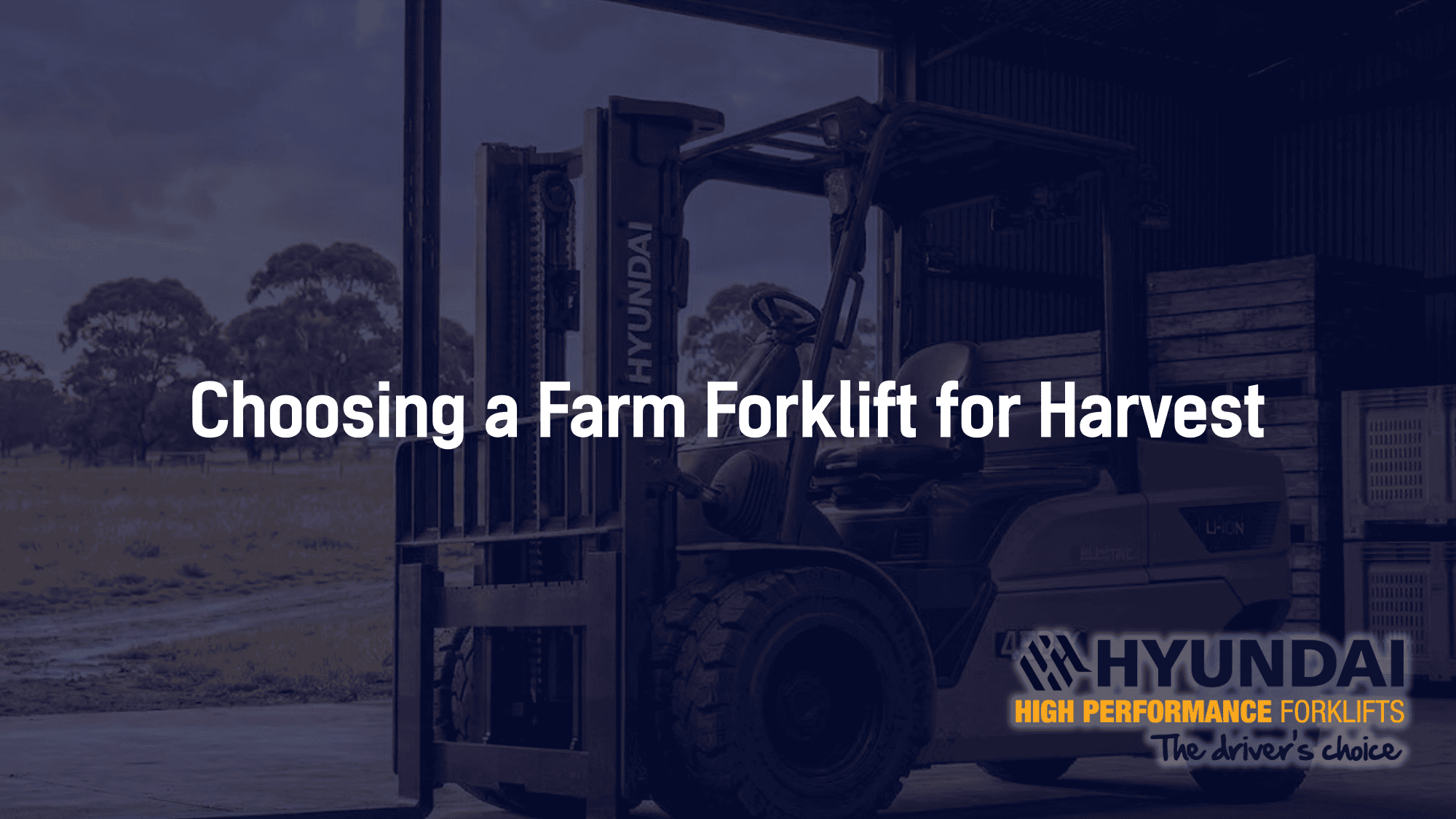
A farm forklift should match your loads, your ground conditions...
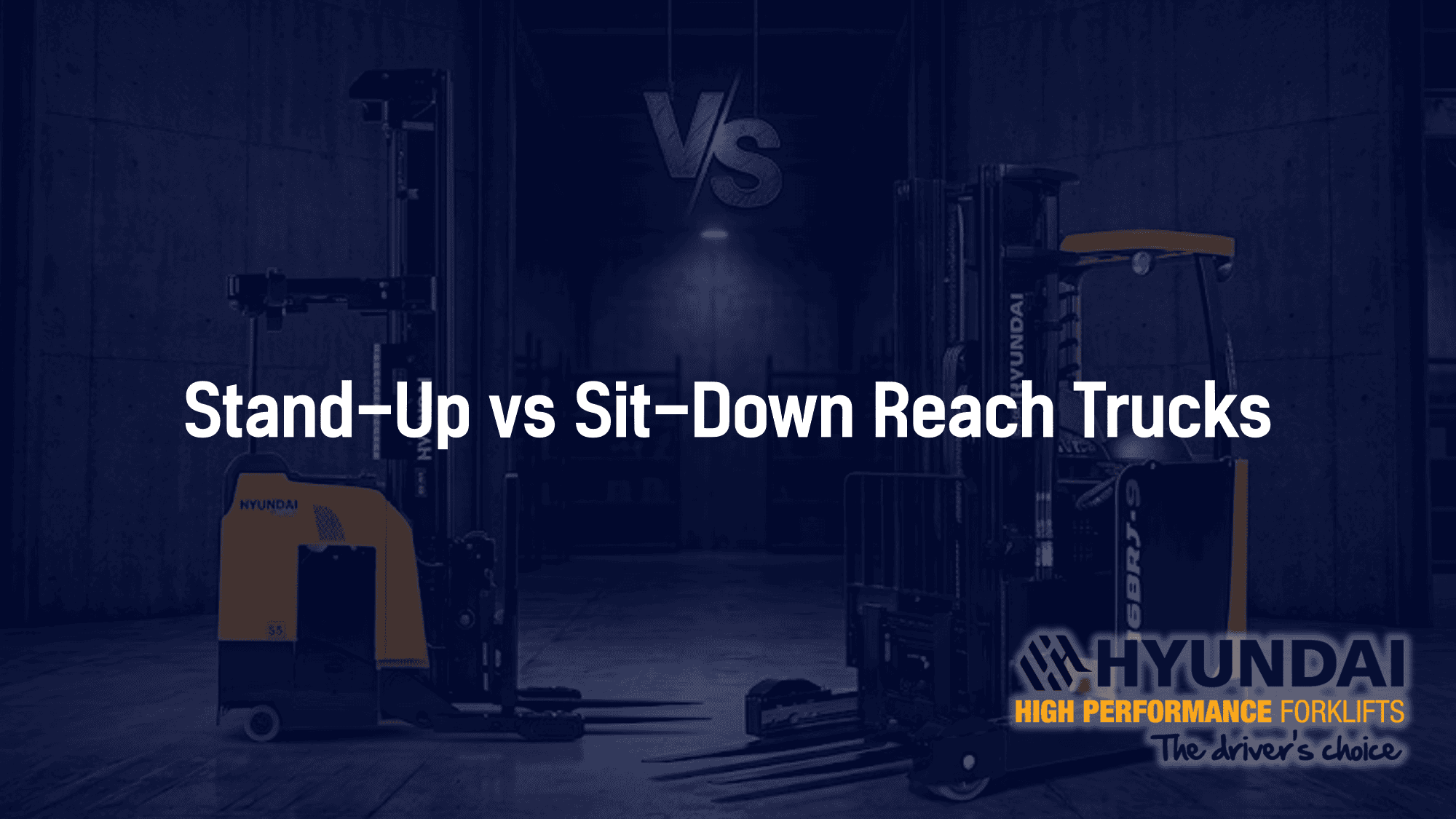
A stand-up reach truck suits frequent stops and short trips,...
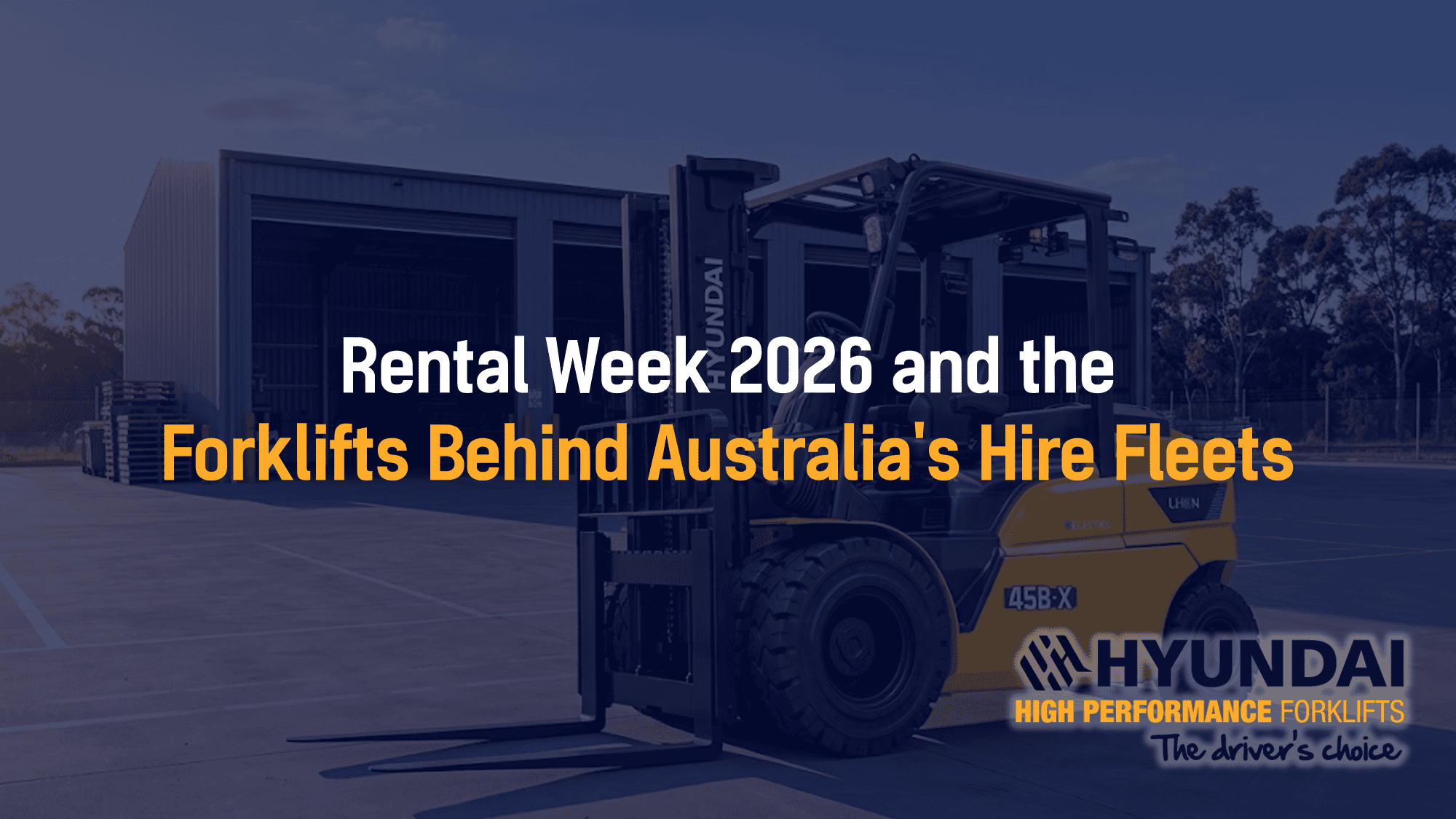
Life in a hire fleet is demanding. A forklift can...