
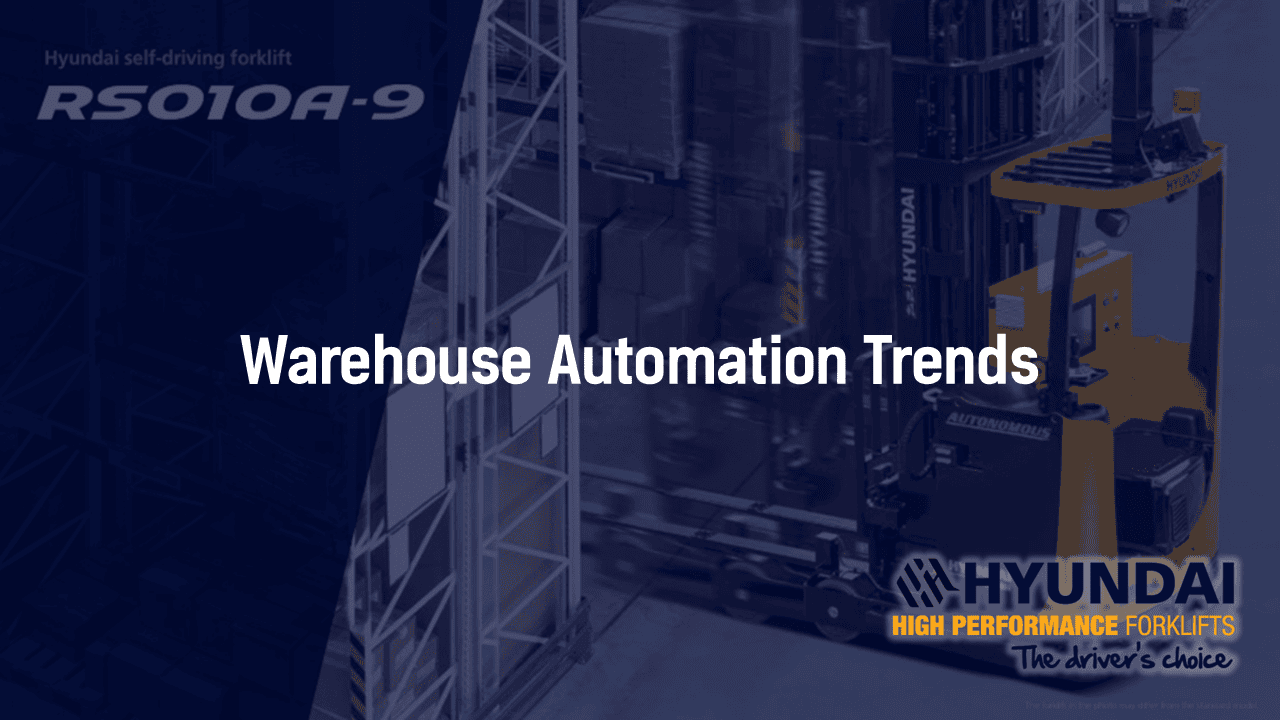
Many Australian logistics companies and supply chain managers exploring next-generation warehouse automation often face challenges due to the sheer volume of market information. Global case studies and highly advanced technical solutions frequently focus on mega-infrastructure layouts, making it difficult to find realistic benchmarks that align with the unique operational scale of local Australian facilities. Furthermore, headline-grabbing media articles about AI and autonomous robots rarely provide clear guidance for immediate practical needs, such as building a concrete business case for the CFO, optimizing specific SKU picking efficiency, or ensuring the safe and productive redeployment of existing labor.
CeMAT Australia 2026 serves as a premier stage to witness these overarching shifts and future trends shaping the logistics landscape. While the 17 specialized sessions on the very first day of the event will feature various industry speakers discussing advanced concepts – ranging from AI implementation strategies to the economic viability of AMRs/AGVs, modular conveyor engineering, and high-voltage lithium-ion battery reliability- Hyundai Material Handling Australia is on the exhibition floor to bring these ideas down to earth. We are participating with our stand specifically to ease the immediate operational burdens and practical anxieties of today’s forklift fleet operators. If you are looking to move past the complex theories presented on stage and find clear, achievable goals with tangible Return on Investment (ROI) simulations tailored to your floor, we invite you to discover the practical answers firsthand at the Hyundai Material Handling stand.
Today, Australian warehouse managers, supply chain directors, and COOs are more attentive than ever to AI-driven warehouse innovations. This is far from mere curiosity about new technology. The Australian logistics sector currently faces a chronic and severe labor shortage, coupled with some of the strictest Workplace Health and Safety (WHS) regulations in the world. With massive legal and financial risks tied to any on-site safety incident, logistics leaders are caught in a double bind: filling operational gaps while ensuring absolute compliance. In this challenging environment, smart technology has evolved from an optional upgrade into an essential strategy for operational resilience.
For those managing legacy warehouse management systems (WMS), a recurring question arises when hitting the limits of increasingly complex supply chains: to what extent can AI assist on-site teams or streamline problem-solving? In this regard, the upcoming session at CeMAT Australia 2026 by Darren O’Connor of Infeos, titled “Transitioning from Reactive to Intelligent Warehouse Operations,” provides an excellent starting point to address these questions.
Traditionally, conventional WMS layouts often disrupted operational flow with cumbersome verification procedures whenever unexpected confusion occurred on the floor. In contrast, the upcoming sessions will highlight smart software solutions designed to connect real-time floor signals, smoothly reducing unnecessary wait times and repetitive administrative hurdles. Resolving these minor delays and bottlenecks built up during each shift is a crucial key to boosting overall logistics efficiency and preventing hidden financial losses.
Furthermore, the event will showcase various technology trends aimed at lightening the day-to-day workload for both logistics leaders and on-site operators. These include Dexory’s intelligence technology, which makes tedious manual stocktaking much more efficient, and EPG’s ‘AURA’ platform, designed to support workers so they can make safer and easier decisions amid complex warehouse conditions. If you are seeking practical breakthroughs to ease workplace stress and drive efficiency within an increasingly demanding operational environment, the smart supportive technologies presented at these CeMAT sessions are well worth your attention.
Managing a warehouse in Australia keeps getting tougher. Finding reliable staff is a constant struggle, and the country’s strict workplace safety laws (WHS) mean any on-site accident comes with massive financial and legal headaches. That is why smart logistics leaders are looking for practical ways to keep the floor moving safely without adding more stress to their teams. If you are currently running a traditional warehouse setup, you might wonder: Can new tech actually help my team on the ground, or will it just complicate things?
The robotics sessions on Day 1 at CeMAT Australia 2026 are aimed right at this question, surfacing the real-world tension of how to make different machines perform together as part of a broader warehouse automation strategy. For instance, Jennifer Jia from Pudu Robotics will present on how vendor innovations have drastically compressed AMR deployment timelines. Following this, Prashant Trivedi from Botsync will host a session titled “Beyond Robots,” shifting the focus to the orchestration software layer that coordinates robots, conveyors, humans, and WMS in real time to prevent costly bottlenecks.
Finally, Alan Wang from Heli Material Handling Oceania will discuss high-density AGV stacking and 4-way shuttle systems, offering immediate commercial relevance for local operations already at 85–90% storage utilisation with no room to expand their physical footprint. While these advanced theories and timeline claims on stage deserve careful scrutiny, the smartest move for local operations on the floor is simply letting different machines do what they do best. Automated Guided Vehicles (AGVs) act as your reliable heavy-lifters for fixed, repetitive paths, while Autonomous Mobile Robots (AMRs) serve as flexible helpers to steer around temporary obstacles.
This is exactly where Hyundai’s AGV range offers a distinct advantage for facilities facing these spatial constraints. Unlike third-party automation setups that simply retro-fit guidance systems onto existing trucks, Hyundai’s AGV solutions bring autonomous precision with the added reliability of native integration. From high-voltage lithium-ion batteries and proprietary Battery Management Systems (BMS) to unified fleet management software, the key components are engineered to work together, minimizing the risk of unexpected software drops or hardware conflicts in tight aisles.
When looking into these automated trends, the biggest worry for fleet managers remains system reliability. No one wants an automated truck that stops in the middle of a tight aisle because a mixed bag of third-party parts refused to communicate. This is where the strength of a global brand comes into play. While Hyundai Forklifts Australia operates independently to serve your immediate equipment needs, the broader Hyundai brand name carries a rich heritage in high-tech engineering, including advanced industrial developments from Hyundai Robotics. This shared brand reliability means that for warehouse managers looking toward the future, we offer the potential to deliver a more trusted and integrated service approach, backed by reliable high-voltage lithium-ion batteries and robust fleet management support.
Before signing any contract for new automated equipment, make sure you keep two real-world questions in mind: what is the actual time and cost to connect these new units to your existing software, and what happens operationally when an automated truck meets a manual forklift in a tight aisle? We hope you can find the practical answers to these crucial floor realities while exploring the various insights and sessions at CeMAT Australia 2026.
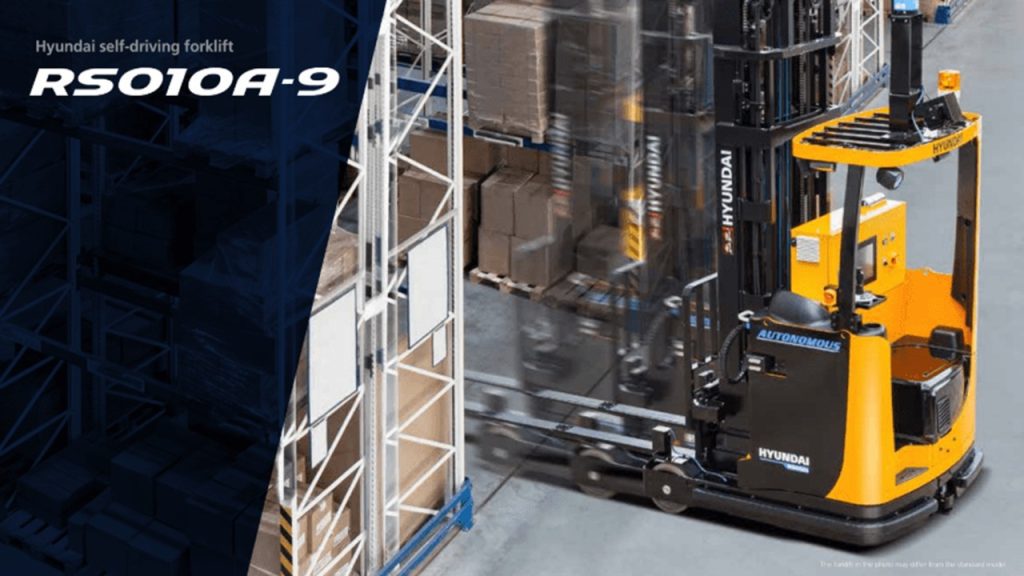
The Hyundai RS010A-9 autonomous forklift operates independently in a high-density warehouse, handling pallets with precision.
While advanced AI and robotics often steal the spotlight, the final block of Day 1 sessions at CeMAT Australia 2026 focuses on what matters most to operations managers running mixed fleets through high-cycle environments: everyday equipment reliability. The afternoon sessions cover practical floor realities, starting with Krishnaram Varadarajan from Emerald Tyre Manufacturers on forklift tyre optimisation to prevent unplanned downtime, followed by Machine Safety Australia’s David Shead and Bradley Henry on integrating compliance early into logistics environments.
However, the session that connects most directly to your daily fleet efficiency is presented by David Cooper from Industrial Batteries Australia. As facilities transition to electric forklifts or integrate AGVs, the energy system ceases to be a supporting component—it becomes the core constraint that either enables or limits your entire operation. Getting the battery chemistry, charging strategy, and Battery Management System (BMS) right is what ensures your capital investment actually delivers consistent productivity.
This focus on reliable energy systems highlights the practical design of Hyundai’s high-voltage lithium-ion B-X Series. Operating at a powerful 309–348V range with a rated cycle life of over 3,500 cycles, this series is engineered for a dependable 10-year service expectation in demanding environments. Rather than piecing together separate components, Hyundai’s battery pairs natively with smart chargers that communicate directly with the BMS, automatically adjusting voltage, current, and temperature. This native integration ensures the battery system degrades predictably without introducing unexpected downtime into your busy fleet schedule. Furthermore, real-time fleet performance data surfaces effortlessly through Hi-Mate, Hyundai’s remote management platform, giving operations complete visibility across utilization, fault history, and maintenance timing without the hassle of manual audits.
Taken together, the Day 1 Tech Demo Stage sessions describe an industry at a major inflection point. Software is becoming smarter, deployment windows are shrinking, and the underlying infrastructure—from batteries to safety systems—is being rebuilt around intelligent control. However, automation or a fleet transition applied to an unsupported process does not fix a problem; it merely moves it. The operations that will get the most out of CeMAT Australia 2026 are those that arrive looking for practical answers to their own unique workplace constraints.
Before evaluating any electric forklift or automated platform, keep one crucial operational checkpoint in mind: ask whether the charger, battery, and BMS are native to the system or sourced from separate suppliers. While third-party integrations can work, a native setup is inherently more reliable, produces better data, and is significantly easier to support as your fleet grows.
If you are evaluating lithium-ion fleet transitions, autonomous forklift options, or long-term fleet management strategies, we hope you can find the practical answers to these crucial floor realities while exploring the various insights at CeMAT Australia 2026.
To see these reliable engineering standards in person, feel free to drop by and view the equipment lineup at the Hyundai Forklifts Australia stand (Stand 041) during the show. It is a great opportunity to gather the right data, compare real-world total cost of ownership, and discover what consistent, dependable fleet performance can change about how you plan your capacity.
Businesses looking at high-voltage forklifts often ask about infrastructure, and...
Spec sheets make forklifts easy to compare. Capacity, lift height,...
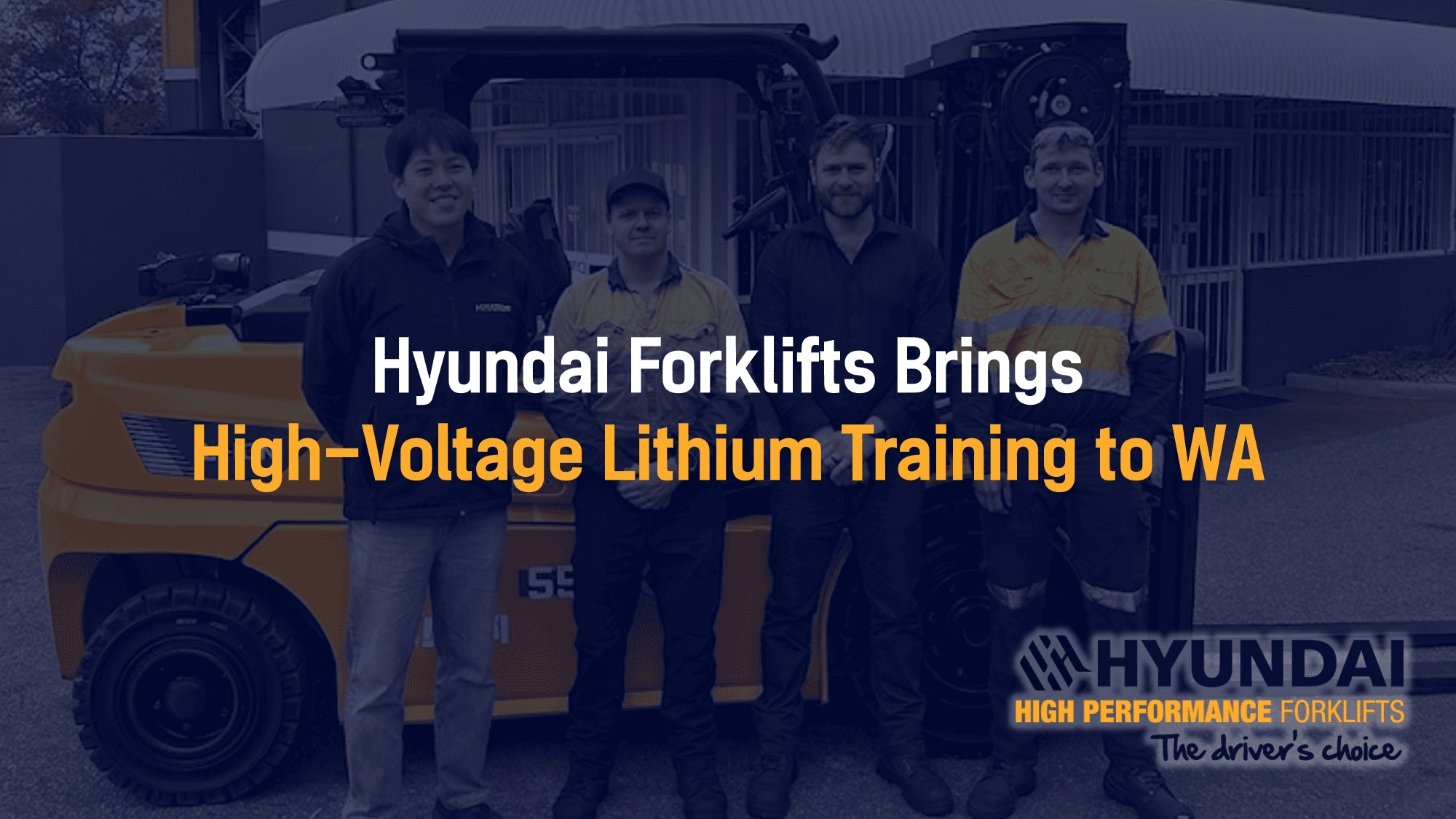
Hyundai Forklifts Australia has delivered its first high-voltage forklift training...