
Warehouse peak season preparation should start in July, not October. The Australian financial year has just reset. Christmas volume is still months away. Hire fleets across your region still sit full. This guide counts the peak season backwards from the December rush. It shows you what to secure before August. That list covers hire contracts, temporary racking, operator licences, and charging capacity. Operators who act early get the equipment they need. Operators who wait take whatever the region has left.
This guide covers what to secure and set up for peak. If you also want to review the fleet you already run, start with our July forklift fleet review guide first. Diagnose the fleet, then procure against the gaps.
Christmas in July is an Australian tradition built on a calendar quirk. Our December Christmas falls in the middle of summer. Roast dinners and mulled wine suit a cold northern Christmas, not a Sydney heatwave. Christmas in July gives Australians the log fires and hearty food that December cannot. Think of it as a taster of December moved to July.
Warehouses run on a different July Christmas. The real Christmas rush builds on the warehouse floor long before shoppers see any decorations. Retail shelves fill in November. By then operators have already made the fleet decisions that decide the season. July is when smart operators start securing the equipment for a rush still five months away.
July also brings its own logistics load. Many businesses buy equipment before 30 June to claim the instant asset write off. That equipment arrives and gets commissioned through early July. So July is rarely a quiet month for capital decisions. It is a natural point to lock in what December will demand.
Peak planning fails when you run it forwards from today. It works when you run it backwards from the December floor. Start with the date the volume hits. Then trace every dependency back to its own deadline.
October to December is when peak volume sits on the floor. Extra units run all day. Operators hold current licences and know the machines. Racking holds the stock. Nothing waits to be booked because the season already runs.
September to October is when the new equipment goes into service. Hire units arrive. Installers fit the racking. Chargers go into place. Operators learn the new machines. All of this depends on orders you locked in during July and August.
July to August is when the floor still looks normal. Nothing physically changes yet. This is when you sign hire contracts while the pool stays full. You measure the layout before the installer calendar fills. You audit licences while there is time to fix a gap. You check the site power supply before an upgrade turns urgent.
Each stage rests on the one below it. A new forklift in Australia takes around twelve weeks to arrive. Operator familiarisation on a new machine takes days, not minutes. Temporary racking needs measuring, ordering, and installing before any extra pallet arrives. Miss the July to August window and every later task compresses against a fixed December deadline.
Three decisions carry the most weight for peak procurement. Each one gets harder and more expensive the longer you wait.
Hire fleets work as a shared resource. Every warehouse in your region draws on the same pool of hire units. That pool empties as peak approaches. A machine you book freely in July can be gone by October.
Reach trucks feel this pressure first. Warehouses hire them often because the workload is seasonal. That same seasonality makes the whole market want them at once. A warehouse adding high density storage wants a reach truck for a set period. Demand peaks and the reach truck pool tightens fastest of all. Our guide to the 16BRJ-9 warehouse reach truck explains why it suits narrow aisle peak work.
Book the specification you need in July. Wait until October and you choose from what nobody else wanted.
Deciding how much to hire against how much to own is a separate question. That balance depends on your year round demand, not just the peak spike. Our July forklift fleet review guide works through the owned to hired ratio in full. Settle that ratio first, then book the seasonal top up here.
Peak often means fitting more pallet positions into the same building. Taller racking and narrower aisles are the usual answer. Many operators treat the racking and the forklift as separate decisions. That is the mistake.
A narrower aisle changes which machine can work in it. A counterbalance forklift runs fine in a wide aisle. It cannot turn and place loads in a narrow one. Force it in and you get slower aisle entry and more steering corrections. You also raise the risk of rack strikes. Plan the racking and the equipment together. Otherwise the new layout throttles the throughput it was meant to create. Our guide to the best equipment for narrow aisles matches machine types to aisle widths.
Confirm the layout in July. That leaves time to hire equipment that actually fits.
Peak brings extra people onto the floor. Casual staff, labour hire, and returning seasonal operators all arrive at once. Every one of them who drives a forklift needs a current High Risk Work Licence in the right class.
The class matters. An LF licence covers standard counterbalance and reach trucks. An order picker needs a separate LO licence. An LF does not authorise LO work. A mixed peak fleet often means you check both. The employer verifies that licence, not the worker. This duty covers labour hire and casual staff too. Our guide to forklift safety on Australian sites sets out the full requirements.
New starters can work before their plastic card arrives. The Notice of Assessment acts as a temporary licence once they pass. The physical card then follows by mail within a few weeks. Run your licence audit in July anyway. Finding an unlicensed operator during a December shift creates a compliance problem and a staffing gap at once.
More trucks need more power. A peak fleet on an off season charging setup creates queues. A truck waiting for a charger cannot move pallets through your busiest week. Charging is where a peak procurement plan often falls down, so it earns its own step.
Start by counting how many trucks need to charge at the same time. The windows your shifts allow decide this, not the fleet size alone. A single shift with a long overnight window needs fewer chargers than the headcount suggests. Multi shift operations need charging built around the shift changeovers.
Check two things before August. First, confirm your switchboard can feed the extra chargers a bigger fleet needs. A supply upgrade is an electrical job with its own lead time. You cannot arrange it in October. Second, decide where the extra chargers physically go. A bay squeezed into a corner adds travel to every top up. It also runs cables across a path that gets busier at peak.
If you are weighing charging across the whole fleet rather than just the peak add ons, our July forklift fleet review guide covers charging capacity as part of the wider review.
Machines you buy or hire for peak are not productive the day they land. A new unit earns its place once operators know it and a pre start routine runs. Build that familiarisation time in before the machine joins the roster. Even an experienced driver needs time on a new truck type or control layout.
Onboarding sits on the boundary between securing a machine and running it. Our July forklift fleet review guide covers the full onboarding routine, including pre start checks and logging the new unit into your maintenance schedule. Secure the equipment here, then onboard it there.
Book in July or early August. Hire pools are still full, you can choose the exact specification you need, and delivery has time to land before the September to October training window. Bookings left until October compete for whatever units remain across the whole region.
Most hire runs by the week or month, so a peak contract typically covers the full peak window rather than a few days. Confirm the term when you book. A machine critical to your December shift is worth securing for the whole season rather than renewing week to week.
Confirm the layout by August and install before the September volume ramp begins. Racking changes the equipment you need, so the layout decision has to come before the hire decision, not after it.
It can. We’re now at the start of the 2026 to 2027 financial year. Eligible small businesses can immediately deduct qualifying assets, but only once the asset is installed and ready for use within the financial year. The permanent extension meant to apply from July 2026 is not yet law, and until it passes the threshold sits far lower. Check current ATO guidance before you plan a peak purchase around it.
Talk to your local Hyundai dealer about peak hire and a fleet plan built around your December floor.
A farm forklift should match your loads, your ground conditions...
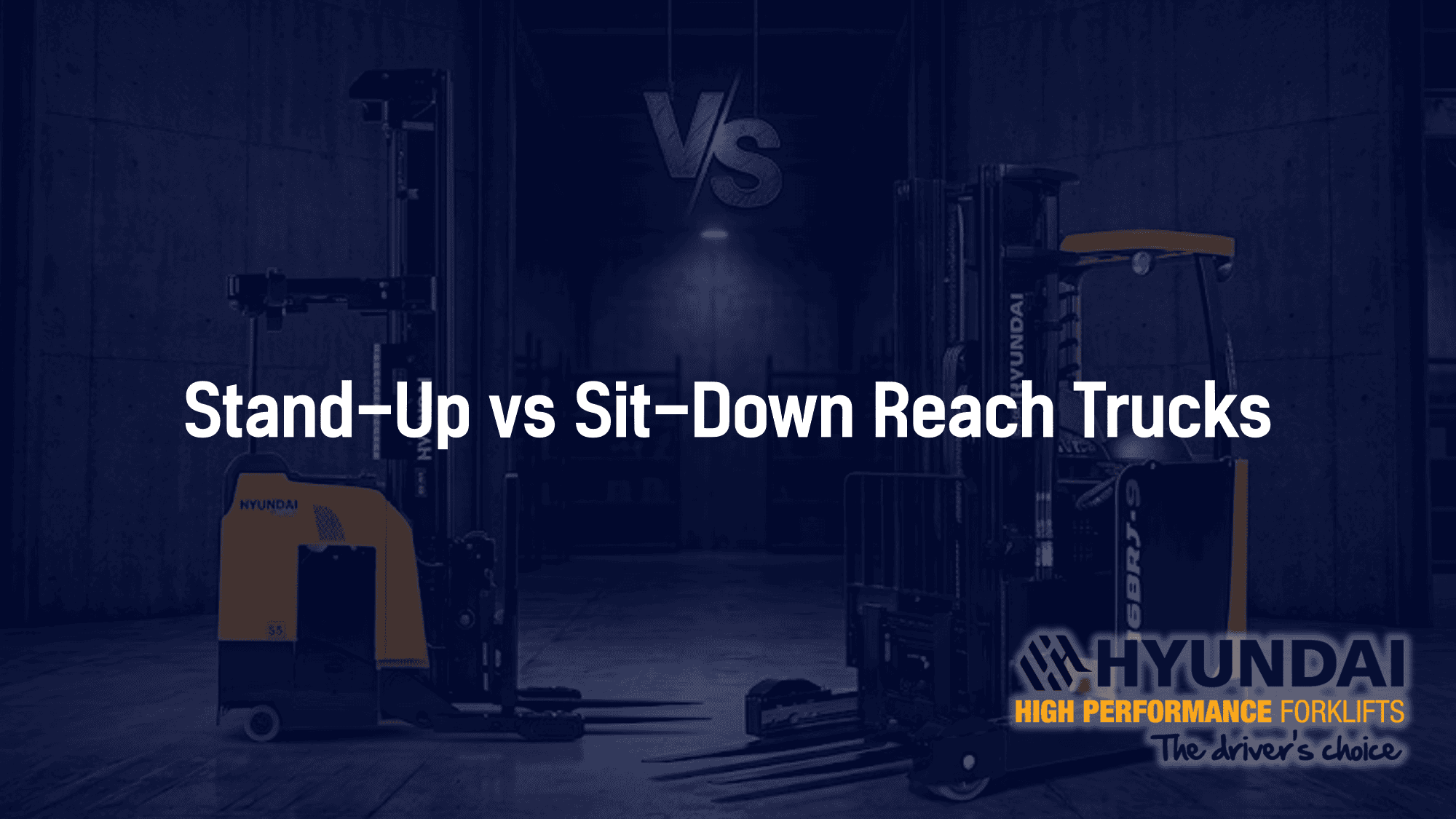
A stand-up reach truck suits frequent stops and short trips,...
Life in a hire fleet is demanding. A forklift can...