
Forklift fleet planning has one window that beats all the others. It falls in early July, when the Australian financial year resets your budget and last season’s problems are still fresh in memory. This guide gives operators a July fleet review checklist. It covers utilisation data, replacement decisions, the hire to owned balance, and onboarding for machines bought at end of financial year. The aim is simple. Review the fleet you already run before the busy months expose its gaps.
The Australian financial year starting on 1 July is what makes this timing local. Your capital and hire spend gets a fresh allocation. Your operators still remember last year’s bottlenecks. That memory is the raw material of a good review, and it fades fast once the floor gets busy.
This guide is about diagnosing the fleet you own. Once you know what to keep, replace, or add, our warehouse peak season preparation guide covers securing and setting up the equipment for December.
Most fleets get reviewed when something breaks. A truck fails during a busy week. A battery stops holding charge. A hire unit gets called in at short notice to cover the gap. Each of these is a reaction, and reactions cost more than plans.
July changes the pattern. Your budget is signed off, so capital and hire spend has a home. Your pain points are fresh, because last season is still in recent memory. Peak is on the horizon, but not yet on the floor. That combination rarely lines up at any other time of year.
The value of reviewing now is that it leaves room to act. A review that flags a worn out unit in July can still trigger a replacement before peak. The same finding in October is just a problem you have to work around. July is early enough that the review’s conclusions can still change what sits on your floor in December.
| Month | What it drives |
|---|---|
| Oct to Dec | Peak volume on the floor |
| Sep to Oct | Extra units, hire fleet, trained operators |
| Jul to Aug | Fleet review, orders, hire contracts locked |
Review in July and you shape the fleet. Review in September and the fleet shapes you.
Four checks turn a vague intention into a plan. Run them in order. Each one feeds the next. Skip the first and the rest run on guesswork.
Start with hours, downtime events, and utilisation per machine. One truck on double shifts while another sits idle is a fleet problem, not a machine problem. Without visibility, that imbalance can run for months unnoticed.
Look for three numbers first. Average engine or key hours per unit. Downtime hours per month. The gap between your highest used and lowest used truck. A wide gap usually means the fleet is misallocated rather than undersized. That distinction matters. A misallocated fleet needs rebalancing, not a new purchase.
Hi-MATE, our remote fleet monitoring platform, surfaces this data without a manual audit. It reports utilisation, fault history, and maintenance timing across every connected unit. The review starts from facts rather than hunches. For the full method behind reading fleet data, our guide to electric forklift fleet management covers it in depth.
Some machines announce their age. Others hide it. Watch for repeated breakdowns, rising service frequency, and operators who quietly avoid a particular unit. These are signals the machine no longer fits the job. Age alone is not the trigger.
A practical signal is the service cost trend. When the yearly spend on one unit keeps rising while its availability keeps falling, the economics tip toward replacement. Read that trend alongside application fit. A truck that suited your layout two years ago can become the bottleneck once loads, aisles, or shift patterns change. A machine can be mechanically sound and still be the wrong tool for the current job.
Replacement timing is rarely obvious. Extending asset life protects capital in the short term. In a high demand fleet, delayed replacement often costs more through downtime than it saves on deferral. The seven fleet management strategies guide weighs replacement against repair in full.
The new financial year is the moment to test whether your owned to hired ratio still fits demand. Stable daily work suits ownership. Seasonal or project spikes suit hire. Locking capital into a machine that sits idle for eight months of the year is an expensive habit.
Map your known daily demand as a baseline. Treat everything above that line as a hire candidate. This keeps capital in the trucks you run every shift and moves the variable load onto flexible hire. Many Australian sites land on a blend. Core units owned, peak capacity hired.
Which route fits a given machine is its own decision. Our guide to forklift leasing versus buying works through utilisation, cash flow, and asset control. July is simply when the ratio deserves a fresh look, because the budget and the peak forecast arrive together.
A fleet plan that ignores power is half a plan. Once your review sets which units you keep, replace, or redeploy, the fleet has a shape, and the charging has to match it. If that shape adds electric units, the chargers and the site supply have to scale with them.
The core question is how many trucks need to charge at the same time in the windows your shifts actually allow. A single shift with a long overnight window needs fewer chargers than the fleet size suggests. Multi shift operations need charging built around shift changeovers. Check the site supply before you commit, because a step up to a peak season bank can exceed what your switchboard delivers.
The physical build out of that plan belongs to peak procurement. Our warehouse peak season preparation guide covers switchboard capacity, charger placement, and scaling the bay for a bigger fleet in full.
Machines bought in the June EOFY window often land in July. A new unit is not productive the day it arrives. It is productive once operators are familiar with it and a pre start routine is running.
Build familiarisation in before the machine joins the roster. Even an experienced driver needs time on a new truck type, battery system, or control layout. A driver moving from a diesel counterbalance to a high voltage electric unit meets different throttle response, different braking feel, and a different charging routine. A short structured handover prevents the machine being worked around rather than worked with.
Set the pre start check from day one. The law requires a pre start safety check at the start of each shift and whenever an operator uses a different forklift. A consistent check is a safety control and the evidence that you met your duty. Our guide to forklift safety on Australian sites covers that duty in full.
Record the new unit in your maintenance schedule immediately. A machine delivered in July with its first service logged against a July baseline is easier to track than one added retrospectively after a fault.
The four checks and the onboarding step are not separate tasks. They form one chain. Utilisation data reveals the gaps. The gaps point to which units to replace or redeploy. The replace or redeploy decision sets the hire to owned balance. The balance sets how many chargers and how much supply the site needs. Onboarding turns the new arrivals into working units before peak.
Run that chain in July and the review’s findings can still change the fleet before peak. Run it in September and each conclusion gets compressed against a deadline. A review only pays off when there is time left to act on what it finds. That is the whole case for July.
Once the review is done, the securing and setup work begins. Our warehouse peak season preparation guide picks up there, covering hire bookings, temporary racking, and licence checks for the season ahead.
The strongest reviews remove guesswork. Match each machine to its real task. Maintain on time. Monitor with data. Back it with responsive support. A fleet planned this way stops being a daily worry and starts driving throughput.
This is where a full service partner earns its place. Equipment, hire, servicing, parts, battery solutions, and fleet planning under one relationship turns a review into action rather than a stack of quotes from different suppliers. Our national dealer network puts that support close to your site, wherever in Australia you operate. Local stock, local technicians, and local hire capacity mean the plan you build in July can be delivered in the weeks that follow.
Review at the start of the new financial year, when a site changes layout, and when you take on new contract volume. Each of these shifts the demand your fleet has to meet. July suits most Australian operators because the budget reset and peak planning line up in the same window.
Map every lease end date against your peak calendar. A lease expiring in November forces a decision during your busiest month. Renew, replace, or transition early in July while you still have room to choose rather than react.
A single site with clean utilisation data can be reviewed in a few days. Multi site fleets take longer, mostly in gathering the data. Starting the review in July gives that gathering time before any peak pressure arrives.
Buy for demand you carry all year. Hire for the volume that only appears at peak. Most sites use both. Owning the baseline fleet and hiring the seasonal spike keeps capital productive and avoids idle units in the quiet months.
Talk to us about a fleet review built around your utilisation, your shift patterns, and your peak.
A farm forklift should match your loads, your ground conditions...
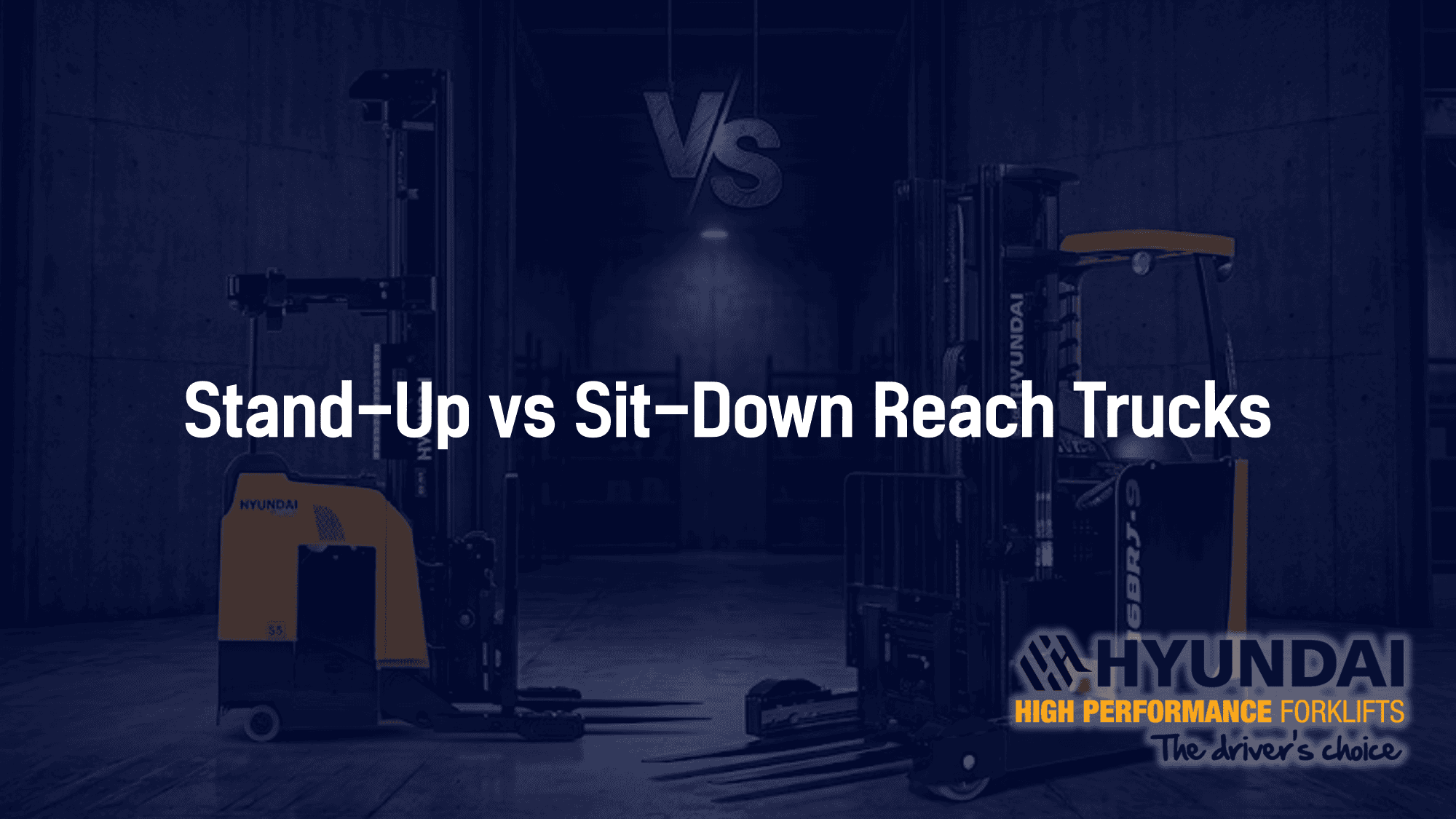
A stand-up reach truck suits frequent stops and short trips,...
Life in a hire fleet is demanding. A forklift can...