
Spec sheets make forklifts easy to compare. Capacity, lift height and battery size are all listed as numbers, so you can line models up side by side. Service support is much harder to compare. A spec sheet won’t tell you who answers the phone when a machine breaks down, or how well that person knows the equipment. Over a service life of close to ten years, that difference shows up in uptime and running costs.
Technicians at each regional Hyundai dealer are the first to look after customer machines. When a case needs extra support, they work with Hyundai Forklifts Australia. Myoungkyou Ha, Product, Service and Parts Manager at Hyundai Forklifts Australia, is one of the experts who handle these cases. He has worked at Hyundai for 18 years. This article looks at the different ways Hyundai supports its customers.
A recent case shows how Mr Ha decides where to look first. He was supporting a service inspection on a 10-tonne diesel forklift. The job started as a camshaft sensor replacement. The engine manufacturer supplies that sensor, so the usual next step would have been to contact them and order a new one.
Before going ahead, Mr Ha drew on his experience and asked the on-site technician to check the wiring harness first. The Hyundai factory designs the harness that connects to the sensor. The sensor relies on that harness to send its signal, so replacing the sensor alone might not have been enough. Checking the harness first gave the technician a clearer picture before any parts were ordered, and the customer ended up with a better result.
At Hyundai’s head office, he worked with major engine manufacturers on warranty matters. That work showed him where a supplier’s part ends and Hyundai’s begins, and that helps him decide who to call first.
Mr Ha has supported forklift customers in many countries since 2009. That year, he took on overseas forklift after-sales service at Hyundai’s head office. His regions covered Europe, Africa, Asia, Russia and Oceania. Each month he reviewed warranty claims from dealers across these markets.
Forklifts in these markets work in very different climates and settings. Reviewing claims from all of them showed him how operating conditions affect a machine and which checks matter most in each setting. He shared what he learned with dealers through Service Bulletins, issuing four to five a month across his regions.
Australia has many of these conditions within one country. A forklift at a humid port in the north works very differently from one on a dry, dusty inland site or in a cold storage facility. Because Mr Ha has supported so many markets, he understands how these differences affect a machine. When a dealer technician describes what they are seeing on a machine, he can quickly work out what to check for that region and application.
While at head office, Mr Ha visited overseas customer sites four to five times a year. Each visit lasted one to two weeks. He watched how operators ran the equipment in their daily work. Where he saw a better way to handle a machine, he showed the operators on the spot. Good operating habits help a machine run smoothly and last longer.
He still visits customer sites in Australia with dealer staff. Seeing a machine at work gives him the full picture. He can tell whether a part needs attention or whether a small change in daily operation would help more.
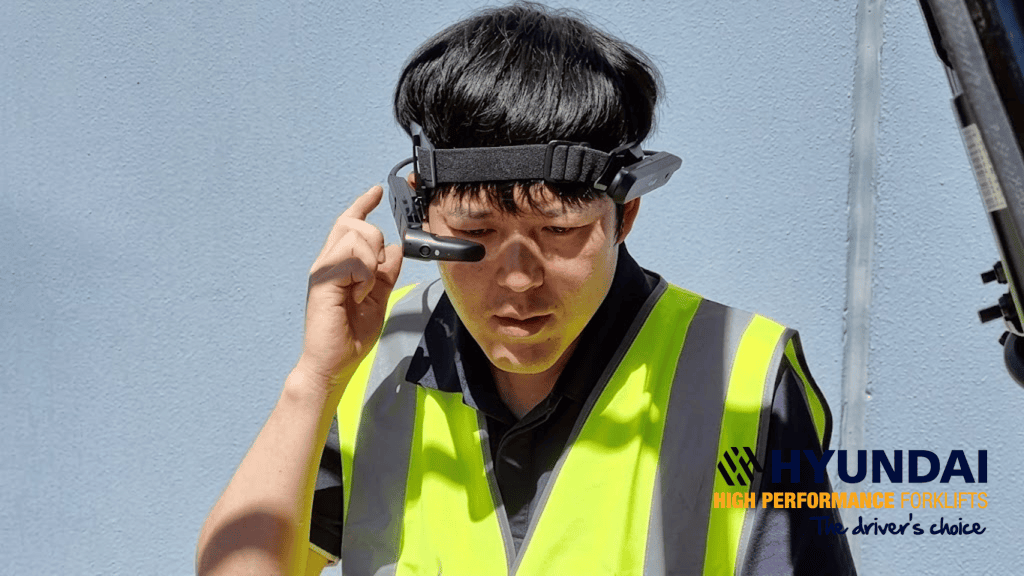
AR smart glasses help support sites that take time to reach. Australia covers long distances, so sending someone to every site isn’t always practical. Mr Ha introduced AR smart glasses at Hyundai Forklifts Australia to close that gap.
The on-site technician wears the glasses while looking at the machine. The glasses stream that view to him. He watches the same view and points out what to check. Diagnosis starts straight away, without waiting for a specialist to travel to site. The technician can finish the repair sooner, and the machine returns to work faster.
Hyundai Forklifts Australia holds a dealer conference each year to review service targets with dealers. Field technicians receive technical training, and dealers receive warranty training. This helps customers get the same standard of service wherever they are.
Hyundai Forklifts Australia uses repair histories to decide which parts to keep on hand. Parts that technicians replace most often are kept in stock before customers need them. Stock levels are set based on fleet numbers at each site and how often each part sells.
Supplying parts from within Australia also saves time. A part shipped from overseas for a single job takes longer to arrive and adds freight costs. Hyundai Forklifts Australia supplies more genuine Hyundai parts from its Australian warehouse, which helps reduce waiting time and freight costs for customers.
Our next two articles focus on Hyundai’s high-voltage lithium-ion electric forklifts. Hyundai Forklifts Australia is expanding this range into higher capacity classes. The next article explains what an electric option offers in these classes. It also covers what changes on site when you add electric forklifts to your fleet. In October, we will mark National Safe Work Month with an article on high-voltage safety. It will cover the practices to follow when operating and servicing these forklifts.
If you have questions about your current fleet or equipment you are considering, please get in touch.
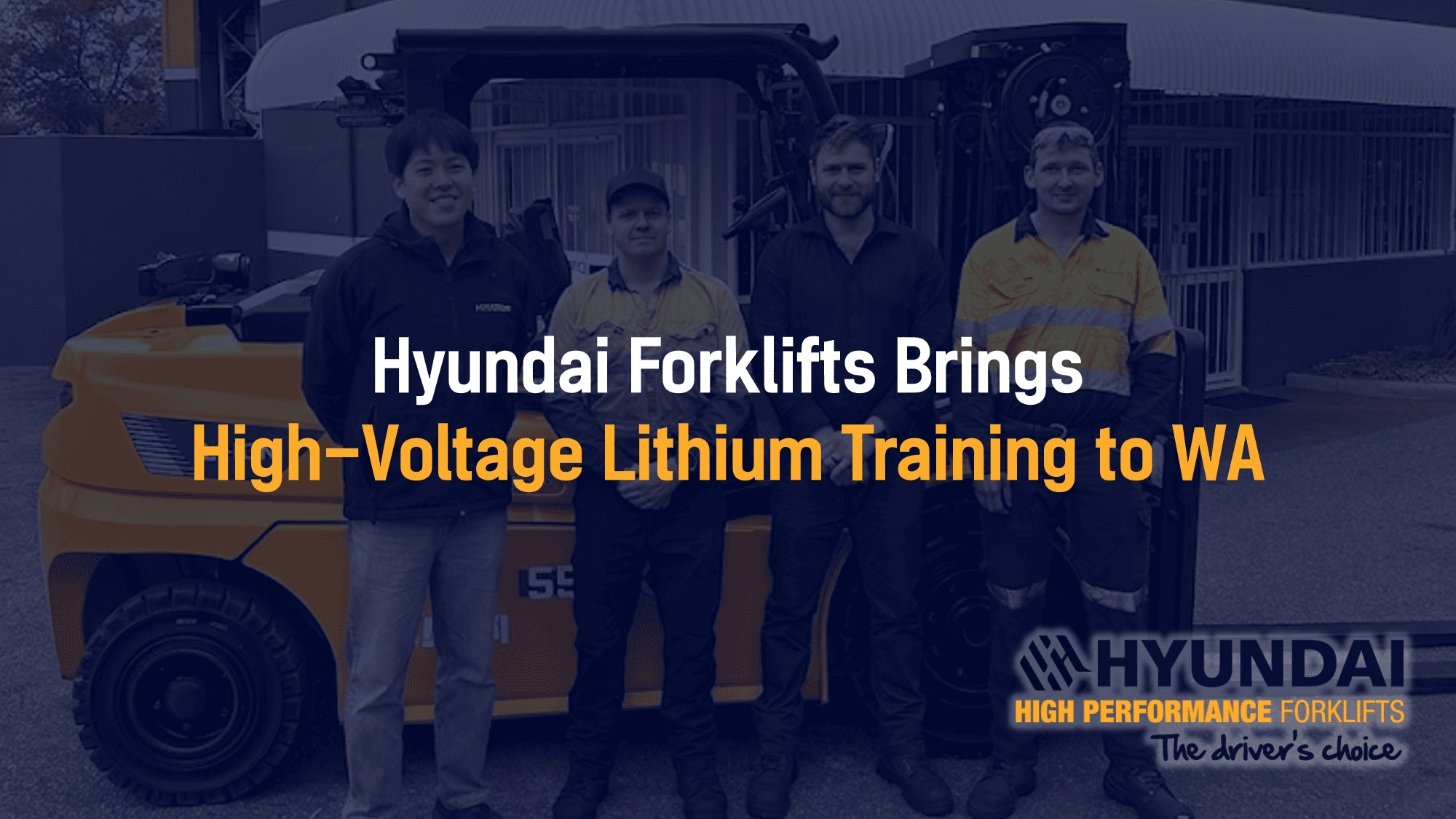
Hyundai Forklifts Australia has delivered its first high-voltage forklift training...
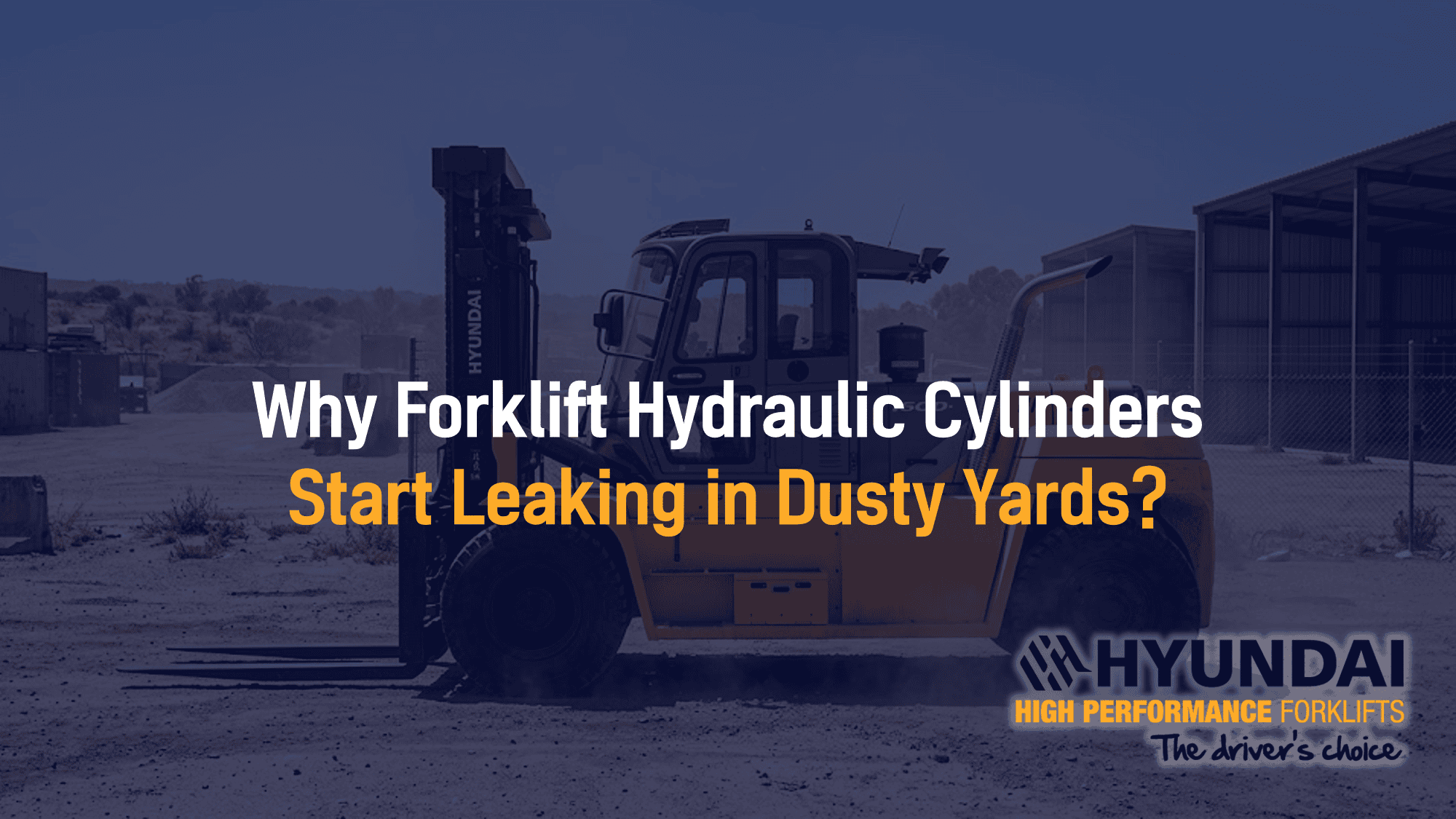
If you run forklifts in a dusty yard, precast plant,...
Forklift selection in a precast concrete yard is rarely settled...