
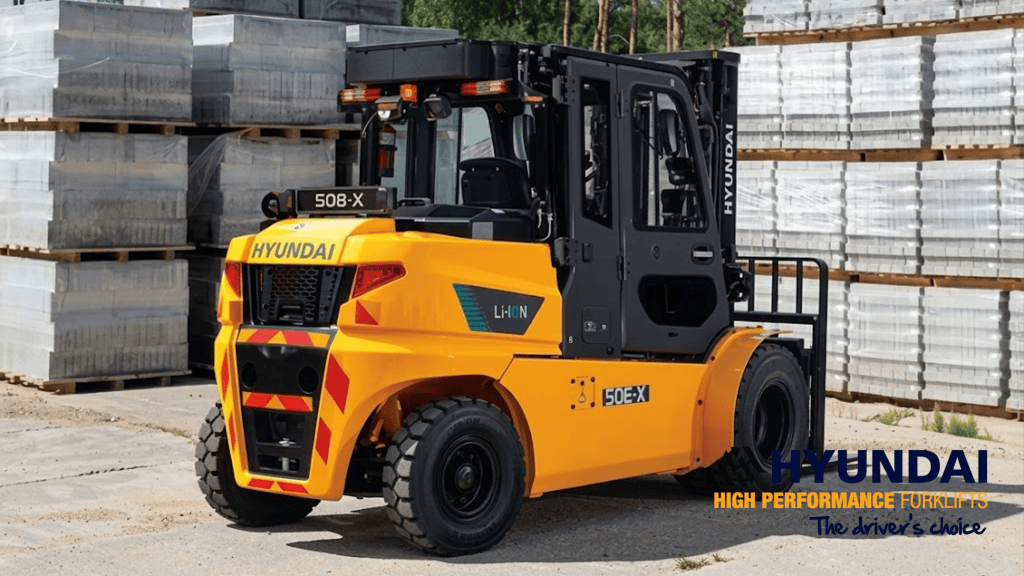
Businesses looking at high-voltage forklifts often ask about infrastructure, and rightly so. Many managers wonder if their facility needs major electrical upgrades. The answer depends entirely on your site, so you should review a few key factors before making a decision.
You must match high-voltage chargers to your power supply, your forklift specs, and your daily operating conditions.
In most cases, technicians can configure Hyundai smart chargers to work within your existing electrical capacity. An operation that parks machines overnight requires a different setup than a facility running continuous shifts, so we adjust the configuration accordingly.
During a recent installation in Western Australia, our team reconfigured the charger on site to fit the available power supply and the customer’s work patterns.
Check whether the supplier fully encases and shields all high-voltage cabling. You should also ask if the system automatically shuts down when a connector or line interrupts. This is a basic safety requirement, not a premium feature.
Ask whether the manufacturer or dealer runs a dedicated high-voltage training course for maintenance staff separate from standard operator licensing. Hyundai explicitly offers this training, and you should expect the same standard from any high-voltage supplier.
Find out how the supplier specifies battery size and whether they match it to your actual duty cycle. Hyundai offers multiple kWh options rather than a one-size-fits-all battery. You also need to ask about charging power options. For heavy-duty fleets, DC charging infrastructure spans a wide range from 50 to 350 kW, which directly impacts your site’s electrical capacity.
Ask what the battery management system actually tracks, such as voltage, temperature, coolant, and current flow, rather than taking a vague promise at face value.
Connect the charger and confirm that charging starts while the technician is still on site. If you wait until the next day to test the installation, any unexpected issue will cost you a full day of operation.
Run operator handover training on the exact same day. If you leave training for later, operators quickly form their own habits, and you will find those habits much harder to correct down the road.
You do not need to gather precise measurements before you contact us. Simply tell us what equipment you run and where you operate, and our team will visit your facility, assess the site conditions, and deliver a tailored configuration. Get in touch with our team or your local Hyundai dealer today.
Our next article explains what happens behind the scenes after you take ownership of the machine.
A farm forklift should match your loads, your ground conditions...
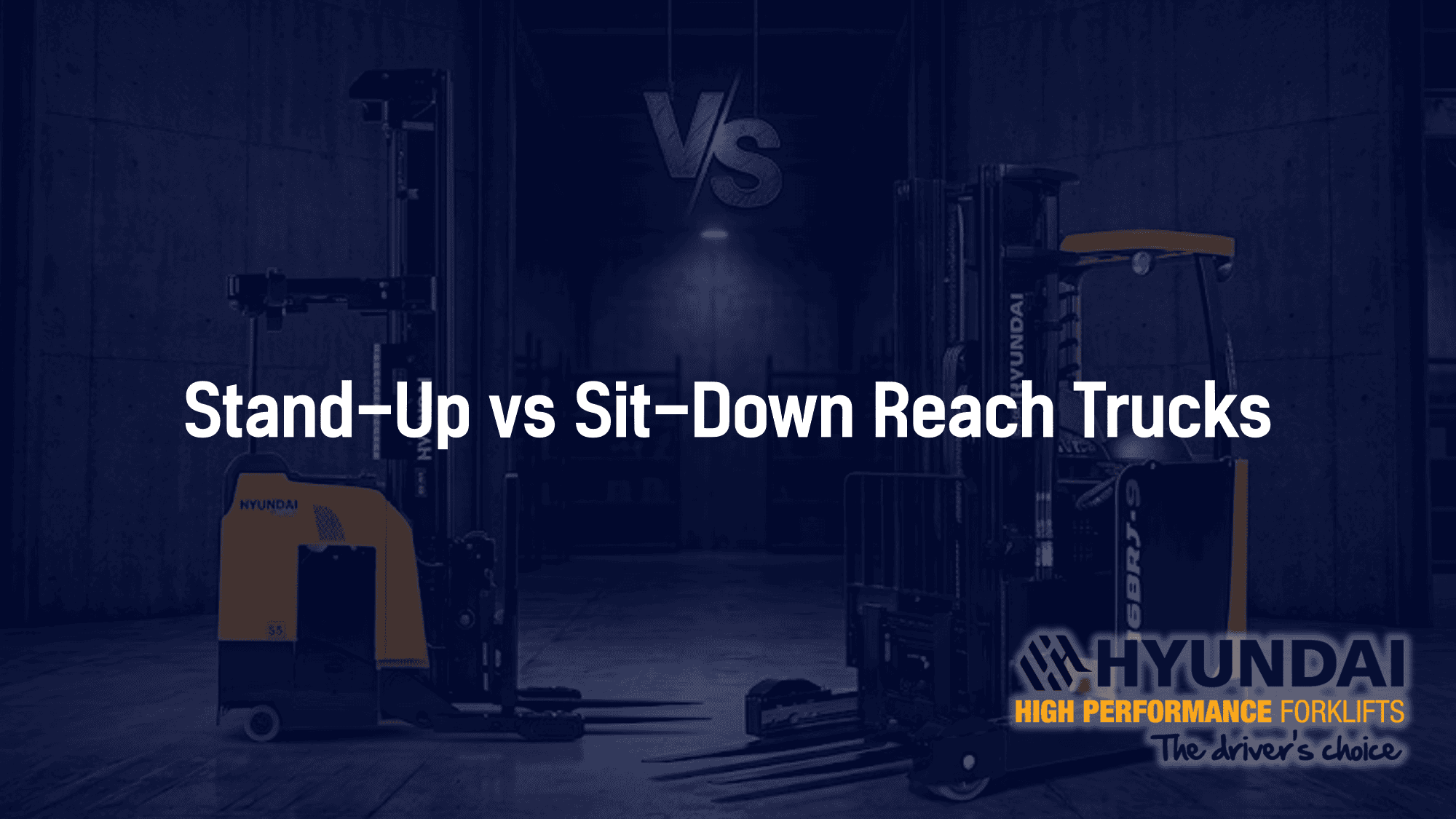
A stand-up reach truck suits frequent stops and short trips,...
Life in a hire fleet is demanding. A forklift can...