
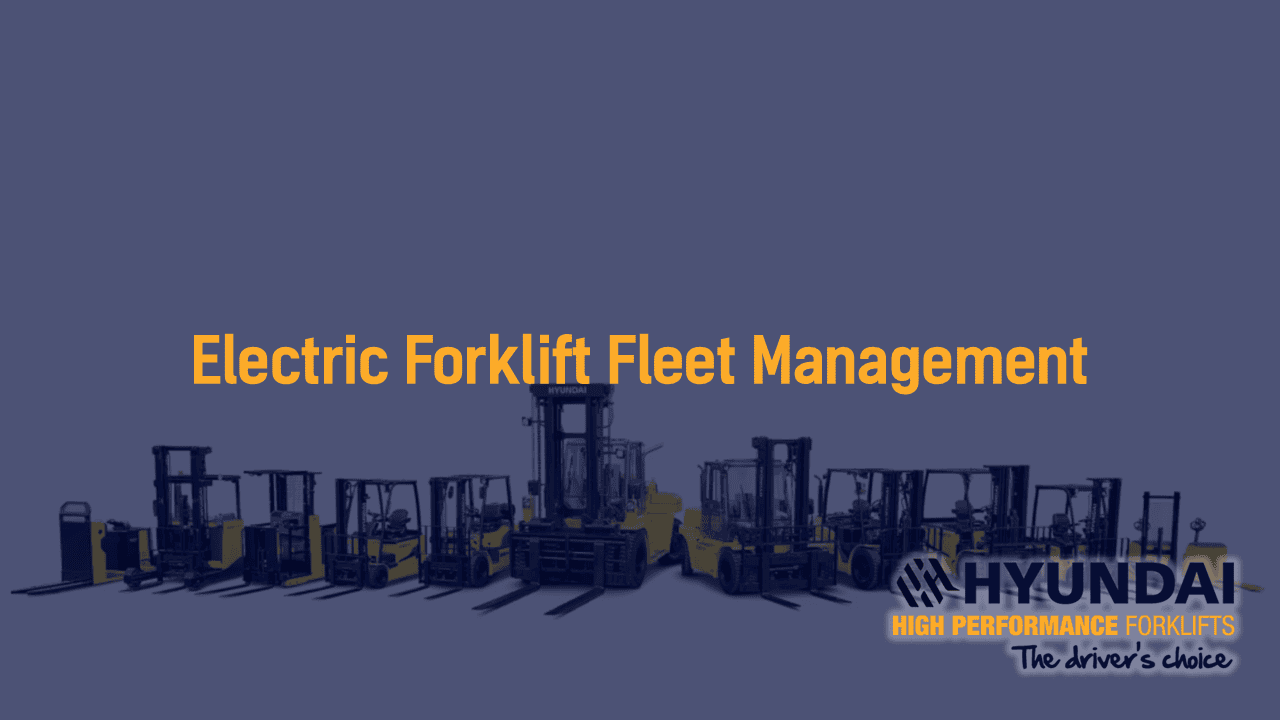
When a forklift fleet underperforms, the problem usually is not the forklift. It is the underlying operational strategy. Poor battery scheduling, the wrong truck in the wrong duty cycle, limited charging access, or patchy servicing can turn a smart investment into a daily bottleneck. That is why electric forklift fleet management matters – not as an admin exercise, but as a direct lever on uptime, safety and operating cost.
For Australian warehouses, distribution centres and industrial sites, the move to electric equipment is no longer a fringe decision. Rising fuel costs, indoor air quality requirements, noise control and tighter sustainability targets are all pushing fleets towards electric forklifts. But the businesses seeing real gains are not just swapping diesel or LPG for batteries. They are managing the fleet as a system.
Electric forklift fleet management is the planning, monitoring and support framework that keeps electric forklifts and warehouse equipment productive across a site. It covers asset selection, battery performance, charging strategy, servicing, utilisation, operator behaviour and replacement timing.
That broader view is where many operations either gain ground or lose it. A fleet manager might focus on purchase price, while operations is focused on throughput and maintenance is dealing with unexpected battery issues. If those decisions are not aligned, the fleet can look efficient on paper and still create downtime on the floor.
In practice, good management starts with a simple question: what does each machine need to do, for how long, in what environment, and with what support behind it? A reach truck working narrow aisles on one shift has a very different profile from a lithium forklift moving heavy loads across a multi-shift manufacturing site.
Electric equipment changes the service and operating model. There are fewer engine-related maintenance items, but energy use becomes central. Charge timing, battery chemistry, temperature, operator habits and duty cycle all influence fleet performance.
This is where some operations get caught out. They expect electric forklifts to slot into the same routines used for internal combustion fleets. That can work in a limited application, but it often falls short in high-throughput environments. If chargers are badly placed, if spare batteries are not available where they are needed, or if shift changeovers are not planned around charging windows, the site starts losing productive hours.
The upside is significant when the fleet is managed properly. Electric forklifts can reduce routine maintenance demands, lower noise, improve operator comfort and support safer indoor use. They also create better visibility around energy consumption and utilisation, especially when paired with fleet monitoring tools and service support.
The foundation of electric forklift fleet management is fit-for-purpose equipment. This sounds obvious, but it is one of the most common causes of poor results. An underspecified truck may save money at purchase and cost far more in lost performance. An overspecified machine can tie up capital without improving output.
Load weight, lift height, travel distance, floor condition, ramp use, attachment requirements and shift intensity all matter. So does the site environment. Food and pharmaceutical operations may prioritise clean running and precise control. Timber and steel applications may need higher capacity, stronger chassis design and equipment built to handle harsher conditions.
Battery type also changes the equation. Lead-acid still has a place in some operations, particularly where duty cycles and charging routines are predictable. Lithium-ion can make more sense where fast opportunity charging, reduced battery maintenance and high utilisation are priorities. There is no universal winner. The right answer depends on the site, the workload and the business case.
Not every industrial site faces the same operational pressure points, but the underlying risks of an unmanaged fleet remain identical. For high-throughput environments, a structured fleet management strategy is no longer optional—it is the baseline for profitability.
Warehouses and Distribution Centres: These facilities represent the most obvious case for rigorous management. When operations scale from ten to hundreds of forklifts running across multiple shifts, any gaps in charging schedules, utilisation tracking, or maintenance planning compound rapidly into costly operational bottlenecks.
Cold Storage and Food Logistics: This sector introduces variables that standard fleet plans often underestimate. Sub-zero temperatures directly reduce battery performance and shift cycles. At the same time, strict hygiene regulations demand that equipment records and service histories are highly accurate, transparent, and audit-ready – not pieced together after an issue occurs.
Manufacturing, Retail Distribution, and Port Operations: What these high-volume environments share is intense uptime pressure, scale, and strict indoor emissions restrictions. In these sectors, relying on reactive, break-fix maintenance is an expensive liability. A systematic fleet approach pays for itself by turning potential downtime into predictable productivity.
Many electric forklift fleets do not fail because of the machines. They fail because charging was treated as an afterthought. Charger numbers, charger speed, power supply, layout and traffic flow need to be planned around the way the site actually runs.
A well-managed charging setup supports operations without creating queuing, unsafe cable layouts or dead time between shifts. That may mean designated charging zones, staggered schedules, opportunity charging during breaks, or a mix of battery solutions across different truck classes.
There is also a trade-off to manage. Fast charging can improve availability, but frequent high-demand charging may affect long-term battery life if the system is not suited to it. On the other hand, a slower charging model may protect battery health while reducing flexibility in peak periods. The right balance comes from understanding both the equipment and the daily operating rhythm.
A common misconception is that electric forklift fleets are close to maintenance-free. They are not. They simply shift the maintenance profile. There may be less engine work, but tyres, brakes, hydraulics, mast components, software, charging systems and battery health still need active management.
For many businesses, the real value comes from planned service and early fault detection. Remote fault finding, diagnostic tools and responsive local support can reduce the time between identifying an issue and getting the truck back into operation. That matters in sites where one forklift offline can slow an entire process.
This is where a full-service partner has an advantage over a transaction-only supplier. Equipment supply is only one part of fleet performance. Parts availability, technician coverage, warranty support, operator training and fleet reviews all affect the real cost of ownership over time.
The strongest electric forklift fleet management programs rely on data, not guesswork. Utilisation rates, battery charge patterns, idle time, impact events, maintenance history and asset age all help build a clearer picture of what the fleet is doing.
Sometimes the findings are uncomfortable. A site may discover that several forklifts are underused while a smaller number are carrying most of the workload. It may find that charging behaviour is shortening battery life, or that a truck class selected years ago no longer fits the current operation.
That visibility helps managers make better decisions on rotation, maintenance timing, replacement planning and future purchases. It also strengthens safety management. If repeated impact events are tied to certain areas or shifts, that points to a training issue, traffic management issue or equipment mismatch that needs action.
Electric forklift fleets often improve the working environment through lower noise and zero tailpipe emissions during operation, but that does not remove risk. Battery charging areas, pedestrian interaction, operator fatigue, visibility and traffic flow all remain critical.
A strong fleet plan builds safety into equipment choice and daily use. That may include forklift safety features, clear charging procedures, access controls, operator training and scheduled inspections. In busy facilities, the best productivity gains often come from removing friction and reducing incidents, not simply increasing truck numbers.
Safety leaders and operations managers usually see the same truth from different angles: a fleet that is predictable is easier to run well. Predictable charging, predictable servicing and predictable operator practices create fewer disruptions.
Electric forklift fleet management is not static. As throughput changes, product mix shifts, or facilities expand, the fleet needs to be reviewed. The warning signs are usually clear – higher downtime, repeated battery complaints, trucks waiting for charge access, increased maintenance cost, or operators consistently reporting that equipment is not suited to the job.
Replacement decisions should not be driven by age alone. Some assets remain productive for years with the right service support. Others become expensive well before the end of their expected life because the application has changed. This is why regular fleet reviews matter. They connect equipment performance to business performance.
For growing operations in markets such as Melbourne, Sydney or Brisbane, that review is especially important during expansion. A fleet that worked in one warehouse footprint may not work once travel distances, shift structures or load profiles change.
The businesses getting the most from electric forklift fleets tend to focus on four things: correct equipment selection, charging discipline, planned support and performance visibility. None of these are glamorous, but they are what keep a site moving when demand lifts.
Electric forklift fleet management works best when it is treated as an operating strategy. Get the mix right, support it properly and review it before small issues become expensive ones. The result is not just a cleaner fleet. It is a fleet that is ready for the next shift, the next peak and the next stage of growth.
This is also where supplier capability matters. A provider with experience across forklifts, lithium solutions, service support and full fleet planning can help avoid expensive trial and error. Hyundai Material Handling Australia operates in that space with headquarters-level scale and global experience needed for large-scale fleet planning, long-term rental and multi-site management. With direct presence in construction, heavy industry and steel sectors where forklifts are actually used, Hyundai is increasingly chosen as a long-term fleet management partner for growing operations.
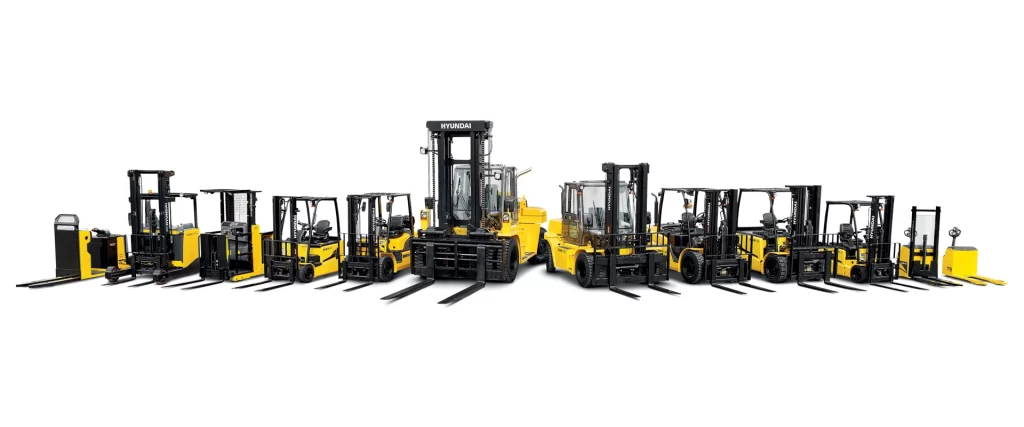
Hyundai Material Handling Australia is also leading the electric forklift and lithium-ion transition in Australia. As the government’s Net Zero targets push fleets from diesel and LPG toward electric forklifts, Hyundai delivers diesel-like power with lithium-ion batteries across 4.0–9.0 tonne models, with 10–13 tonne and 16–18 tonne High-Voltage B-X electric forklifts launching soon. This full-range portfolio makes it possible to plan fleet management under a single brand.
A nationwide dealer network reinforced by annual offline meetings ensures consistent brand standards and a uniform level of pre-sales and after-sales fleet management support, distinguishing Hyundai from transaction-only suppliers that only drop off machines. Businesses operating in high-throughput environments need equipment and support built around uptime.
Hyundai’s High-Voltage B-X Series has been the official equipment partner of the Australian Forklifts Championship at CeMAT Australia from 2023 through 2025 — giving operators and procurement decision-makers the chance to assess real-world performance firsthand, not just on a spec sheet. Hyundai is again present at CeMAT Australia 2026 with the B-X Series, where visitors can trial the equipment, speak directly with product specialists, and get early information on upcoming model releases.
A farm forklift should match your loads, your ground conditions...
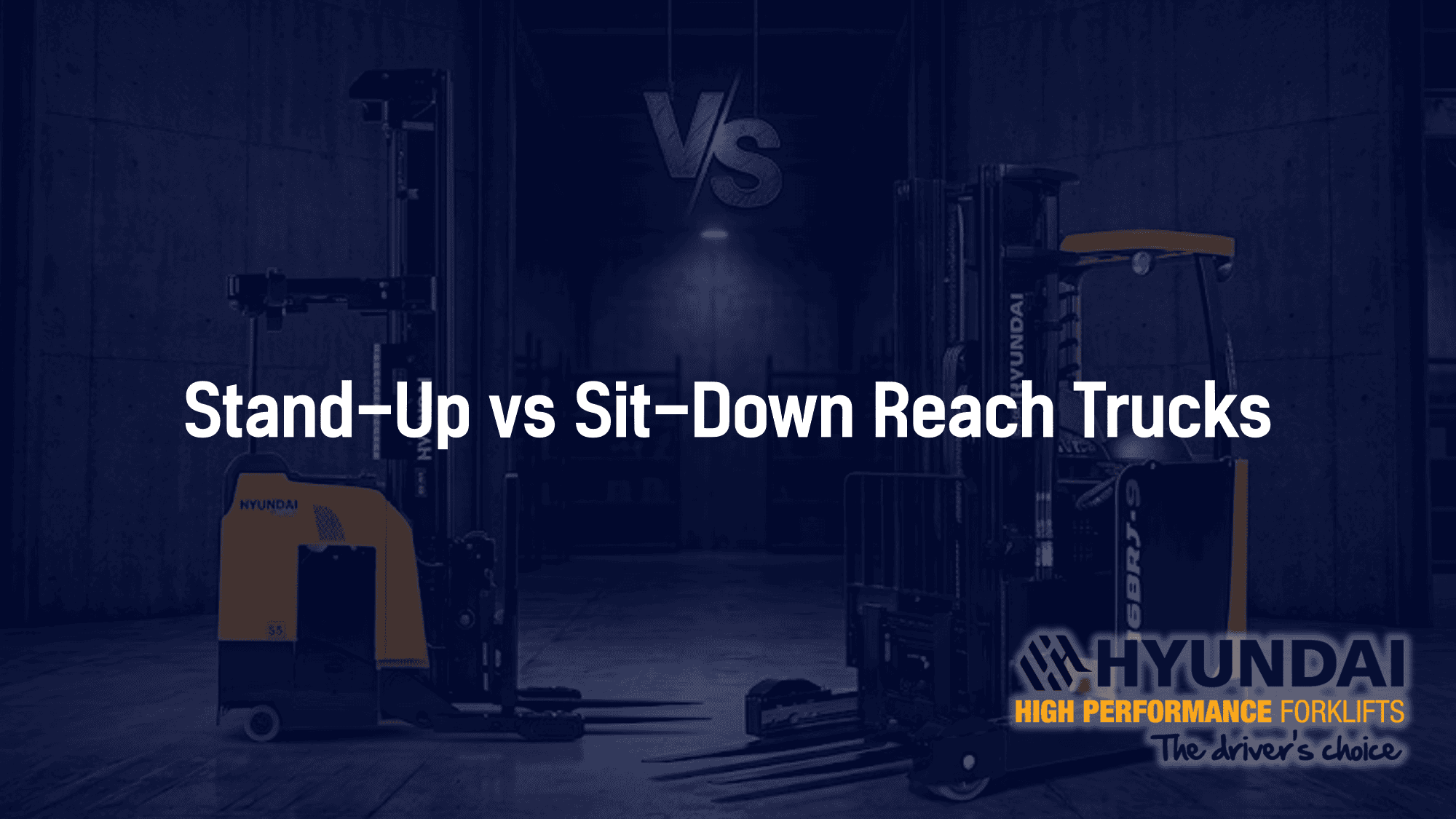
A stand-up reach truck suits frequent stops and short trips,...
Life in a hire fleet is demanding. A forklift can...