
Forklifts in summer heat need extra attention to batteries, cooling systems and operator wellbeing. Australian summer starts in December, and November is a good time to prepare before the heat builds. Engines, tyres, batteries, charging habits and operators all feel the heat, and each needs its own plan. You will know what to check before forklifts in summer heat face their first hot week.
Forklifts in summer heat work harder, from engines and hydraulics to batteries and tyres. Engines run hotter and batteries take longer to cool after charging.
Dust adds to the problem on outdoor sites. A radiator clogged with dust cannot shed heat as well, which raises the risk of overheating.
Heat affects tyres in two ways. Air-filled tyres gain pressure as they warm up, so a lunchtime reading can run higher than the morning one. Letting air out of a hot tyre to match can leave it too low once it cools. Solid tyres can wear faster on hot concrete and asphalt. A daily pre-start check at the start of the shift gives a steady pressure reading and picks up wear early.
Hydraulic oil thins as it heats up, and thinner oil slips past worn seals more easily. That can slow lifting or let a raised load creep down. Operators should report either one on a hot day. Heat can show up seal wear that was already there.
Diesel and LPG forklifts need extra attention on their cooling systems in summer. The engine adds its own heat to the weather. On a 35°C day the radiator has a harder job shedding heat, so small problems show up faster.
Spare LPG cylinders also need a cool place to sit. Workplace Health and Safety Queensland advises storing gas cylinders in cool areas, in the shade where possible. Radiant heat from hot surfaces and engines is one of the sources to keep them away from.
Operators stay safer in summer heat with regular breaks, cool drinking water and shade between tasks. Heat builds up over a shift, so the afternoon can feel harder than the morning.
Rotating tasks and scheduling heavier work for cooler hours can help. Supervisors who check on operators during hot spells can spot problems earlier.
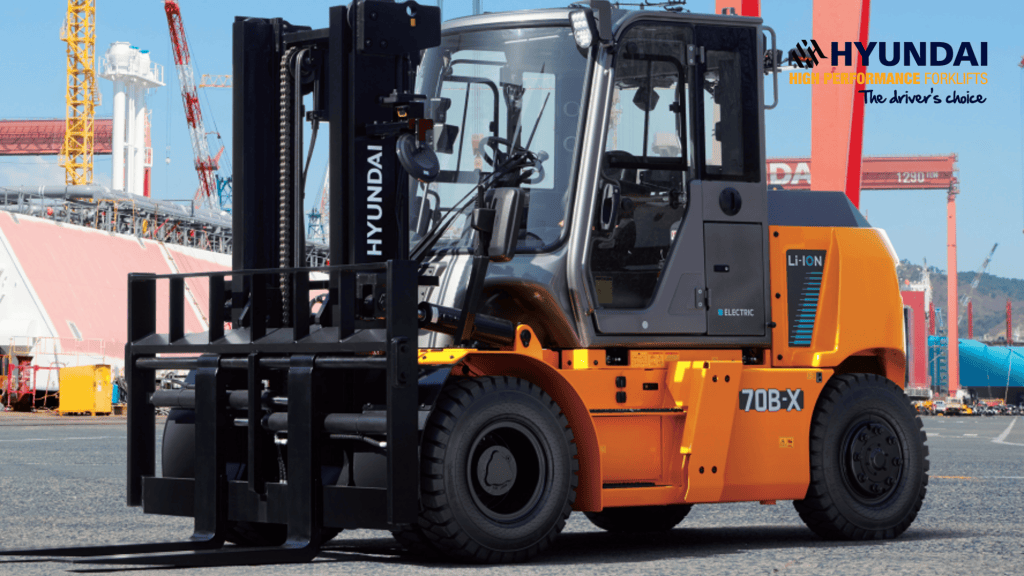
On the Hyundai 70B-X, an enclosed cab with air conditioning and heater is available as an option, providing constant heating and cooling to help keep operators comfortable through hot shifts.
Safe Work Australia publishes guidance on working in heat, including signs of heat-related illness. It also notes there is no single stop-work temperature, as humidity, air flow and workload all affect the risk. Your site’s heat plan then sets the detail for your workplace.
The Bureau of Meteorology’s heatwave forecasts can help supervisors see hot spells coming and plan heavier tasks around them.
Yes, forklift batteries respond to heat, which is why temperature matters when charging and storing them. Lead-acid batteries can lose water faster in hot weather, so watering checks may need to come around sooner.
Lithium-ion batteries need no watering. Hyundai lithium batteries use a battery management system that monitors temperature, voltage and cell balance in real time, helping protect against over-charging and over-discharging.
Summer care is one more factor when choosing between lead-acid and lithium-ion forklifts.
Hot weather calls for charging in a shaded, well-ventilated area away from direct sun. Giving a battery time to cool after heavy use, where the manufacturer recommends it, helps protect its life.
Charging during cooler parts of the day can also help, especially for sites with flexible shifts. Storage follows the same logic, so parked machines and spare batteries do better out of direct sun. Your battery manual sets the charging and storage limits for each model.
For larger fleets, electric forklift fleet management brings charging schedules and battery care into one plan.
The summer rush puts more hours on forklifts, because it overlaps with Christmas and New Year for many Australian sites. Retail, beverage and cold-chain operations often run longer shifts right when temperatures are at their highest.
Rotating machines spreads the wear. If one forklift is clocking far more hours than the rest, lighter duties for a while can help. That can lower the chance of a breakdown in the busiest weeks. A fleet readiness check shows whether the fleet has enough capacity overall.
Hyundai Forklifts’ Hi-MATE telematics system records work hours for each machine, so supervisors can see which units carry the load. It also shows faults as they happen and flags upcoming maintenance, which helps keep servicing on track.
November is a good time to prepare forklifts for summer, before the first heatwave arrives. A service before the heat can cover cooling systems, radiators, coolant, hydraulic oil and battery condition.
If a Christmas shutdown service is already booked, that visit can cover summer checks too. To prepare your fleet for summer, contact Hyundai Forklifts Australia or find your nearest dealer.
Reviewing a forklift traffic management plan means walking the floor...
From 2 to 4 November, Hyundai Forklifts Australia hosted a...
In our last post, we shared day one of our...