
This article wraps up our recent series on HFA service and support. Over the past few weeks we’ve covered high-voltage training for technicians in Western Australia, how HFA backs up dealers and customers after purchase, and what a site needs before lithium forklifts arrive. This article puts those stages in order, starting with what an electric forklift costs over its life and running through to the ten or so years it stays in service.
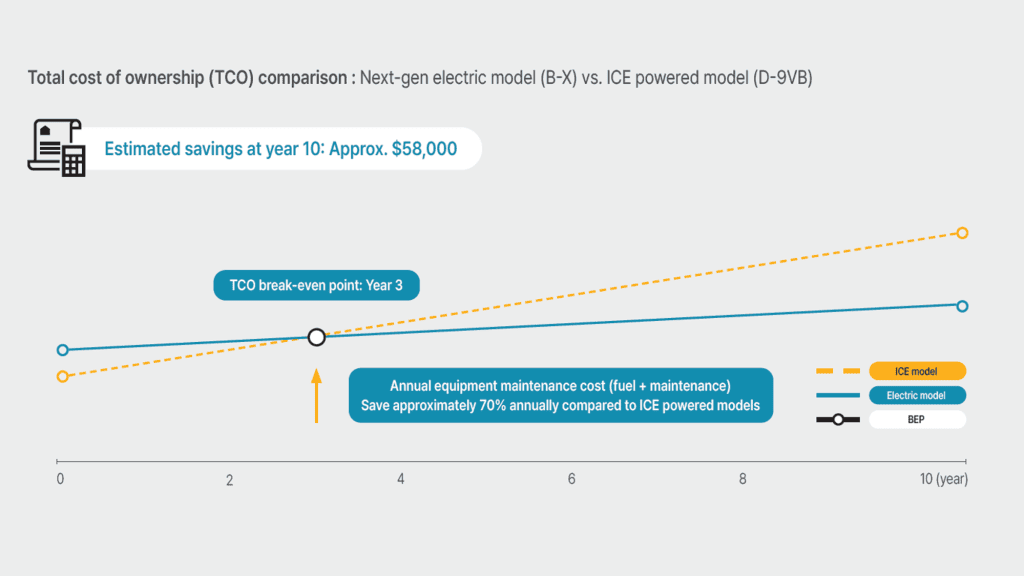
In our comparison it is, and the gap grows every year. Comparing a B-X series electric forklift with a D-9VB diesel model, the total cost of ownership breaks even at around year three, with estimated savings of approximately $58,000 by year ten. The electric model costs more to buy, but its annual energy and maintenance costs come in about 70% lower than the diesel’s fuel and maintenance costs. An electric drive has no engine oil, fuel filters or exhaust system to service, and lithium-ion batteries need no watering or battery swaps. Actual results depend on how many hours your machines run and your local energy costs, so tell us how your site runs and we can work through the comparison with your own figures.
Most sites don’t need a major electrical upgrade for high-voltage lithium forklifts. Our technicians usually configure Hyundai smart chargers to suit the existing power supply and the way the site runs its shifts. A site that parks machines overnight gets a different setup from one running around the clock.
On handover day, connect the charger and confirm charging starts while the technician is still on site. Run operator training the same day as well. Operators pick up their own habits quickly, and those habits are harder to change later.
The full checklist, including the questions to ask any high-voltage supplier, is in our article on site infrastructure for high voltage lithium forklifts.
Your local Hyundai dealer is the first call when something goes wrong. When a case gets complicated, the dealer technician works directly with HFA’s Product, Service and Parts team.
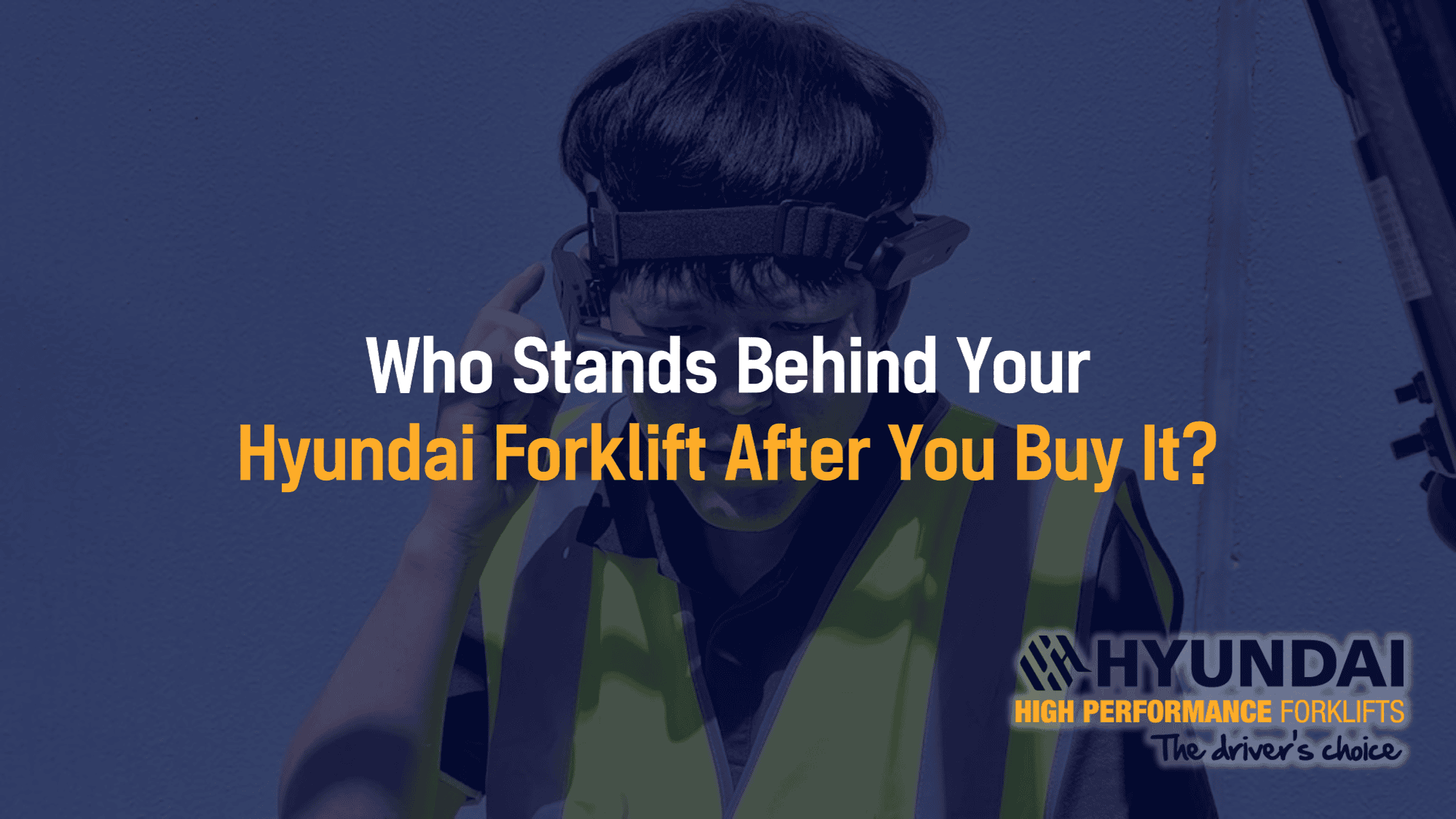
That backing often saves money before any part is ordered. On one 10-tonne diesel forklift, the first diagnosis pointed to a camshaft sensor. HFA asked the technician to check the wiring harness first, because a harness fault can look like a sensor failure. For remote sites, the dealer technician can wear AR smart glasses so HFA specialists see the same view in real time and guide the diagnosis without anyone having to travel.
Parts are planned ahead of time. HFA sets stock levels in its Australian warehouse using repair history and the number of machines at each site, so fast-moving genuine parts are already here when a machine needs them. Our article on who stands behind your forklift after you buy it covers this in more detail.
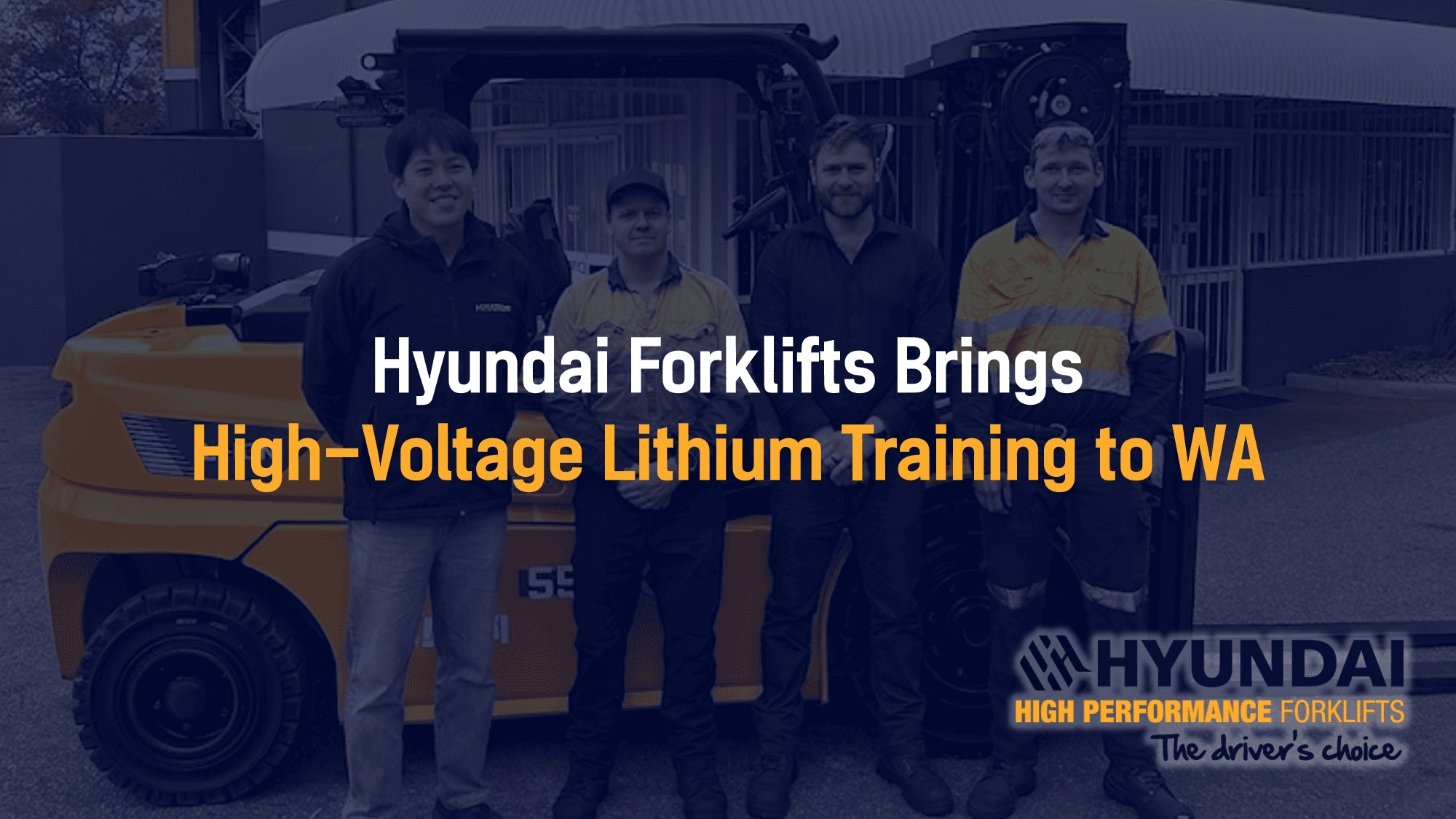
Hyundai dealer technicians who have completed HFA’s high-voltage training service these machines, and HFA runs that training ahead of larger models arriving in each region. In September we ran our first high-voltage training in Western Australia for senior and master technicians at Hyundai Material Handling WA, covering the 50B-X through to the 130B-X. You can read more about the Western Australia training session.
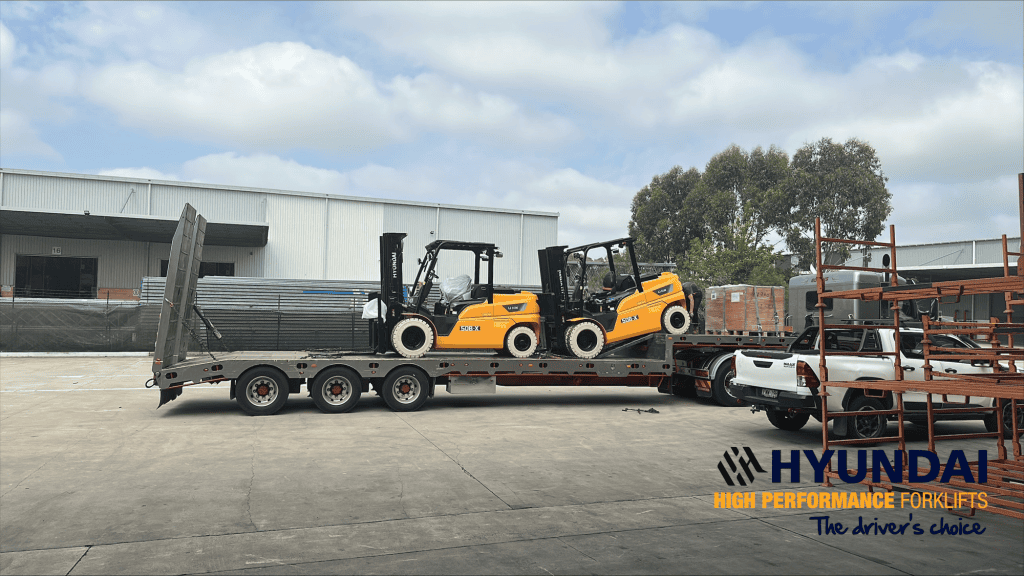
The session was led by Mr Ha, HFA’s Product, Service and Parts Manager, who worked at the Hyundai factory in Korea before joining HFA. We’re running more sessions as other regions request them, and training will continue as each new model is added. Two 50B-X high-voltage lithium-ion forklifts arrived at our head office in September.
Yes. Hyundai Forklifts’ lithium range runs from 2.5 to 18 tonnes, so you can add machines or move up a capacity class and stay with the same dealer for servicing and parts. Many customers start with one forklift and add more a few years later, and operators moving to a bigger machine will find the controls largely familiar.
Battery voltage differs between capacity classes, so technicians need separate training for the larger machines. That is what the regional training above is for.
In our comparison of a B-X series electric forklift and a D-9VB diesel model, total cost of ownership breaks even at around year three, with estimated savings of approximately $58,000 by year ten.
Yes. HFA keeps fast-moving genuine parts in its Australian warehouse, with stock levels set from repair history and the number of machines at each site.
Yes. Dealer technicians can wear AR smart glasses so HFA specialists see the machine in real time and guide the diagnosis without travelling to the site.
The first Western Australia session covered the high-voltage range from the 50B-X through to the 130B-X, and training continues as new models are added.
Tell us how many machines you run and which models, and we’ll check which parts you’re likely to need and roughly when. Get in touch with our team or your local Hyundai dealer.
In October, for National Safe Work Month, we’ll share high-voltage safety practices for operating and servicing these machines.
Businesses looking at high-voltage forklifts often ask about infrastructure, and...
Spec sheets make forklifts easy to compare. Capacity, lift height,...
Hyundai Forklifts Australia has delivered its first high-voltage forklift training...