
Electric forklift run time can cover a full shift when the battery and charging plan match the work. On Australian sites, electric forklifts can now take on work that once relied on diesel. Battery type, workload and charging habits all decide how long an electric forklift keeps working. You will be able to plan electric forklift run time around your own shifts. Hyundai Forklifts lithium batteries support rapid charging and need no routine maintenance.
Electric forklift run time depends on battery capacity, battery type, workload and how often the truck charges. Heavy loads, long travel distances, ramps and frequent lifting all draw more power.
Battery type plays a big part. Lead-acid batteries suit a single long charge between shifts, while lithium-ion batteries accept short top-up charges during the day. Shift patterns and charging windows usually decide which battery type fits.
Yes, an electric forklift can last a full shift when its battery suits the duty cycle. Single-shift sites can run through the day and recharge overnight. Multi-shift sites plan around charging, either with opportunity charging or a battery sized for the work.
Matching the battery to the job before you buy matters, since duty cycles vary between sites.
For a whole fleet, scheduling matters as much as the battery, which is where electric fleet management comes in.
Opportunity charging keeps forklifts working by topping up lithium-ion batteries during breaks, shift changes and quiet periods. Short charges add up across the day, so the forklift needs fewer stops for a full recharge.
Lithium-ion also takes battery change-outs and watering out of the daily routine. Hyundai Forklifts lithium batteries track voltage, current and temperature in real time. They also include over-charge and over-discharge protection.
Charger placement makes opportunity charging easier. Chargers work well where operators already pause, such as near break rooms or dock doors. Placement also depends on your power supply, which shapes the site infrastructure for lithium forklifts.
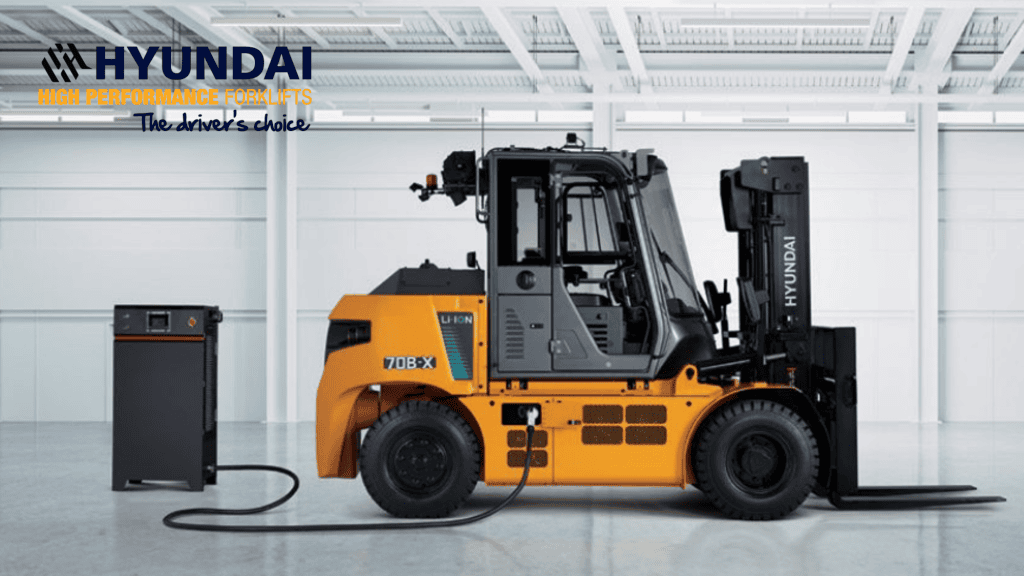
Yes, electric forklifts can handle heavy work that once called for diesel. The Hyundai B-X Series delivers output comparable to internal combustion models. The range now covers 4 to 18 tonnes, including new 10 to 13 tonne and 16 to 18 tonne models.
On the Hyundai 70B-X, the 93kWh battery option supports up to 12 hours of operation on around 2 hours of charging. Run time and charging time vary with operating conditions.
These machines can work indoors and outdoors on the same shift. Major components carry an IP67 rating for water and dust, so they stay usable in wet weather.
For fleets weighing a switch from diesel, there are reasons that go beyond fuel costs.
Matching electric forklift run time to your shifts starts with mapping hours, loads and natural breaks across a typical day. It helps to note when operators pause, how long each shift runs and which tasks draw the most power.
That picture shows whether one charge covers the day or opportunity charging fits better. Your dealer can then size the battery and charger to suit.
To plan electric forklifts around your shifts, contact Hyundai Forklifts Australia or find your nearest dealer.
A farm forklift should match your loads, your ground conditions...
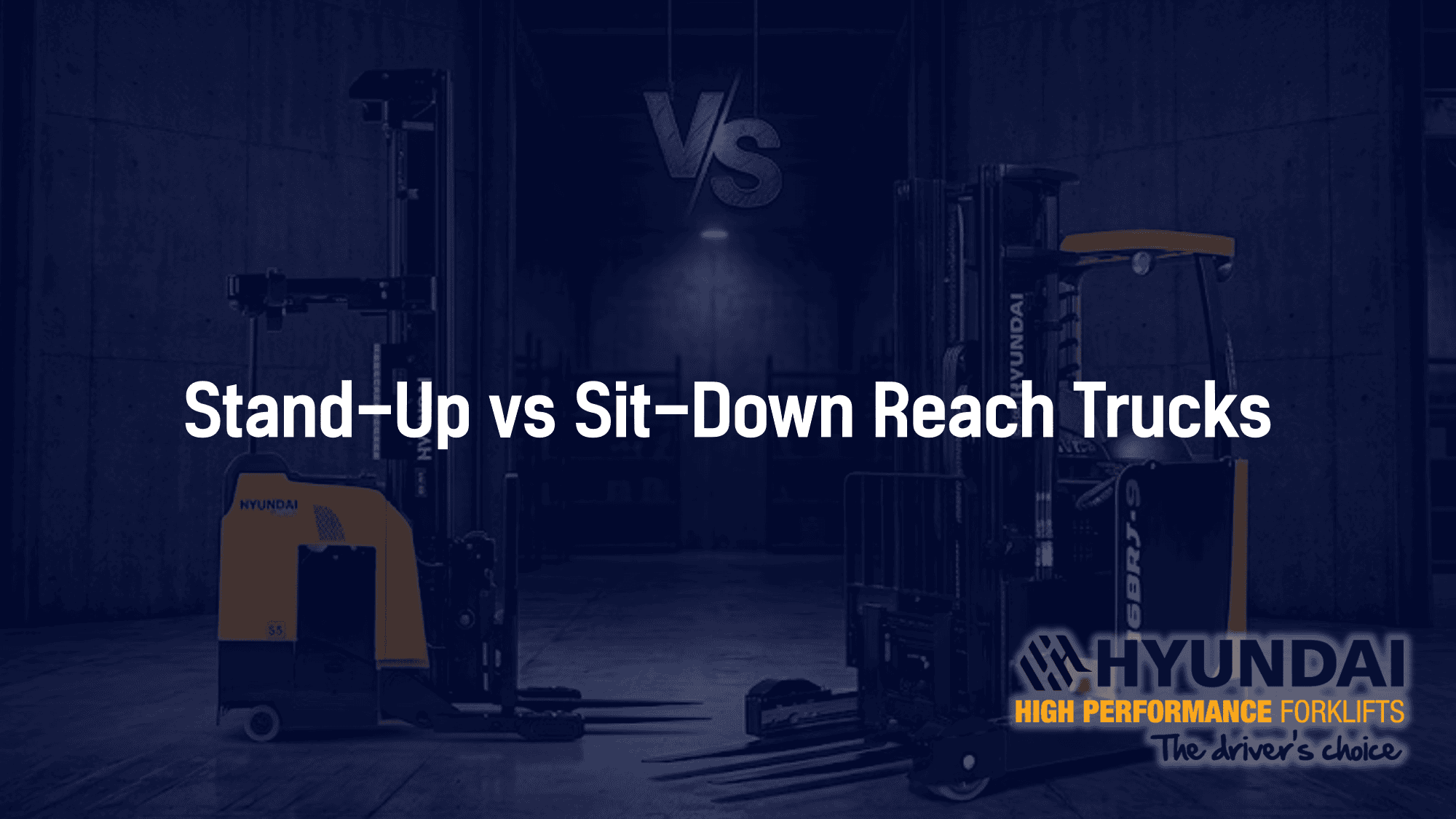
A stand-up reach truck suits frequent stops and short trips,...
Life in a hire fleet is demanding. A forklift can...