
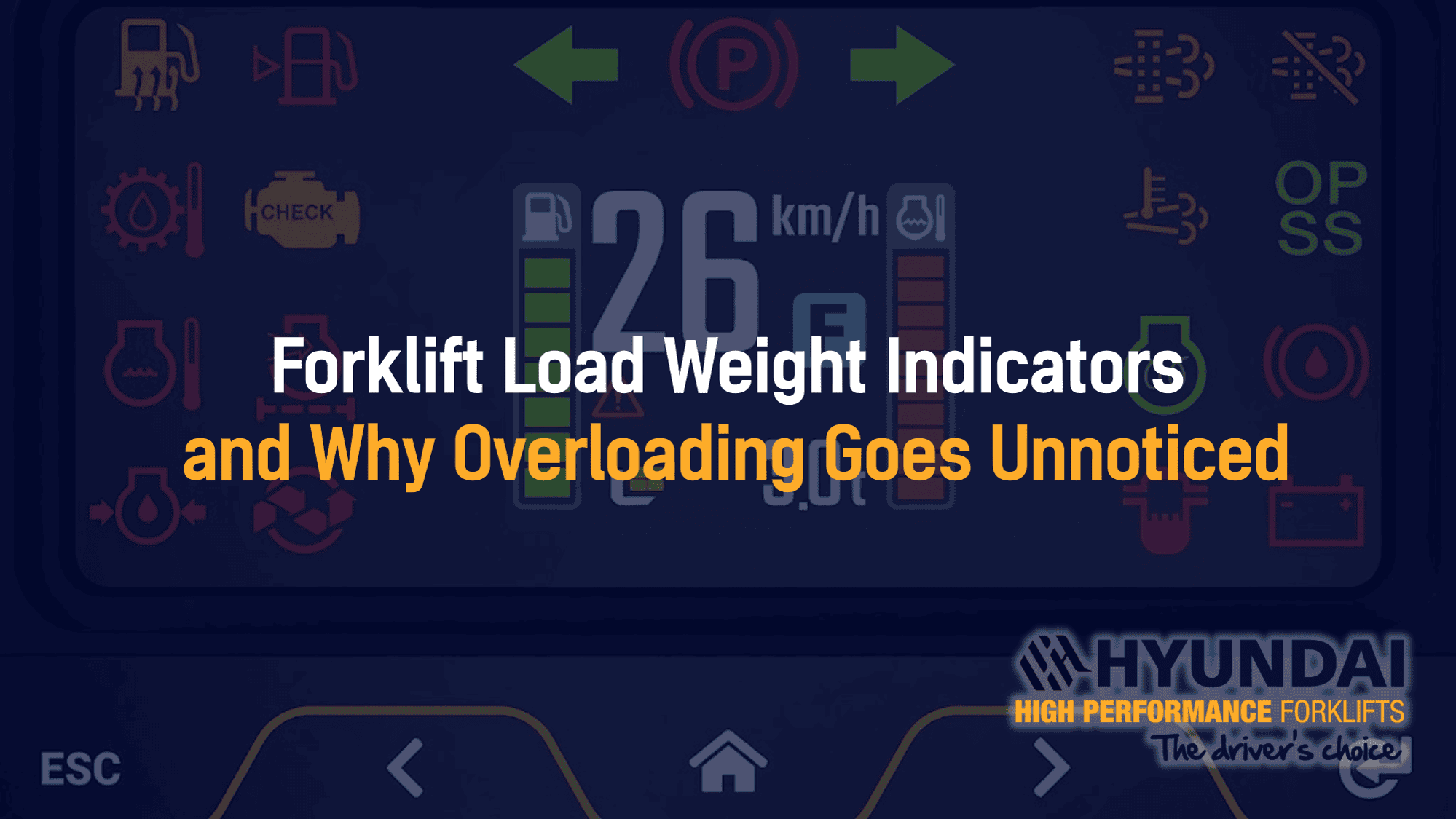
A forklift load weight indicator shows the operator how much the forks are actually carrying. Hyundai fits this function across its diesel, LPG and electric ranges. On some models it comes standard. On others it arrives as an option. The reason it matters comes down to a gap that most operators never see. Rated capacity tells you what a machine can lift in ideal conditions. The load in front of you does not always match what you assumed it weighed.
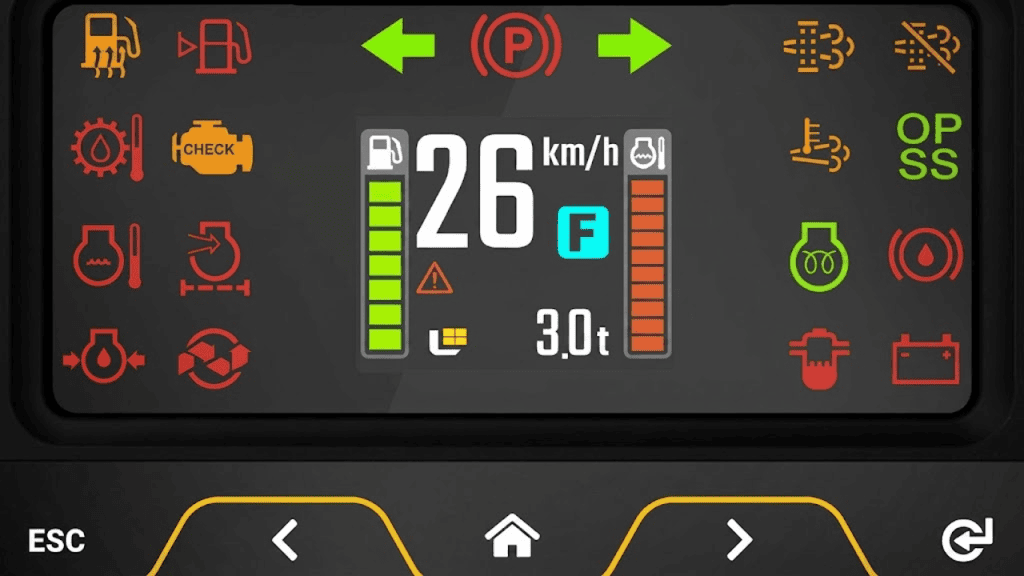
The system measures the actual weight sitting on the forks and displays it to the operator. Hyundai’s LN-9 LPG series builds this in as standard, showing load weight on the dash. The load sensor cuts the time an operator spends checking weight before a lift. When the machine exceeds its rated capacity, an alarm alerts the driver.
The display method differs between ranges. On Hyundai’s BE-X electric forklifts, load weight appears inside the multifunction digital cluster. That same screen shows battery discharge, hour meter and working mode. The operator reads weight alongside everything else about the machine, on one display, in real time.
Every forklift carries a rated capacity on its data plate. That number assumes a specific load centre and ideal conditions. Real work rarely matches those assumptions.
Timber shows the problem clearly. Dry stock and wet stock weigh different amounts. Rain changes the number without changing the pallet or the look of the load. An operator who handled the same pack last week has no way to see the difference. A machine sized tightly against dry weight will sit at its limit the first time the yard gets soaked. Hyundai’s forklift guide for timber handling covers how to size capacity for that variation. A load weight indicator closes the gap between the weight you assumed and the weight you are actually lifting.
Attachments change the picture too. Adding a clamp or a rotator reduces how much the machine can safely carry. An operator working from the original data plate number can overload the truck without realising it.
Operators carry less of the judgement burden. Reading weight by eye is a skill that takes years to build, and it still fails on unfamiliar loads. A driver covering an unfamiliar shift has no history with the stock in front of them. A number on the display removes the guesswork from that moment.
Buyers can size a fleet with better information. Knowing the real weight range of your loads helps you choose a capacity class with margin. Sizing against an assumed average leaves nothing in reserve when a heavier load arrives.
Warehouse managers protect their racking and their floors. Overloaded lifts stress the mast, the tyres and the structure the load lands on. Damage from repeated overloading builds slowly, which makes it hard to trace back to a cause.
Finance and operations leaders see it in maintenance costs. Repeated overloading wears components faster than rated use does. That cost arrives as unplanned downtime rather than a line item anyone budgeted for.
Hyundai Forklifts Australia offers this function across all three power types.
On the diesel range, the 180D-9 lists a load weight indicator among its standard features, alongside machine inclination indication. The 160D-9L and 180D-9B carry it as an option. The 80D-9 and the 35-45D-9 series both offer an optional load indicator that alerts the operator when the machine is overloaded.
On LPG, the LN-9 series includes a built in load indicator as standard equipment. The same machines come standard with a 5.6 inch LCD colour monitor and Hyundai’s inclination warning system.
On the BE-X electric range, a load sensor is available as an option across the 16BE-X through 35BE-X models. The multifunction cluster then displays the reading in real time.
Configuration varies by model and by market. Your nearest Hyundai dealer can confirm what applies to a specific machine.
Hyundai builds several systems that act before an operator error becomes an accident. The BE-X range limits travel speed to 3 km per hour when the fork rises above 500 mm, which keeps a raised load stable. The Operator Presence Sensing System restricts driving, lifting and tilting when the operator leaves the seat. Anti roll back holds the machine on an incline when neither pedal is pressed.
A load weight indicator belongs in that group. The operator gets the number while the decision is still open. Hyundai’s pedestrian detection system applies the same thinking to people around the machine instead of the load on the forks.
The system measures the actual weight on the forks and displays it to the operator in real time. On Hyundai’s LN-9 LPG series it shows the weight on the dash and sounds an alarm when the machine is overloaded. On the BE-X electric range, the reading appears in the multifunction digital cluster alongside battery and hour meter information.
It depends on the model. Hyundai’s 180D-9 diesel and the LN-9 LPG series include it as standard. The 160D-9L, 180D-9B, 80D-9, 35-45D-9 and the BE-X electric range offer it as an option. A Hyundai dealer can confirm the configuration for a specific machine.
It reduces one specific risk, which is lifting more than the machine is rated to carry. Overloading affects stability, stresses the mast and increases the chance of a tip over. Seeing the actual weight before the lift gives the operator the information needed to stop.
Yes. The data plate gives you the limit. The indicator gives you the load. An operator needs both numbers to judge whether a lift sits inside the safe range.
Talk to Hyundai Forklifts Australia about load sensor options for your fleet.
A farm forklift should match your loads, your ground conditions...
A stand-up reach truck suits frequent stops and short trips,...
Life in a hire fleet is demanding. A forklift can...