
A forklift operator induction should confirm each worker’s licence, explain site rules and check skills before solo work. Australian warehouses that bring on casual staff before Christmas often do so during their busiest weeks. Licence checks come first, followed by induction content, a skills sign-off and the site hazards to explain early. With that sequence, supervisors can run a consistent forklift operator induction for every new starter. Hyundai Forklifts’ Hi-MATE system can control which drivers have access to each forklift.
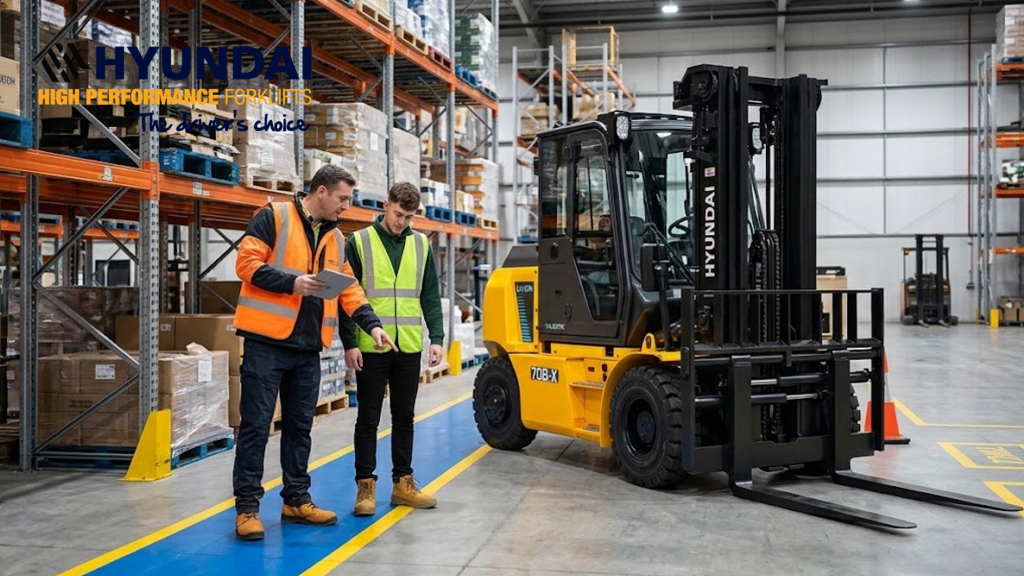
Checking a casual worker’s forklift licence means sighting the original card and confirming it with the issuing regulator. Forklift work in Australia needs a high risk work licence, usually class LF, while order-picking forklifts use class LO.
The class should match the machine the worker will drive. Recording the licence number and expiry date in the induction record keeps the details together.
Rules and check services differ between states and territories. Your local work health and safety regulator sets out how to confirm a licence is current.
A forklift operator induction should cover site rules, traffic routes, the machines in use and how to report a problem. Walking the site with each new starter helps routes and zones make sense on the ground.
Running the first forklift pre-start check together is a good start. Speed limits, pedestrian walkways and no-go zones are easier to remember when someone points them out in person.
New operators also need to know who to call when a forklift fails a check or an incident happens. Clear reporting lines help them speak up early.
A signed induction record shows what each worker covered and when, and it can sit alongside their licence details.
A new operator is ready to work alone once a supervisor has watched them handle real loads safely on site. A licence shows they passed an assessment. Your site still has its own racking, routes and loads to learn. Even experienced, licensed operators need time to get used to a different forklift, its controls, capacity and safety systems.
Simpler tasks and lighter traffic make a good starting point. Watching a few full cycles, from picking up a load to placing it in the rack, shows how they cope. Sign-off can then cover the machines and areas they have proven on.
Supervisors watching those cycles look for a few habits. A quick look behind before turning shows awareness of tail swing. Travelling in reverse when a load blocks the view, with forks low on the move, shows good control.
Operators who check the data plate and keep the mast tilted back show good load control. Facing the load uphill on ramps is another sign they are ready for more.
Hyundai Forklifts’ Hi-MATE telematics system can manage which drivers have access to each forklift. That lets supervisors limit new starters to the machines they are signed off on. Short toolbox talks and honest feedback after near misses keep coaching going through the first weeks.
A forklift operator induction should explain pedestrians, loading docks, blind corners and ramps first. These are the places where an unfamiliar site catches new operators out.
Pedestrian routes need careful attention, including the spots where forklifts give way. For separating people from forklifts, forklift safety on busy Australian sites sets out the controls in order.
Loading docks need their own briefing. Trailer creep, dock levellers and trucks pulling away early all need explaining. Each one is covered in safer dock and container loading.
Machine safety features add a further layer of protection while new operators settle in. Selected Hyundai forklifts include operator presence sensing, automatic speed reduction when cornering and anti roll-back protection. Hyundai B-X Series forklifts also offer optional pedestrian detection and blue spot lighting.
Your site is ready for casual operators when routes are marked, machines are checked and supervisors have time set aside. Fresh floor markings and signage help, ideally before peak stock starts arriving.
Booking servicing early helps each forklift start peak in good condition. A fleet readiness check for peak season shows what else needs attention. Short-term rental can add machines for the busiest weeks if the check shows a gap.
Supervision belongs in the roster for the first weeks, when new operators need it most. To prepare your fleet and site for peak, contact Hyundai Forklifts Australia or find your nearest dealer.
Booking a forklift service before the Christmas shutdown helps your...
Electric forklift run time can cover a full shift when...
A farm forklift should match your loads, your ground conditions...